
Warranty on New HVAC Systems: A Complete 2026 Homeowner Guide
If you think missing a 60-day registration window will void your entire cooling protection plan, you are operating on outdated information. As of July 2024, Florida law changed the landscape for homeowners, ensuring that a warranty on new hvac systems remains valid even if you forget to fill out a registration form. However, while the law is on your side, the complexity of 2026 equipment and the mandatory shift toward new refrigerants means your investment still needs careful management to survive our high-humidity climate. Early system failure is a real concern, and understanding your rights is the first step in prevention.
We understand that a major purchase often comes with the fear of hidden repair costs or confusion over parts versus labor coverage. It’s stressful to imagine your unit failing during a July heatwave only to find out your costs aren’t fully covered. This guide provides the clarity you need to master the two-tier warranty system and keep your home cool without financial surprises. Proven expertise. Reliable service. Total protection. As a team with a long history of technical excellence, we believe reliability is built on transparency. You’ll learn how to verify your coverage, navigate 2026 efficiency standards, and ensure your system is truly protected.
Key Takeaways
- Distinguish between manufacturer parts coverage and contractor labor agreements to ensure you aren’t blindsided by service fees during a repair.
- Identify specific Florida exclusions, such as salt air corrosion, and learn how to secure the additional protection necessary for coastal environments.
- Learn how to properly document your warranty on new hvac systems to maximize your coverage period and simplify future claims.
- Maintain your equipment’s validity by keeping a detailed record of professional annual service, a mandatory requirement for most major manufacturers.
- Select a stable, long-standing contractor who will be there to honor labor commitments and navigate manufacturer transitions for years to come.
Understanding the Two Layers of HVAC Warranties
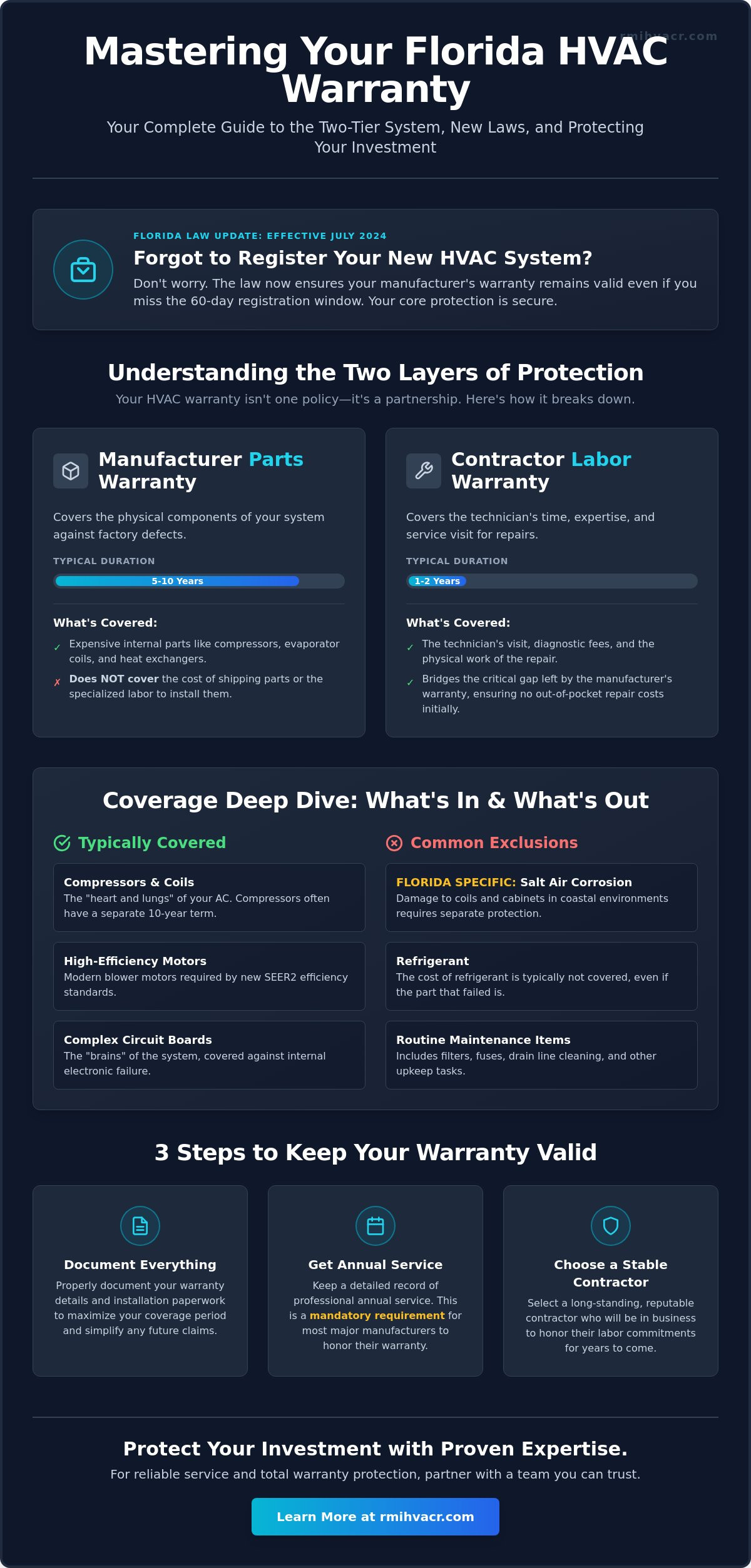
A warranty on new hvac systems isn’t a single, all-encompassing safety net. It’s actually a split agreement between two different entities. One half of the protection comes from the manufacturer that built the equipment. The other half comes from the local professionals who performed the installation. This distinction is the most important factor in your 2026 home maintenance budget. If you don’t understand where one ends and the other begins, you might expect a “free” repair only to receive a bill for hundreds of dollars in labor costs.
By viewing your warranty as a partnership, you can better protect your investment. The manufacturer guarantees the quality of the machine’s construction. The contractor guarantees the quality of the setup and ongoing performance. When these two layers work together, you get the total peace of mind you deserve. As systems become more complex with new efficiency standards, having both layers of protection is no longer optional; it’s a necessity for any Florida homeowner who wants to stay cool without financial stress.
The Manufacturer Parts Warranty
This layer focuses strictly on the physical components of your Heating, ventilation, and air conditioning (HVAC) system. Most major brands offer coverage that ranges from 5 to 10 years. This protection is designed to cover expensive parts like the compressor, evaporator coils, and heat exchangers against factory defects. If a part fails because it was made incorrectly, the maker provides a replacement. However, it’s vital to remember that they only provide the part. They do not cover the cost of shipping that component to Florida or the hours of specialized labor required to install it.
The Contractor Labor Warranty
The labor warranty is a direct reflection of the dependability and expertise of the company you choose. While the manufacturer handles the metal and wires, the contractor handles the time and talent. Typically, a reputable installer provides a labor warranty for the first 1 to 2 years after installation. If a component fails during this window, the homeowner pays zero out-of-pocket for the technician’s visit or the repair work. This coverage bridges the gap that manufacturers leave open. It ensures that your initial investment is protected from the very first day of operation.
Understanding these layers is especially critical in 2026. With the industry shift toward new refrigerants and higher SEER2 efficiency requirements, modern components are more sophisticated than ever. A simple part replacement now requires advanced diagnostic tools and specific technical certifications. Without a clear labor agreement, even a “free” part from a manufacturer can lead to significant service costs. Clear definitions and honest agreements are the hallmarks of a professional service relationship.
What is Typically Covered (and Excluded) in 2026?
Understanding the specifics of a warranty on new hvac systems is essential for long-term budget planning. In 2026, coverage is highly standardized across major brands, but the fine print often surprises homeowners. Most policies focus on internal mechanical failures rather than external damage or routine upkeep. As energy standards like SEER2 become the baseline, components like high-efficiency blower motors and complex circuit boards are now standard inclusions. Knowing which parts are protected helps you manage expectations when a repair is needed.
Manufacturers design these agreements to protect you from factory errors, not environmental wear. This is why coverage is often categorized by the component’s role in the system. While the machine’s internal logic is usually safe, the items that require regular replacement are left to the homeowner’s responsibility. Reliability starts with a clear understanding of these boundaries.
The Big-Ticket Items: Compressors and Coils
The compressor serves as the heart of your unit. Because it’s the most expensive part to replace, many manufacturers offer a separate 10-year term specifically for this component. Evaporator coils are equally critical, especially in the high-humidity environment of Central Florida where they’re prone to leaks. It’s vital to understand that “covered” typically refers only to the cost of the raw metal part. You’re still responsible for the technician’s time, diagnostic fees, and the recovery of old refrigerant. Verifying these terms early prevents sticker shock later.
Common Warranty Exclusions to Watch For
Standard warranties don’t cover everything. “Acts of God,” such as lightning strikes or hurricane-related flooding, fall under your homeowner’s insurance rather than the equipment warranty. Many people ask, Are Home Warranties Worth It when compared to manufacturer coverage? While manufacturer warranties cover factory defects, they won’t pay for failures caused by improper DIY repairs or the use of uncertified parts. Using anything other than OEM components can immediately void your protection.
For those living near the coast, the “Salt Air” exclusion is a major hurdle. Standard warranties often exclude corrosion caused by salt spray unless you have specific protective coatings applied at the time of installation. Additionally, consumables are never covered. This includes air filters, drain line cleaning, and the refrigerant itself. If your system leaks due to a lack of professional air conditioning maintenance, the manufacturer will likely deny the claim. They view these issues as preventable through proper care and regular oversight.
In 2026, the complexity of high-efficiency systems makes professional oversight more valuable than ever. A failed circuit board in a SEER2-compliant unit isn’t just a simple swap; it requires precise programming and testing. Ensuring your system is installed by a team that understands these nuances helps you avoid the common pitfalls of denied claims. Reliability comes from knowing exactly what your contract protects and keeping your system in peak condition.
The Critical 60-Day Window: Registering Your New System
Many homeowners believe their protection is fully active the moment the power is switched on. While Florida law provides strong safeguards for consumer rights under federal warranty law, a specific industry practice known as the “Registration Gap” remains. Most manufacturers offer a 10-year term for parts, but this is often an “enhanced” benefit. Without online registration, many systems default to a standard 5-year base warranty. Registering your warranty on new hvac systems ensures you don’t lose five years of critical coverage due to a simple administrative oversight.
Success starts with organization. Manufacturers require precise data to validate your claim. You’ll need to gather your model numbers, serial numbers, and the exact date of installation. This information is typically found on the data plates of both the outdoor condenser and the indoor air handler. Keeping these details in a dedicated “Warranty Passport” for your home allows for a smooth, stress-free process if a component fails in the future.
Step-by-Step Registration Guide
The registration process for major 2026 HVAC brands is designed to be straightforward. Follow these steps to secure your investment:
- Identify your equipment: Take a photo of the serial number labels on all indoor and outdoor components.
- Visit the manufacturer’s portal: Go to the official website within 60 days of your air conditioning installation.
- Input contractor details: You’ll need the name and license information of the professional team that performed the work.
- Save the confirmation: Verify that you received a confirmation email. Store a digital copy in the cloud and a physical copy with your home’s closing documents.
The Consequences of Missing the Deadline
Missing the 60-day window has tangible financial impacts. The most immediate result is an automatic downgrade to “Base Warranty” status. This essentially cuts your parts protection in half. If a compressor fails in year seven, an unregistered system would be out of coverage, leaving you with a significant repair bill. Additionally, while Florida law has made warranties easier to transfer, having a fully registered 10-year term adds clear value and documentation if you decide to sell your home. It provides the next owner with the same confidence and reliability you enjoyed, making your property more attractive in a competitive market.
Reliability is about more than just high-quality machinery; it’s about proper documentation. By taking ten minutes to register your warranty on new hvac systems, you protect your budget for the next decade. Our team is always ready to help you locate your serial numbers or provide the necessary installation data to ensure your coverage is locked in and secure.
Why Maintenance is the Key to Keeping Your Warranty Valid
A warranty on new hvac systems is a conditional contract. It is not a “set it and forget it” shield that protects you regardless of how you treat the equipment. Manufacturers provide these guarantees with the expectation that the homeowner will perform basic upkeep. If a major component fails, the very first thing a manufacturer will look for is proof of professional care. Without a documented history of service, a company can legally deny your claim by citing “owner neglect.”
This standard of professional care is universal for maintaining high-value home systems; for instance, in the Southwest, homeowners often turn to Sonora Sprinkler Inc. to manage their residential irrigation needs and ensure their systems are properly prepared for the Arizona desert environment.
This requirement is often called the Maintenance Clause. It essentially states that the manufacturer is responsible for factory defects, but you are responsible for the environment in which the machine operates. When you invest in HVAC maintenance contracts, you aren’t just buying a cleaner system. You are securing your legal right to a warranty claim. Professional oversight ensures that small issues don’t turn into catastrophic failures that the manufacturer refuses to pay for.
The Paper Trail: Proving You Cared for Your System
If your compressor fails in year seven, the manufacturer may request copies of your service invoices before they ship a replacement part. They want to see that the system was inspected annually by a licensed technician. A professional HVAC tune-up serves as your best insurance policy in these moments. It provides a dated, verified record that a certified expert checked the refrigerant levels, cleaned the coils, and tested the electrical components. DIY maintenance, while helpful for changing filters, rarely satisfies the strict requirements of a warranty audit because it lacks a professional’s signature and formal report.
Environmental Factors in Central Florida
Our local climate puts a unique strain on your warranty on new hvac systems. In Orlando, systems run harder and longer than the national average due to extreme heat and relentless humidity. This constant operation leads to rapid dust accumulation on evaporator coils. When coils get dirty, the compressor has to work twice as hard to cool your home, eventually leading to a burnout. Manufacturers view a failure caused by dirty coils as a maintenance issue rather than a factory defect.
Humidity also leads to biological growth in primary drain lines. If a drain clogs and causes water damage or a system shutdown, the warranty will not cover the cleaning or the resulting repairs. Regular professional cleaning prevents the “neglect” label from being applied to your claim. We recommend staying ahead of these issues to ensure your system remains reliable and your coverage stays intact. Secure your home’s comfort today by scheduling your annual system inspection with our experienced team.
Choosing a Dependable Florida Contractor for Warranty Support
Your contractor acts as the essential bridge between your home and the manufacturer. A warranty on new hvac systems is only as strong as the company that stands behind it. We have served as a stable, professional anchor for Central Florida homeowners since 1999. In an industry where small operations often vanish overnight, our longevity provides a sense of security that your labor claims will be honored for years to come. Hiring a licensed and insured team for air conditioning replacement is the most effective way to ensure your installation meets the rigorous standards required to keep your manufacturer coverage active.
We understand the stress of a system failure during a Florida heatwave. That’s why RMI handles the complex paperwork and logistics of manufacturer claims on your behalf. Navigating warranty portals and filing detailed technical reports can be overwhelming for any homeowner. Our experienced team manages these interactions, securing the necessary parts and verifying coverage before the repair begins. This proactive approach eliminates confusion and ensures your system is back online as quickly as possible. As your local partner, we understand Central Florida’s unique climate challenges and how they impact your equipment’s lifespan.
The RMI Commitment to Reliability
Reliability is built on preparedness and total transparency. Our fully stocked trucks are a tangible signature of our service; they ensure that warranty parts are installed correctly and quickly without unnecessary delays or multiple trips. We provide clear, staccato communication on what is covered by your specific agreement before any work starts. This no-nonsense style builds trust and ensures you are never surprised by an unexpected bill. Experience the peace of mind that comes from a professional partner with a deep historical anchor in the Orlando community. We prioritize getting the job done right the first time.
Next Steps for Your New System
Securing your home’s future comfort starts with a professional conversation. Schedule a consultation with us today to discuss high-efficiency options and the specific warranty on new hvac systems that fits your lifestyle. We can guide you through the latest 2026 efficiency standards and help you select a system that thrives in our local humidity. Ask about our extended labor warranties for the ultimate level of protection against future repair costs. If you need immediate assistance, contact us today for emergency AC repair or a free quote on a new installation. We are ready to help you stay cool.
Secure Your Long-Term Comfort and Protection
A warranty on new hvac systems is your strongest defense against the unpredictable Florida heat. By completing your registration and committing to a professional service schedule, you transform a simple purchase into a reliable safety net. These steps ensure your manufacturer parts coverage and contractor labor agreements remain valid for years to come. It’s time to put that knowledge into action with a partner you can trust.
RMI has served Central Florida since 1999. Our fully licensed and insured HVAC experts are dedicated to your comfort and system longevity. We maintain 24/7 emergency service readiness to ensure you’re never left in the heat. Let us handle the technical details so you can enjoy a cool, worry-free home. Protect your investment with an RMI Maintenance Plan today. Your comfort is our commitment.
Frequently Asked Questions
Does a new HVAC warranty cover the cost of refrigerant?
No, manufacturer warranties generally do not cover the cost of refrigerant. Most brands categorize refrigerant as a consumable item rather than a mechanical component. If your system develops a leak, the manufacturer may provide the replacement coil under the warranty on new hvac systems, but you are responsible for the cost of the new refrigerant needed to recharge the unit. Professional leak detection and repair are necessary to prevent these recurring costs.
Can I transfer my HVAC warranty if I sell my house?
Yes, you can transfer your warranty to a new homeowner. According to Florida law as of July 1, 2024, warranties for systems installed after that date automatically transfer when a property is sold. Manufacturers cannot charge a fee for this transfer. This legal protection adds tangible value to your home. It provides the next owner with the same reliability and peace of mind you enjoyed during your residency. For those managing high-end residential sales, you may also wish to explore Real Estate Transaction Commissions to plan your next move effectively.
What is the difference between a limited and a full HVAC warranty?
Limited warranties are the industry standard for HVAC equipment. They cover specific parts against factory defects for a set number of years but exclude labor, shipping, and maintenance related failures. A full warranty would cover all costs associated with a repair, including the technician’s time. Because most manufacturer agreements are limited, pairing them with a contractor’s labor warranty is the best way to achieve comprehensive protection for your investment.
Will a generic thermostat void my manufacturer warranty?
No, using a generic thermostat will not automatically void your warranty. However, if the thermostat is installed incorrectly and causes an electrical short that damages the system’s control board, that specific repair will not be covered. We recommend using high quality, compatible thermostats. Professional installation ensures your system’s sophisticated electronics remain protected and operate within the manufacturer’s specific voltage and communication requirements.
How much does a typical labor warranty cost for a new system?
The cost of an extended labor warranty depends on the length of the term and the complexity of your specific system. Many professional contractors include a standard labor period with a new installation, while five or ten year extensions are available for an additional fee. You should review your contract details carefully to understand your specific coverage. Investing in labor protection prevents unexpected service fees if a mechanical part fails in the future.
What happens if the company that installed my AC goes out of business?
Your manufacturer parts warranty remains valid even if the original installer is no longer operating. You can contact any authorized dealer for your equipment brand to process a claim under your warranty on new hvac systems. However, a private labor warranty provided by a defunct company is typically lost. This highlights the importance of choosing a stable, long standing partner with a proven history of community service and reliability.
Do I need a warranty for a commercial HVAC system in Florida?
Yes, commercial systems require warranty protection to manage the high costs of industrial grade components. Commercial warranties often feature different terms than residential policies, focusing on the heavy duty demands of business environments. Given that Florida businesses run their cooling systems nearly year round, having a solid warranty paired with a professional maintenance contract is essential. It prevents operational downtime and protects your company’s bottom line from sudden repair expenses.