
What to Do If Your AC Freezes Up: A Homeowner’s Emergency Guide
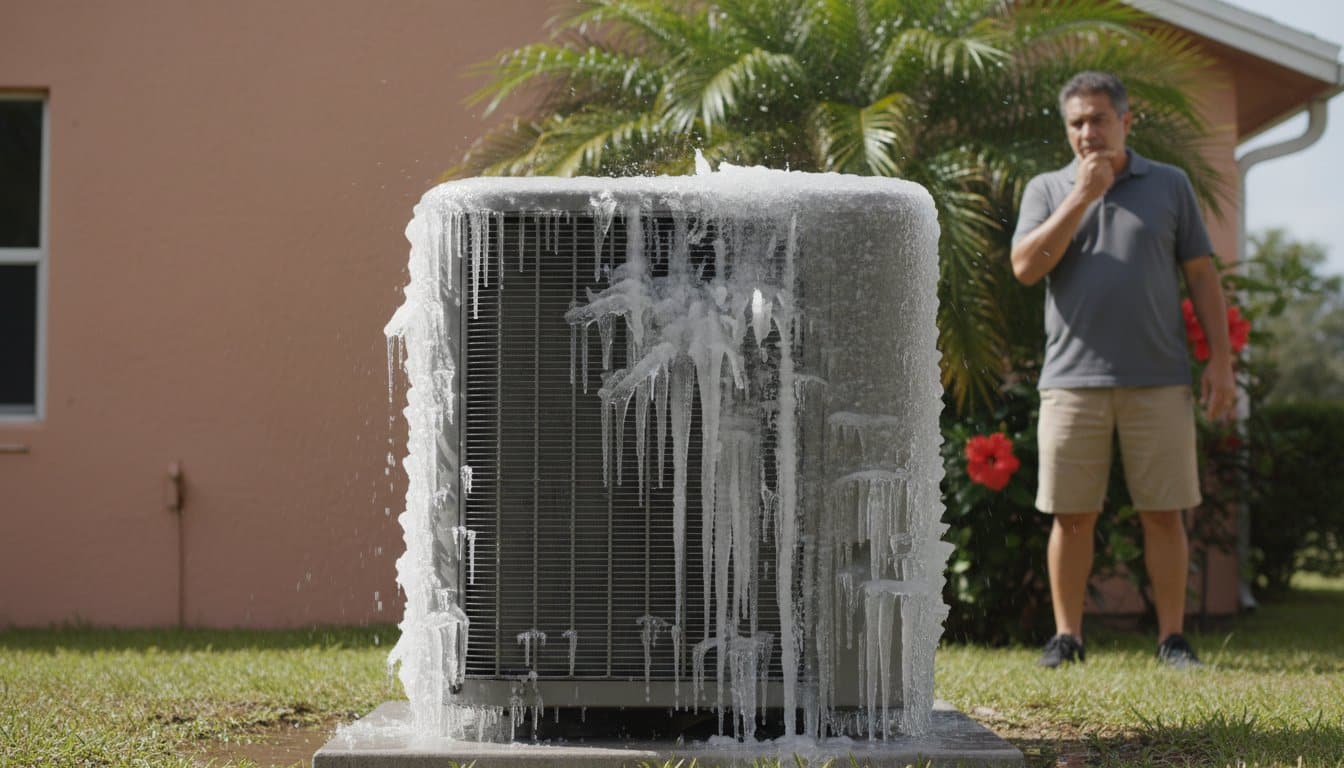
Imagine it’s a sweltering afternoon in Florida, the humidity is thick, and suddenly your vents start blowing warm air. You step outside only to find your outdoor unit encased in a block of ice despite the 90-degree heat. It’s a frustrating and confusing sight that leaves most homeowners fearing a total system collapse or a massive repair bill. You just want your home to be comfortable again without spending a fortune on an emergency service call.
At RMI Heating and Air Conditioning, we’ve been providing trusted air conditioning services since 1999, and we know how stressful a cooling failure can be. This guide explains exactly what to do if your ac freezes up so you can thaw your unit safely and prevent permanent damage to your compressor. We’ll walk you through our expert “Thaw, Check, then Call” protocol. You’ll learn how to identify if the fix is as simple as a dirty filter or if you’re dealing with a refrigerant leak that requires a certified technician. Our goal is to help you restore your comfort quickly while avoiding unnecessary fees so you can get back to the cooling you count on.
Key Takeaways
- Protect your compressor from permanent damage by immediately turning your system off and setting the fan to “on” to start the defrosting cycle.
- Master exactly what to do if your ac freezes up to determine if you can fix the issue with a simple filter change or if you need professional assistance.
- Prepare for a thawing period that can last up to 24 hours and learn how to manage the significant water runoff to protect your home from moisture damage.
- Establish a proactive maintenance routine tailored for Florida’s high humidity to ensure your system runs efficiently and ice-free all summer long.
- Recognize the signs that your system has reached the “point of no return” and requires a trusted, certified technician to perform a safe, professional repair.
Immediate Steps to Take When Your AC Freezes
Discovering a layer of ice on your outdoor unit or indoor evaporator coil is a stressful moment for any homeowner. When this happens, you need to act quickly to protect your equipment. Knowing exactly what to do if your ac freezes up can be the difference between a minor service visit and a total system replacement. Your priority is to stop the cooling cycle and begin a controlled thaw immediately. At RMI Heating and Air Conditioning, we’ve helped Florida families manage these emergencies since 1999, and the first few minutes of your response are critical.
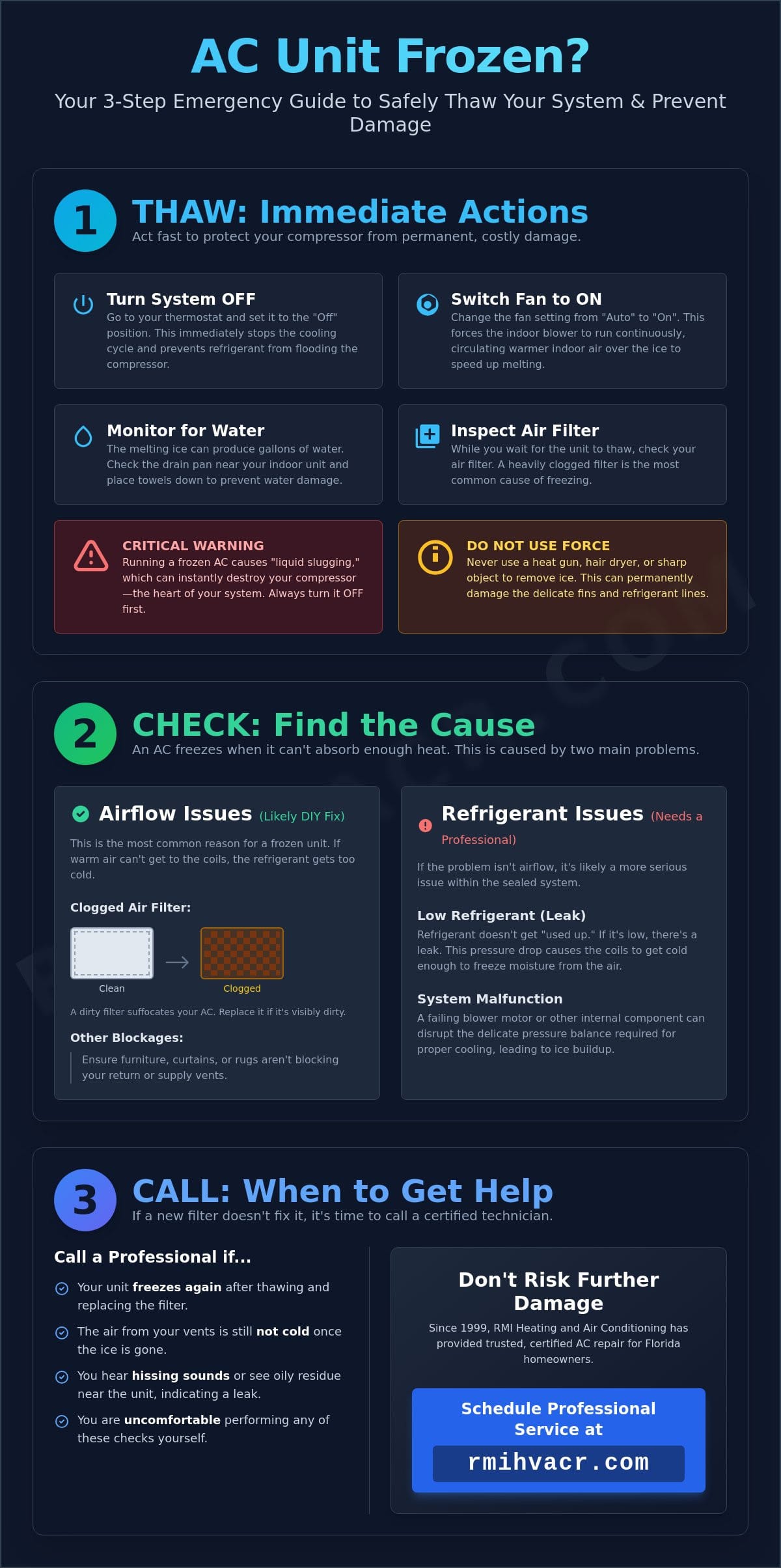
- Step 1: Turn off the system. Set your thermostat to the “Off” position. This stops the flow of refrigerant and prevents the compressor from continuing to struggle against the ice.
- Step 2: Switch the fan to “On.” Change the fan setting from “Auto” to “On.” This keeps the blower motor running even though the cooling is off, which helps move warmer air across the frozen coils.
- Step 3: Monitor for water. As the ice melts, it will turn into a significant amount of water. Check the primary condensate pan and the area around your indoor air handler to ensure the drain line isn’t overflowing.
- Step 4: Inspect the air filter. Pull out your air filter and check it for heavy dust or debris buildup. A clogged filter is a primary reason why systems struggle to maintain the airflow needed for how air conditioning works effectively.
Why You Must Stop the System Immediately
Ice acts as a thick layer of insulation on your coils. This prevents the refrigerant from absorbing heat from your home, which forces the compressor to work much harder. Running a frozen unit puts you at high risk for liquid refrigerant “slugging.” This occurs when liquid enters the compressor, which is only built to handle gas. Slugging can destroy the internal components of your compressor instantly. Stopping the unit now is the most reliable way to avoid an expensive air conditioning repair or a premature system failure.
Setting Your Fan to Defrost Mode
By switching your fan to the “On” setting, you’re using the air inside your home to defrost the system safely. In the “Auto” mode, the fan would shut off along with the compressor, leaving the ice to melt very slowly on its own. Moving room-temperature air over the coils speeds up the process significantly. You should never use a hair dryer, heat gun, or sharp objects to remove the ice. These can damage the sensitive aluminum fins or puncture the copper lines, leading to a major refrigerant leak. Patience is your best tool when figuring out what to do if your ac freezes up safely.
Why Is My AC Frozen? Identifying Airflow vs. Refrigerant Issues
Understanding the root cause is the next vital step in knowing what to do if your ac freezes up. While it seems counterintuitive for a cooling system to struggle because it’s “too cold,” the ice is actually a symptom of a heat exchange failure. Your air conditioner doesn’t “create” cold; it removes heat. When that process is interrupted, the refrigerant inside the coils drops below freezing. In the heavy humidity of Central Florida, our air is saturated with moisture. When this damp air hits a super-cooled evaporator coil, it doesn’t just condense into water; it flash-freezes into a solid block of ice.
This failure typically stems from a disruption in the “Pressure-Temperature” relationship. HVAC systems are closed loops designed to operate at specific pressures. If the pressure in the evaporator coil drops too low, the temperature of the refrigerant follows suit. When that temperature falls below 32 degrees Fahrenheit, the condensation that naturally forms on the coil during the cooling process turns into a foundation for ice. Once a thin layer of frost forms, it acts as an insulator, making it even harder for the system to absorb heat and causing the ice to grow rapidly.
Airflow Obstructions: The DIY Fixes
Airflow restriction is the most common reason for a frozen unit. If warm air from your home can’t reach the coils, the refrigerant stays too cold. While you’ve already checked your filter as an immediate step, it is important to understand how restricted air prevents heat exchange. According to the U.S. Department of Energy, maintaining your air conditioner by keeping filters and coils clean is the most reliable way to prevent this. You should also check for blocked return vents or closed supply registers. “Choking” the system by closing too many vents creates an airflow imbalance that leads to localized freezing. Additionally, a layer of dust on the evaporator coil itself can provide the perfect foundation for ice to take hold.
Mechanical Failures: When DIY Is Not Enough
If your filters are clean and vents are open, the issue is likely mechanical. Low refrigerant levels are a frequent culprit. When a system has a leak, the remaining refrigerant expands more than it should, creating a “flash gas” effect that super-cools the coils. This isn’t a problem you can solve by “topping off” the system; you need a professional air conditioning repair to find and seal the leak. Other mechanical issues include a failing blower motor that isn’t pushing enough air or a damaged expansion valve (TXV) that is mismanaging refrigerant flow. If your troubleshooting doesn’t reveal a simple fix, our team at RMI Heating and Air Conditioning is ready to help you identify the exact mechanical failure before it leads to a total system breakdown.
The Thawing Process: How to Safely Defrost Your Unit
Once you’ve turned off the system, the real work of restoration begins. Many homeowners feel a sense of urgency to call for air conditioning repair immediately, but there’s a vital “Golden Rule” in the HVAC industry: a technician cannot diagnose or fix a system that is still encased in ice. If we arrive at your home and find a solid block of ice, we’ll have to wait for it to melt before we can connect our gauges, check pressures, or inspect the coils. By managing the defrosting process yourself, you save time and avoid paying for a service professional to simply watch ice melt.
The thawing period serves as the critical window for property protection. Depending on how thick the ice has grown, this process can take anywhere from 1 to 24 hours. During this time, the several gallons of water frozen to your coils will begin to liquefy and move through your system’s drainage components. You must stay vigilant to ensure this water doesn’t end up on your floors or ceilings.
Managing Condensate and Preventing Water Damage
In Central Florida, many air handlers are located in attics or upstairs closets where water overflow can cause immediate and expensive ceiling damage. As the ice melts, your primary condensate pan will fill quickly. Check for clogs in the drain line that could cause an overflow. If you see the water level rising too high, keep towels or a wet-vac nearby to catch moisture that might bypass the pan. Most modern Florida systems include a secondary drain pan and a float switch. This switch is designed to shut the system down if water levels get too high, but you shouldn’t rely on it as your only line of defense during a major defrost. Taking a proactive approach is part of knowing what to do if your ac freezes up without causing secondary damage to your home.
When Is the System Ready for Inspection?
You’ll know the process is complete when you can no longer see any frost on the indoor evaporator coil. Even after the visible ice is gone, the “Dry Out” phase is essential. Running the fan for an extra hour ensures the coils are completely dry, which allows for an accurate pressure reading during our diagnostic check. While you wait for the system to dry, gather your service history and note any strange noises or smells you noticed before the freeze. This preparation helps the experts at RMI HVACR provide a faster solution. We’ve been providing trusted service since 1999, and having this information ready allows us to get your home back to the cooling you count on much sooner.
Preventing Ice Buildup: Maintenance Tips for Florida Heat
Preventing a system freeze is far more cost-effective than dealing with the aftermath of one. While previous sections detailed what to do if your ac freezes up during an emergency, long-term reliability depends on consistent care. In Central Florida, our cooling systems run almost continuously for eight months of the year. This heavy workload means that standard national maintenance advice often falls short for Orlando homeowners. If you want to avoid the $150 to $650 typical cost for a standard AC repair in Florida, you must prioritize a proactive maintenance schedule.
The “Florida Filter Schedule” is your first line of defense. While some national guides suggest changing your air filter every three months, this is often too infrequent for our climate. During peak summer, you should check your filters every 30 days. High humidity causes dust to clump, which restricts airflow faster than in drier regions. Additionally, keep your condensate lines clear. Algae and sludge thrive in our warm, damp environment. A professional air conditioning maintenance visit includes flushing these lines to prevent the moisture buildup that encourages ice formation on the coils.
System efficiency also plays a major role in freeze prevention. As of 2023, the minimum efficiency standard for new split-system air conditioners in Florida is 14.3 SEER2. Older units with lower ratings struggle more with high heat loads, making them more prone to freezing. If your system still uses R-410A refrigerant, remember that this refrigerant was phased out of new manufacturing on January 1, 2025. Maintaining these older systems is critical, as the cost of R-410A is expected to rise as supplies decrease. Catching a small leak now can save you from an expensive compressor failure later.
The Importance of Clean Coils
Your evaporator coils are the heart of the heat exchange process. Over time, Florida pollen and household dust create a thin “insulation” layer on the aluminum fins. This layer prevents the refrigerant from absorbing heat, leading directly to ice buildup. We use specialized chemical cleaning agents to remove this debris safely. You should avoid DIY coil cleaning with high-pressure hoses or stiff brushes. These can easily bend the delicate fins and restrict airflow further. Clean coils don’t just prevent freezing; they also lead to lower monthly energy bills by allowing your system to run shorter, more efficient cycles.
Smart Thermostat Settings for System Health
Your thermostat settings can either protect or punish your AC unit. Avoid “extreme” temperature drops, such as setting the thermostat to 60 degrees when it is 95 degrees outside. This won’t cool your home faster; it simply forces the system to run indefinitely, which is a leading cause of frozen coils. Instead, use “Fan Circulate” modes to keep air moving even when the compressor is off. If you have a smart thermostat with humidity sensors, aim to keep indoor humidity below 55%. This reduces the moisture load on your coils and significantly lowers the risk of a flash-freeze event. Schedule your comprehensive AC tune-up with RMI HVACR today to ensure your system is optimized for the Florida summer.
When to Call RMI for Professional AC Repair
If you’ve followed the “Thaw, Check, then Call” protocol and your system refreezes within hours of restarting, you’ve reached the point of no return. Troubleshooting what to do if your ac freezes up is helpful for identifying simple airflow blocks, but it cannot fix a compromised refrigerant line or a failing mechanical component. At this stage, continuing to run the unit risks permanent damage to your compressor. Replacing a compressor can cost between $1,200 and $2,800, whereas a professional diagnostic call in Florida typically ranges from $75 to $150. Calling for a trusted AC repair in Orlando early is the most effective way to protect your investment.
Since 1999, RMI HVACR has built a reputation for dependability and technical expertise. Our certified technicians don’t just provide a quick fix; they perform a comprehensive evaluation of your system’s health. We check motor amperage to ensure your blower is pushing enough air and inspect duct integrity to confirm that your cooling isn’t being lost in your attic. By catching these issues early, we help you avoid a premature air conditioning replacement, extending the life of your current system. We understand that your comfort always comes first, and we prioritize getting the job done right the first time.
Our Emergency 24/7 Response
AC emergencies don’t stick to a 9-to-5 schedule, especially in the Florida heat. We provide rapid response services to Orlando, Kissimmee, and the surrounding communities at any hour of the day or night. Our service vehicles arrive as “fully stocked trucks,” equipped with the most common parts and tools needed to solve your problem on the first visit. We stand behind our work with a professional guarantee on all parts and labor. This gives you the peace of mind that comes with knowing your cooling is in expert hands. You can count on us to be there when the humidity is at its worst.
For those seeking similar high-standard maintenance and technical support, Fazal Technical Services offers expert HVAC solutions designed to maintain peak efficiency in challenging environments.
Comprehensive System Diagnostics
We use specialized electronic leak detectors to find microscopic refrigerant leaks that a visual inspection might miss. This is particularly important for systems using R-410A, as the dwindling supply makes every ounce of refrigerant valuable. Our goal is to solve the root cause of the freeze-up, not just the symptoms. We evaluate the overall health of your HVAC system to prevent future ice buildup and ensure peak efficiency. Don’t let a frozen unit turn into a total system failure. Schedule your emergency AC repair with Roberts Mechanical today!
Get Back to Cooling You Can Count On
Dealing with a frozen unit is a race against time to protect your compressor and your home’s interior from water damage. By following the “Thaw, Check, then Call” protocol, you’ve already taken the most important steps toward a resolution. Remember that a clean filter and open vents are your best defense against future ice buildup; however, mechanical failures require the precision of a certified expert. Whether the issue is a microscopic leak or a faulty blower motor, professional intervention ensures the job is done right the first time.
Knowing what to do if your ac freezes up gives you the power to manage the crisis, but you don’t have to face the Florida heat alone. Our team has been the region’s trusted HVAC experts since 1999. We arrive with fully stocked trucks to ensure same-day service and reliable repairs that last. We understand the urgency of a cooling failure and are committed to restoring your comfort as quickly as possible.
Don’t wait for your system to fail—call the experts at RMI for 24/7 Emergency AC Repair! We provide 24/7 emergency availability across Central Florida to ensure your family stays cool and comfortable. Your peace of mind is our priority, and we’re ready to help you solve your cooling problems for good.
Frequently Asked Questions
How long does it take for an AC unit to thaw out?
It typically takes between 1 and 24 hours for an AC unit to thaw completely, depending on the thickness of the ice and the outdoor temperature. You can speed up this process by turning the system off and switching the fan to the “On” setting. This circulates room-temperature air over the coils. Never use mechanical tools to scrape the ice; you might puncture the delicate refrigerant lines.
Can I still run my AC if it is only slightly frozen?
No, you should never run your air conditioner if you see any signs of frost or ice. Even a light layer of ice acts as an insulator, preventing the system from absorbing heat and forcing the compressor to work under extreme stress. Continuing to operate the unit will only cause the ice to grow thicker. This eventually leads to a total mechanical breakdown or an expensive compressor failure.
Why is my AC freezing up even with a clean filter?
If your filter is clean, the freezing is likely caused by a mechanical issue such as low refrigerant, a failing blower motor, or heavily soiled evaporator coils. While you may have mastered what to do if your ac freezes up regarding basic maintenance, these internal problems require professional tools to diagnose. A technician will check for microscopic leaks or electrical failures that prevent proper heat exchange from occurring.
Will a frozen AC fix itself if I just turn it off for a while?
No, a frozen air conditioner will not fix itself because the ice is a symptom of a deeper systemic problem. Turning the unit off allows the ice to melt, but the underlying issue remains. Once you restart the cooling cycle, the leak or airflow restriction will cause the ice to return immediately. You must identify and repair the root cause to ensure the system operates reliably throughout the summer.
How much does it cost to fix a frozen air conditioner?
The cost to fix a frozen air conditioner in Florida typically ranges from $150 to $650 for standard repairs. Most local HVAC companies charge a diagnostic fee between $75 and $150 to identify the problem. If the issue is a simple refrigerant recharge, expect to pay between $200 and $600. However, neglecting the problem can lead to a compressor replacement costing between $1,200 and $2,800.
Can low refrigerant really cause ice to form on my unit?
Yes, low refrigerant is a primary cause of ice formation because it drops the pressure inside the evaporator coil. When the pressure falls, the temperature of the refrigerant also drops below the freezing point. This causes the moisture in the air to flash-freeze onto the coils. It’s a common misconception that less refrigerant means less cooling; in reality, it creates a super-cooled surface that quickly turns into ice.
What happens if I don’t turn off my frozen AC?
Failing to turn off a frozen unit can lead to “slugging,” which is when liquid refrigerant enters the compressor and destroys its internal valves. Compressors are only designed to pump vapor, not liquid. If you continue running the system, you risk turning a minor repair into a total system replacement. It’s vital to know what to do if your ac freezes up to prevent this catastrophic and expensive damage.
Is a frozen AC a sign that I need a new unit?
A frozen AC isn’t always a sign that you need a new unit, but it often indicates that an older system is struggling. If your unit uses R-410A refrigerant, which was phased out of manufacturing in early 2025, repairs may become increasingly expensive. Our technicians can evaluate your system’s overall health and help you decide if a repair is cost-effective or if an energy-efficient SEER2 upgrade is a better investment.