
Troubleshooting Common AC Problems: A Homeowner’s Guide to Cooling Relief
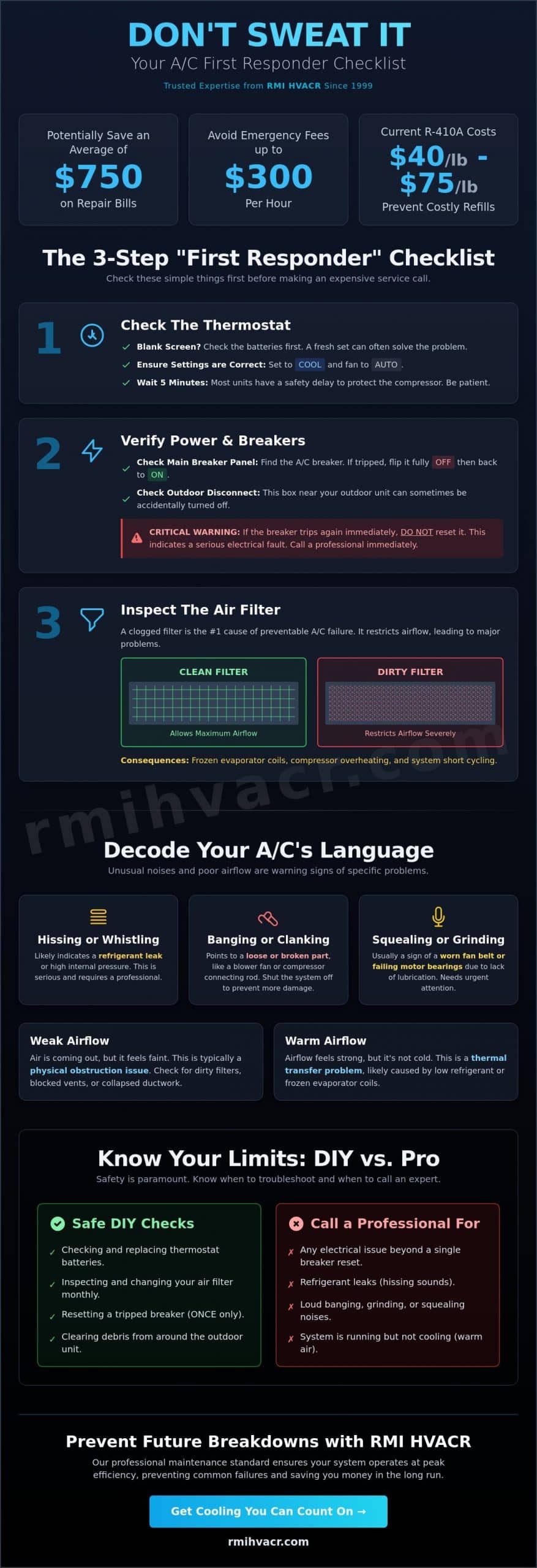
Most air conditioning failures in 2026 are caused by just three preventable oversights, and mastering these “First Responder” checks can save you from a national average repair bill of $750. It’s incredibly stressful when your home starts feeling like an oven and you’re staring at a blank thermostat screen. You’re likely worried about expensive emergency fees, which can now reach $300 per hour, or the rising cost of R-410A refrigerant that currently sits between $40 and $75 per pound. We understand that your comfort always comes first.
Since 1999, RMI HVACR has provided cooling you can count on, and we want to help you take control of your home’s climate. This guide simplifies troubleshooting common ac problems so you can identify exactly what’s wrong before you spend a dime on professional help. You’ll learn how to diagnose frequent issues, determine when a certified expert is actually necessary, and implement simple maintenance habits to prevent these breakdowns from recurring. Let’s get your home back to a comfortable temperature quickly and efficiently.
Key Takeaways
- Learn the three immediate “First Responder” checks to perform when your system stops cooling, potentially saving you from an unnecessary service call.
- Master the art of troubleshooting common ac problems by decoding unusual noises and smells to pinpoint internal mechanical issues.
- Discover why Central Florida’s intense humidity makes the condensate drain line a primary failure point and how to keep it clear.
- Identify the clear safety boundaries between simple DIY maintenance and hazardous high-voltage repairs that require a certified technician.
- Understand how a professional maintenance standard prevents future breakdowns and ensures your system operates at peak efficiency.
The AC First Responder Checklist: Three Things to Check Immediately
When your home starts heating up, the panic often sets in before you even check the basics. Many homeowners assume a total system failure when their unit stops, but the solution is frequently much simpler than a compressor replacement. Before you call for air conditioning repair, you should perform a quick audit of the three most common culprits. This “First Responder” checklist is the foundation of troubleshooting common ac problems, helping you rule out minor issues that don’t require a professional technician. Since 1999, we’ve seen countless “emergencies” solved in under five minutes just by checking these three areas.
Thermostat Settings and Power Issues
Your thermostat is the brain of your Heating, ventilation, and air conditioning (HVAC) system. If the screen is blank, check the batteries first; a $5 set of AAs can solve what looks like a total system blackout. Ensure the setting is on “Cool” and the fan is set to “Auto” rather than “On” to prevent unnecessary humidity buildup. If you’ve just adjusted the temperature, remember that most modern units have a built-in 5-minute delay. This safety feature protects the compressor from damage caused by rapid power cycles, so give it a few minutes before assuming there’s a problem.
Breaker Box and Outdoor Disconnects
Sometimes the issue is purely electrical. Locate your home’s main electrical panel and find the dedicated HVAC breaker. These switches don’t always flip completely to “Off” when they trip; they often land in a middle “neutral” position. To reset it, you must flip it all the way to “Off” before clicking it back to “On.” You should also check the outdoor disconnect box located near your condenser unit. This is a pull-out handle or a small switch that can sometimes work loose or be accidentally flipped during yard work. A critical warning: if a breaker trips again immediately after you reset it, do not try a second time. This indicates a serious electrical short or a failing component that requires an expert’s attention.
Finally, inspect your air filter. A dirty filter is a $20 part that can lead to a $2,000 repair if it causes the evaporator coils to freeze or the compressor to overheat. When airflow is severely restricted, the system may begin “short cycling,” which is a pattern where the unit turns on and off every few minutes without ever reaching the set temperature. Consistent air conditioning maintenance, including monthly filter checks, is the best way to avoid these preventable headaches. By ruling out these simple fixes, you’ll know exactly when it’s time to bring in the professionals.
Decoding Unusual Symptoms: Noises, Smells, and Weak Airflow
Your air conditioner communicates through more than just the temperature on your thermostat. It uses a specific “language” of sounds and scents to alert you to internal mechanical stress. Mastering this aspect of troubleshooting common ac problems helps you catch a minor issue before it evolves into a complete system failure. While some hums are normal, other signals—like the odors often addressed by SMELLKILLERS.COM—are clear warning signs that your unit’s internal hygiene or components need attention. We’ve been helping homeowners interpret these signals since 1999, ensuring that cooling you can count on is always just a phone call away.
What Your AC Noises Are Telling You
If you hear a persistent hissing or whistling, you’re likely dealing with a refrigerant leak or high internal pressure. These leaks are serious because they reduce cooling efficiency and can damage the compressor over time. Banging or clanking sounds usually point to a loose part, such as a blower fan or a connecting rod within the compressor. Squealing noises are generally less catastrophic but still urgent; they typically signal a worn out fan belt or motor bearings that have lost their lubrication. Identifying these “danger” noises early is a vital part of troubleshooting common ac problems and preventing expensive replacements.
Weak Airflow vs. Warm Airflow
Sometimes the problem isn’t that the AC is off, but that it isn’t performing correctly. Weak airflow often stems from physical obstructions like blocked return vents or collapsed ductwork hidden in your attic. In contrast, warm airflow usually indicates a thermal transfer problem. This happens when you have frozen evaporator coils or low refrigerant levels. Regular maintenance of your air conditioner can prevent these issues by ensuring coils stay clean and airflow remains unobstructed. If your vents are blowing air that feels like a hair dryer, you may need an expert with professional diagnostic tools to check your system’s pressures and electrical components.
Smells are another critical indicator of system health. “Dirty Sock Syndrome” is a common term for the musty odor caused by mold and bacteria buildup on the evaporator coils. This isn’t just unpleasant; it impacts your home’s air quality. If you notice persistent odors or the symptoms mentioned above, it’s a good idea to request a professional inspection to restore your home’s freshness and cooling efficiency. We prioritize your comfort and safety, arriving with the tools needed to fix these issues on the first visit.
The Florida Factor: Managing Humidity and Drainage Failures
Living in Central Florida means your air conditioner works significantly harder than units in drier climates. The high humidity in Orlando creates a constant stream of condensation that must be channeled away from your home. When this drainage fails, it becomes one of the most frequent reasons for troubleshooting common ac problems. Since 1999, we’ve seen how a simple blockage in a plastic pipe can bring a high-end cooling system to a complete standstill. An AC unit in our region can pull over 10 gallons of water from the air daily, and that moisture needs a clear path out.
The U.S. Department of Energy identifies drainage issues as one of the most Common Air Conditioner Problems, and in Florida, this is often caused by rapid biological growth. The warm, damp environment inside your drain line is the perfect breeding ground for algae and mold. Over time, this sludge thickens until the water has nowhere to go, triggering a safety shutdown. If you ignore the signs of a slow drain, you risk water damage to your drywall and flooring.
Clearing a Clogged Condensate Drain Line
You can often resolve a minor drainage issue yourself with a few household tools. First, locate the PVC drain line, which is usually a white pipe found near your outdoor condenser unit. If you see standing water in the drain pan under your indoor air handler, the line is definitely blocked. Use a wet/dry vacuum to create a tight seal around the end of the outdoor pipe and run it for about 30 seconds to extract any sludge or biological “gunk.” Once the line is clear, flush it from the indoor access point with a mixture of warm water and white vinegar. This simple step kills remaining algae and helps prevent regrowth for several months, keeping your system running efficiently.
The Role of the Float Switch
If your AC suddenly loses power and the thermostat screen stays dark, check your safety float switch before calling for air conditioning repair. This small, plastic device is usually located on the drain line near your indoor air handler. It features a floating mechanism that rises when water backs up in the pipe. When the float reaches a certain level, it breaks the electrical circuit to your system. This isn’t a system failure; it’s a vital safety feature designed to prevent gallons of water from flooding your closets or damaging your home’s structure. Once you clear the clog and the water level drops, the switch will reset and allow the system to restart. If you find yourself clearing clogs every few weeks, it’s time to consider a professional maintenance tune-up to deep-clean your coils and lines.
DIY vs. Professional Repair: Knowing When to Call RMI
While troubleshooting common ac problems can save you time on simple fixes like filter changes or thermostat resets, there’s a clear point where DIY efforts become dangerous. It’s natural to want to save money and avoid a service call, but HVAC systems involve high-voltage electricity and pressurized chemicals that require specialized training. Since 1999, our priority has been your safety and long-term comfort. We believe in empowering homeowners with basic knowledge while providing expert backup when the job requires technical certification. Our certified experts bring years of hands-on experience to every call, ensuring the job is done right the first time.
The Dangers of Refrigerant and Electrical DIY
Refrigerant is a strictly regulated chemical that requires EPA Section 608 certification to handle legally and safely. You should never attempt to “top off” your system yourself. If your refrigerant is low, there’s a physical leak in your coils or lines that needs a professional seal to prevent recurring failure. Beyond the legalities, there’s a high risk of frostbite or inhaling toxic fumes if handled incorrectly. Furthermore, electrical components like capacitors and contactors carry enough stored energy to cause a life-threatening arc flash, even when the main breaker is off. If your troubleshooting common ac problems reveals a grounded compressor or a burnt-out motor, it’s often more cost-effective to discuss air conditioning replacement options rather than risking a hazardous and expensive repair.
When “Quick Fixes” Mask Major Problems
Some homeowners try to bypass safety float switches or use a hair dryer to “thaw out” frozen coils for temporary relief. These shortcuts often lead to catastrophic failures and even more expensive repair bills later. Recurring ice on your coils is a definitive sign of a deeper system leak or a failing blower motor that a simple reset won’t fix. Bypassing a safety switch can lead to thousands of dollars in water damage to your home’s structure. When you realize the problem is beyond a simple filter change, you can count on us for emergency ac repair near me. Our service vehicles arrive as “Fully Stocked Trucks,” carrying over 100 of the most common parts and tools to ensure we solve the issue in a single visit. We respect your time and prioritize getting your home back to a comfortable temperature quickly and efficiently.
Don’t risk your safety or your system’s longevity on a guess. Schedule your expert AC repair today and let our dependable team restore your peace of mind with a guaranteed solution.
Preventing Future Breakdowns: The RMI Maintenance Standard
Mastering the basics of troubleshooting common ac problems is a valuable skill, but the most efficient way to handle a cooling crisis is to prevent it from happening in the first place. Transitioning from a reactive “fix-it” mindset to a proactive maintenance strategy ensures your system stays reliable during the peak of the Florida summer. Since 1999, we’ve developed a precision maintenance standard that addresses the specific environmental stressors found in Central Florida. Our goal is to provide cooling you can count on, reducing the likelihood of a total system failure when you need comfort the most.
The Value of a Professional Tune-Up
A homeowner’s monthly filter change is a great start, but it doesn’t compare to the depth of a professional inspection. Our certified experts perform a comprehensive coil cleaning to remove deeply embedded dust and biological growth that a standard vacuum simply can’t reach. We also monitor the amperage draw on your motors. This data allows us to predict a component failure before it actually occurs. By identifying a motor that is pulling too much power, we can replace it during a scheduled visit rather than an emergency midnight call. You can learn more about securing these benefits year-round in our HVAC maintenance contracts guide.
Cooling You Can Count On Since 1999
RMI HVACR remains committed to the comfort of Central Florida homeowners. Our 25+ years of hands-on experience have taught us that preparedness is the key to dependability. This is why our service vehicles arrive as fully stocked trucks, ready to handle almost any issue on the spot. We understand that HVAC emergencies don’t stick to a 9-to-5 schedule, which is why we offer 24/7 availability for urgent repairs. We also stand by our 48-hour service guarantee to ensure you aren’t left waiting in the heat for days on end. Your satisfaction is guaranteed because we prioritize your well-being above all else.
Investing in a professional maintenance plan typically pays for itself through improved energy efficiency and a longer system lifespan. Instead of waiting for the next breakdown, take control of your home’s climate today. Our team is ready to deliver the expert care your system deserves. Schedule your AC service with Roberts Mechanical today and experience the peace of mind that comes with a professionally maintained home.
Take Control of Your Home Comfort
Mastering the basics of troubleshooting common ac problems empowers you to handle minor glitches without the stress of an immediate service call. You now know how to audit your thermostat, clear a clogged drain line, and recognize the “danger” noises that signal a need for professional intervention. By combining these simple homeowner checks with a consistent maintenance plan, you protect your system from the unique demands of the Florida climate. Since 1999, we’ve served as Central Florida’s trusted experts, and we understand that your comfort always comes first.
Whether you need a routine tune-up or an urgent fix, our team is ready to deliver cooling you can count on. Our fully stocked service trucks arrive prepared to resolve most issues in a single visit, and we maintain 24/7 emergency availability for your peace of mind. Need urgent help? Call our 24/7 emergency line or schedule your expert AC repair now! You don’t have to face the heat alone; we’re here to ensure your home stays cool and comfortable all year long.
Frequently Asked Questions
Why is my AC running but not blowing cold air?
Your system is likely suffering from a frozen evaporator coil, low refrigerant levels, or a failed compressor. If the indoor fan is blowing but the air isn’t chilled, the heat exchange process has failed. You should check the outdoor unit to see if the compressor is engaging; if it’s silent while the fan spins, the system cannot move heat out of your home.
Is it safe to leave my AC on if it is making a loud clanking noise?
No, you should shut the system down immediately to prevent permanent mechanical failure. A clanking sound usually indicates that a component, such as a fan blade or a balance weight, has come loose and is striking other parts. Continuing to run the unit can turn a simple repair into a total system replacement.
How often should I change my air filter in Florida?
You should inspect your filter every 30 days and replace it at least every 90 days. Because Florida air conditioners run for approximately 2,500 hours per year, they accumulate dust and allergens much faster than units in cooler climates. Homes with pets or high occupancy often require a fresh filter every month to prevent airflow restriction.
Can a dirty outdoor coil cause my AC to stop working?
Yes, a thick layer of dirt on the condenser coils prevents the system from releasing heat, which eventually triggers a high-pressure safety shutdown. This is a vital step in troubleshooting common ac problems during a heatwave. If the coils can’t breathe, the compressor will overheat and may eventually burn out.
What does it mean if there is water leaking around my indoor unit?
Water leakage typically signals a clogged condensate drain line or a rusted drain pan. In our humid environment, algae and mold grow rapidly in the PVC lines, creating blockages that force water to back up. If your safety float switch doesn’t cut the power, this overflow can quickly damage your home’s structure and drywall.
In cases where water issues extend beyond your cooling system, it’s helpful to discover Anton Plumbing Heating & Cooling for comprehensive emergency plumbing and HVAC services.
How much does a typical AC repair service call cost in Orlando?
In Florida, common AC repairs generally range between $150 and $650 for issues like capacitor failures or contactor replacements. National data from May 2026 shows that major repairs, such as compressor work, can reach $3,000. Emergency service calls often carry a higher hourly rate, ranging from $150 to $300 per hour.
Can I add Freon to my own AC unit?
No, it’s illegal for an unlicensed person to purchase or handle refrigerant under EPA regulations. Beyond the legal risks, adding refrigerant without sealing the underlying leak is a temporary fix that wastes money. Certified technicians must use calibrated gauges to ensure the system charge matches the manufacturer’s exact specifications.
What happens if I ignore a tripped breaker for my AC?
Ignoring a tripped breaker can lead to an electrical fire or the total destruction of your HVAC motor. A breaker trips to protect your home from a dangerous electrical surge or a short circuit. If you repeatedly force the switch back to the “on” position, you risk overheating the wiring and causing permanent damage to the system’s expensive electronic boards.