
What Size AC Unit Do I Need for My House? A Complete 2026 Sizing Guide
Most homeowners believe a larger air conditioner automatically equals a cooler home; however, in Central Florida, an oversized unit is often the primary reason for high humidity and skyrocketing energy bills. It is a common misconception that more power is always better. You want a system that keeps your family comfortable without overpaying for capacity you simply do not need. Dealing with sticky indoor air or a unit that constantly cycles on and off is frustrating, especially when you are trying to manage your monthly expenses and avoid being upsold on equipment that does not fit your floor plan.
This 2026 sizing guide helps you answer the critical question: what size ac unit do i need for my house? We have been serving this community for decades, and we know that Florida cooling is a dehumidification strategy first. You will learn how to achieve the perfect balance of cooling power and moisture removal to protect your comfort. We will break down the latest SEER2 requirements, explain why professional Manual J load calculations are essential, and provide the clear estimates you need to make a dependable choice for your property.
Key Takeaways
- Avoid the “bigger is better” trap to prevent high humidity levels and unnecessary energy expenses.
- Use local rules of thumb to help determine what size ac unit do i need for my house based on your specific square footage.
- Master the balance between cooling and dehumidification to ensure your home stays dry during Orlando’s humid afternoons.
- Recognize signs of an improperly sized system, such as short cycling or uneven temperatures across different rooms.
- Learn how professional load calculations and ductwork readiness protect your investment and lower your monthly utility bills.
The Goldilocks Principle: Why AC Unit Size is Critical for Home Comfort
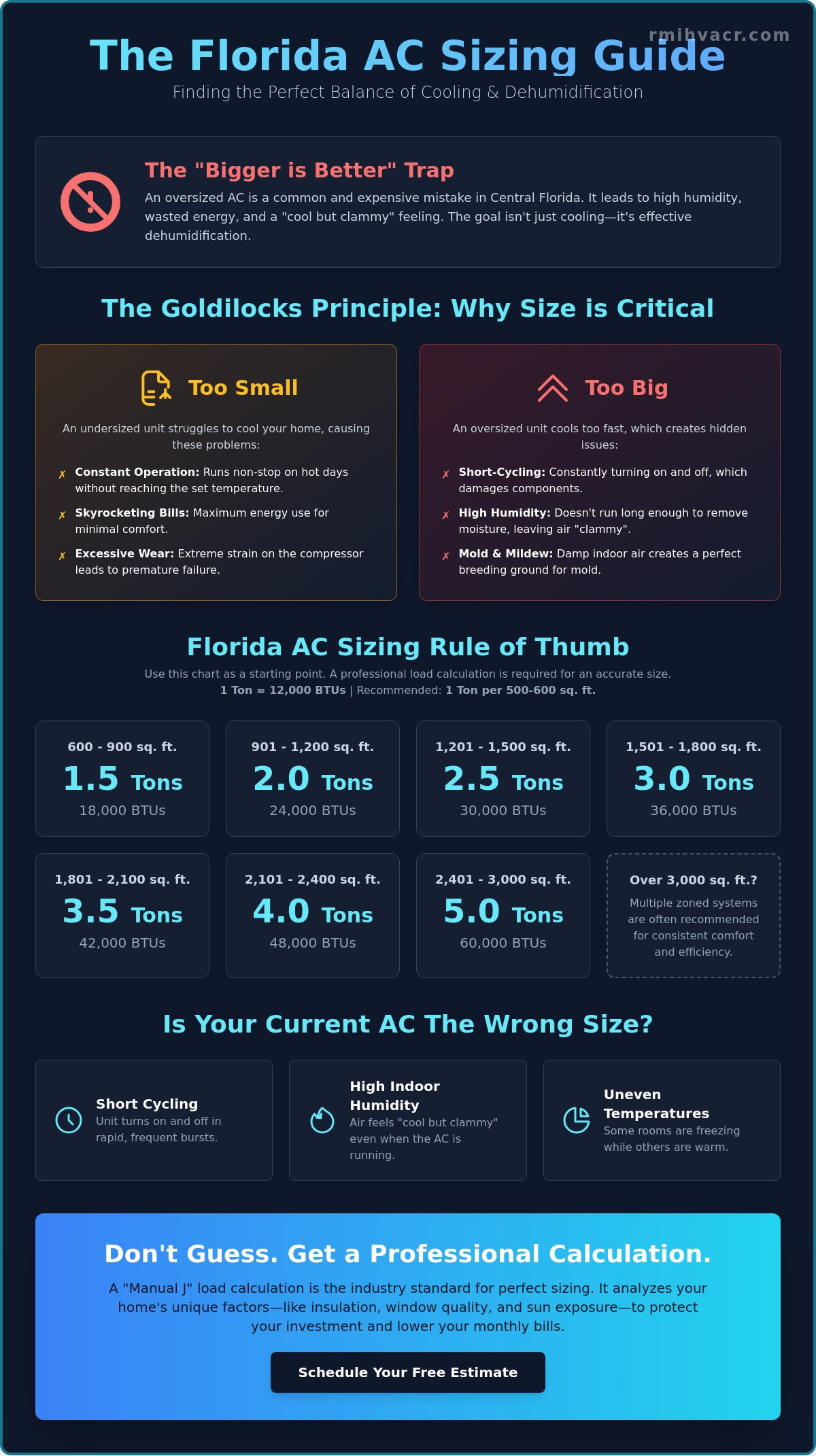
Finding the right fit for your home is not about guesswork. It is about physics. When homeowners ask, “what size ac unit do i need for my house,” they are usually looking for a balance between comfort and cost. In the HVAC world, we use two main terms: BTUs and Tonnage. A BTU, or British Thermal Unit, measures the amount of heat an AC can remove from your home in one hour. Tonnage is simply a larger unit of measurement; one ton equals 12,000 BTUs. Understanding these air conditioning principles is the first step toward a reliable installation.
Many people assume that a larger unit will cool the house faster. This is the most expensive mistake you can make. A system that is too big will satisfy the thermostat quickly but fail to remove moisture. In Central Florida, cooling is only half the job. Your system must also act as a giant dehumidifier. Proper sizing ensures the unit runs long enough to pull water out of the air. This protects your home from rot and extends the life of your equipment. A perfectly sized system runs efficient cycles that keep your utility bills predictable and your family comfortable. Homeowners seeking similar expert support can rely on Comfort Boys Air and Heating for comprehensive residential and commercial HVAC solutions.
What Happens if Your AC is Too Small?
An undersized unit is a recipe for exhaustion. Because it lacks the capacity to move enough heat, it will run continuously without ever reaching your desired temperature. This “never-ending run-time” leads to skyrocketing energy bills and puts immense strain on the compressor and blower motor. On a 95-degree Orlando afternoon, a small unit simply cannot keep up. You end up paying for maximum electricity while remaining uncomfortably warm. This constant operation leads to premature mechanical failure and frequent repairs.
The Hidden Dangers of an Oversized AC Unit
Oversized units suffer from a problem called short-cycling. This means the system blasts cold air, hits the target temperature in minutes, and shuts down. It repeats this cycle dozens of times a day. This frequent starting and stopping is the hardest thing you can do to an electrical motor. It kills efficiency and leaves you with a “cool but clammy” feeling. Since the unit does not run long enough to dehumidify, your indoor air stays heavy and wet. This creates a perfect environment for mold and mildew growth. Investing in a professional air conditioning installation ensures your system is sized perfectly for your specific floor plan.
Calculating Your Ballpark Figure: Square Footage and BTU Basics
When you start researching what size ac unit do i need for my house, the square footage of your property is the most logical place to begin. In our region, a common rule of thumb is to allocate one ton of cooling capacity for every 500 to 600 square feet of living space. This estimate helps you visualize the scale of the system required. However, these figures are just the foundation of a reliable quote. Since we opened our doors in 1999, we’ve learned that older Central Florida homes often have unique requirements due to settled insulation or dated window seals. We use our historical experience to refine these ballpark numbers into a dependable plan for your comfort.
Capacity is measured in BTUs, or British Thermal Units. For every 12,000 BTUs of cooling power, the industry assigns one “ton” of capacity. This term doesn’t refer to the weight of the equipment; it refers to the amount of heat the system can remove in an hour. The U.S. Department of Energy provides basic guidelines for sizing and selecting a room air conditioner, but whole-home central systems require a more detailed look at your specific architecture.
Standard AC Sizing Chart for Florida Homes
This table provides a general starting point for residential properties in our climate. If your home exceeds 3,000 square feet, it’s common to install multiple zoned systems to maintain consistent temperatures throughout the house.
| Home Square Footage | Recommended Tonnage | BTU Capacity |
|---|---|---|
| 600 – 900 sq. ft. | 1.5 Tons | 18,000 BTUs |
| 901 – 1,200 sq. ft. | 2.0 Tons | 24,000 BTUs |
| 1,201 – 1,500 sq. ft. | 2.5 Tons | 30,000 BTUs |
| 1,501 – 1,800 sq. ft. | 3.0 Tons | 36,000 BTUs |
| 1,801 – 2,100 sq. ft. | 3.5 Tons | 42,000 BTUs |
| 2,101 – 2,400 sq. ft. | 4.0 Tons | 48,000 BTUs |
| 2,401 – 3,000 sq. ft. | 5.0 Tons | 60,000 BTUs |
Why Professionals Use the Manual J Load Calculation
Square footage tells only part of the story. A professional AC installation depends on a Manual J Load Calculation. This process accounts for several variables that a simple chart ignores. We look at the “U-factor” of your windows and the “R-value” of your attic insulation. We even consider the direction your home faces. A living room with large, west-facing windows will absorb significantly more heat during a Florida sunset than a north-facing room. Internal loads also matter. The number of occupants and the heat generated by your kitchen appliances change the math. By measuring these specific details, we ensure you don’t pay for capacity you won’t use. If you’re ready for an accurate assessment, scheduling a sizing assessment is the best way to protect your long-term investment.
The Central Florida Factor: Why Local Climate Changes the Math
In Central Florida, calculating what size ac unit do i need for my house requires more than just looking at the thermostat. We have to balance two distinct types of heat: sensible and latent. Sensible heat is the actual temperature of the air, while latent heat refers to the moisture or humidity level. Our local environment is unique because we deal with extreme levels of both. A system that only focuses on lowering the temperature without addressing the heavy moisture in the air will leave your home feeling sticky and uncomfortable. Since 1999, we’ve focused on sizing systems that tackle both loads simultaneously to ensure a truly dry and cool environment.
Orlando’s afternoon thunderstorms also play a major role in your system’s workload. When a storm rolls through, the temperature drops, but the humidity spikes. This creates a challenging scenario for an improperly sized unit. Additionally, the “sun load” on your property can change your requirements significantly. Large, west-facing windows can add up to half a ton of heat load to a single room. If your home in Kissimmee or Winter Park has older insulation, your system has to work even harder to fight off the radiant heat from the roof. We take these specific local variables into account to ensure your capacity is exactly right.
Dehumidification: The Unsung Hero of Sizing
A properly sized unit must run long enough to pull gallons of water out of your indoor air every day. If the unit is too large, it satisfies the temperature setting too quickly and shuts off before the dehumidification process is complete. This is why we often recommend variable-speed compressors for Florida’s fluctuating climate. When reviewing a room air conditioner sizing guide, you’ll see that experts suggest increasing capacity for sunny rooms. This principle is even more critical for whole-home systems. Getting this right prevents that “musty” smell and protects your furniture from mold. Determining what size ac unit do i need for my house is ultimately a strategy for moisture control.
Zoning and Ductwork in Florida Architecture
Florida homes often feature vaulted ceilings and open floor plans that create “hot spots” if the air isn’t distributed correctly. Two-story homes are especially prone to uneven cooling. Your ductwork must be able to handle the volume of air your new unit provides. If you increase your tonnage without updating your ducts, you’ll face noisy vents and restricted airflow. Evaluating the health of your existing air conditioning infrastructure is a vital first step. We ensure your ductwork capacity matches your new unit to maximize efficiency and comfort in every room.
Signs Your Current AC Unit is the Wrong Size
Identifying the symptoms of a mismatched system is the first step toward a more comfortable home. If you often ask yourself “what size ac unit do i need for my house” while dealing with a clammy living room, your current equipment is likely sending you signals. Short cycling is a primary indicator. If your unit shuts down after only 5 or 10 minutes of operation, it is likely oversized. It hits the thermostat setpoint so quickly that it never has a chance to dehumidify the air. This leaves your home feeling cold but wet, which is a common frustration for Central Florida homeowners.
Uneven temperatures are another clear sign of sizing issues. You might find that the master bedroom is freezing while the kitchen remains stiflingly hot. This suggests the unit’s capacity or the ductwork design is not capable of distributing air evenly across your floor plan. Additionally, if your indoor humidity stays consistently above 55 percent, the system is failing its most important Florida duty. This inefficiency often results in “sticker shock” when you compare your utility bills to neighbors with similar homes. Determining what size ac unit do i need for my house helps you avoid these performance gaps and the high costs associated with them.
Troubleshooting Sizing Issues Before Replacing
Before committing to a total replacement, it is wise to investigate other variables that mimic sizing problems. Sometimes the issue is not the unit size but the infrastructure supporting it. A hidden duct leak or degraded attic insulation can cause the same hot spots as an undersized unit. A professional maintenance tune-up can help diagnose whether the problem is mechanical or related to capacity. In some cases, a furnace or air handler repair might restore proper airflow and resolve comfort gaps without requiring a completely new system.
The ROI of Right-Sizing Your Next System
Right-sizing your next system offers a substantial return on investment over its 10 to 15 year lifespan. A correctly sized unit runs more efficiently, which directly lowers your monthly energy costs. You also gain improved indoor air quality and better sleep comfort because the humidity is managed correctly. Most importantly, you avoid the “emergency repair cycle.” Strained, undersized units fail more often because they never stop running during a heatwave. By choosing the right capacity now, you ensure long-term reliability for your family. If you are noticing these red flags, scheduling a system diagnostic is the most reliable way to confirm your needs.
Choosing Your System with Confidence: The Roberts Mechanical Approach
Selecting a new HVAC system is a significant investment in your family’s daily comfort. Since 1999, RMI Heating and Air Conditioning has focused on a “Measure Twice, Install Once” philosophy to ensure every Central Florida home receives a perfectly matched system. We don’t rely on guesswork or outdated rules of thumb. When you ask what size ac unit do i need for my house, our team provides a precise answer based on the unique architecture of your property. We understand that a dependable installation starts with accurate data and ends with a system that runs efficiently for years to come.
Our commitment to professional service extends to our physical preparedness. RMI Heating and Air Conditioning service vehicles are fully stocked with the specialized equipment and inventory needed to handle sizing-related ductwork adjustments on the spot. If your new high-efficiency unit requires a larger return or modified supply lines to handle the airflow, we’re ready to perform those tasks immediately. This respects your time and ensures your AC replacement is completed correctly the first time without unnecessary delays.
The RMI Heating and Air Conditioning Sizing Consultation Process
During our on-site load calculation visit, we perform a comprehensive assessment of your home’s thermal envelope. We examine your insulation levels, window quality, and sun exposure to determine the exact cooling and dehumidification needs of your space. We also review the latest high-efficiency SEER2 options tailored to your specific budget. As of 2026, new systems in Florida must meet a minimum of 14.3 SEER2 for units under 45,000 BTU. We’ll guide you through these regulations and explain the benefits of the newer, lower Global Warming Potential (GWP) refrigerants now standard in the industry. Our pricing is transparent, and our goal is to provide a solution that lowers your monthly utility costs.
Ready for a Cooler Home?
Mastering the essentials of AC sizing is the only way to ensure your home stays cool, efficient, and dry during a brutal Florida summer. Professional sizing is not just a technical requirement; it’s a strategy to protect your equipment from premature wear and your home from excessive humidity. RMI Heating and Air Conditioning is proud to serve residents in Orlando, Clermont, and the surrounding communities with the same reliability we’ve offered for over two decades. You don’t have to settle for a “cool but clammy” home or high energy bills from an oversized unit. Schedule your expert AC sizing consultation today!
Protect Your Comfort with Professional Sizing
Choosing the right HVAC capacity is the final step in securing your home’s long-term comfort and efficiency. You now understand that while square footage provides a basic starting point, factors like sun exposure and Central Florida’s extreme humidity require a precise, expert approach. Relying on a professional assessment ensures you never overpay for power you don’t need or suffer through the “cool but clammy” air caused by an oversized unit. RMI Heating and Air Conditioning has spent years helping local families answer the question, what size ac unit do i need for my house, with total accuracy.
Our team arrives in fully stocked trucks, ready to handle every detail of your installation or ductwork adjustment. We take the stress out of technical decisions by providing clear, dependable solutions that lower your monthly utility costs. Don’t leave your indoor air quality to chance. Get a Professional AC Sizing Quote from RMI Heating and Air Conditioning today to secure a cooler, drier future for your property. We look forward to providing the reliable service you deserve.
Frequently Asked Questions
Is it better to have a slightly larger or slightly smaller AC unit?
Neither is ideal, but an oversized unit is particularly problematic in Florida’s humid climate. A system that is too large will reach the set temperature too quickly and shut off before it has a chance to remove moisture from the air. This leaves your home feeling sticky and clammy. A perfectly sized unit runs long, efficient cycles that keep your indoor environment both dry and comfortable.
How much square footage does a 3-ton AC unit cover in Florida?
A 3-ton AC unit typically covers between 1,500 and 1,800 square feet in Central Florida homes. This estimate assumes standard insulation and average window exposure. If your property has vaulted ceilings or large west-facing windows, the actual coverage might decrease. This is why we perform detailed assessments to accurately determine what size ac unit do i need for my house rather than relying on generic charts.
What is a Manual J calculation and do I really need one?
A Manual J calculation is the professional industry standard for determining the exact heat load of your home. It accounts for square footage, insulation levels, window types, and local climate data. Yes, you really need one before any new installation. Without this data, you risk installing a system that is either inefficient or incapable of handling Orlando’s peak summer heat and humidity levels. For homeowners in other markets, HVAC Inspections Los Angeles offers similar professional evaluations to ensure long-term system reliability.
Can I just replace my old AC with the same size unit?
You should not assume your old unit was the correct size for your current needs. Over the years, you may have added better insulation or energy-efficient windows that lower your cooling requirements. Conversely, if your old unit struggled to keep up on hot afternoons, it might have been undersized from the start. We always re-evaluate the load to ensure your new installation provides dependable, long-term comfort.
Does a higher SEER2 rating mean I need a different size unit?
A higher SEER2 rating measures energy efficiency, not cooling capacity. A 3-ton unit with a high SEER2 rating provides the same amount of cooling as a 3-ton unit with a lower rating; it simply uses less electricity to do the job. You still need the correct tonnage to handle the heat load of your specific floor plan. The rating helps you save money on monthly utility bills over time.
How do high ceilings affect the AC size I need for my house?
High ceilings increase the total volume of air in a room, which requires more cooling power to maintain comfort. While a room might have a small footprint in square feet, the extra vertical space adds significantly to the heat load. We adjust our calculations to account for this extra volume. This ensures your system can maintain a consistent temperature from floor to ceiling when deciding what size ac unit do i need for my house.
What happens if I put a 5-ton AC on 3-ton ductwork?
Mismatched equipment and ductwork lead to serious mechanical failures and noisy operation. A 5-ton unit trying to push air through 3-ton ducts creates excessive static pressure. This causes restricted airflow and can lead to frozen evaporator coils or a premature blower motor failure. We ensure your ductwork capacity matches your system tonnage to protect your investment and maintain the high standards of our professional installations.