
HVAC Replacement Orlando: The Complete 2026 Homeowner’s Guide

According to the U.S. Department of Energy, heating and cooling account for roughly 52% of a home’s energy usage, but in Central Florida, that figure often spikes during our relentless 90-degree summer months. If your system is over 10 years old, planning for an hvac replacement orlando is no longer just a luxury; it’s a financial strategy to stop the drain on your bank account. We understand the frustration of watching your energy bills climb while your living room remains humid and uncomfortable. It’s stressful to worry about whether a technician is giving you a fair price or simply trying to hit a sales quota.
You deserve to feel confident in your investment. This guide provides the expert insights we’ve gathered since 1999 to help you choose a cost-effective, high-efficiency system tailored for the unique humidity of the Orlando area. We’ll break down the latest 2026 efficiency standards, explain how to spot “sales fluff,” and show you how to achieve consistent cooling in every room of your home. By the end of this guide, you’ll have the tools to make a reliable decision that keeps your family comfortable for years to come.
Key Takeaways
- Learn why the Central Florida climate limits system lifespan to 10-12 years and how to identify the “humidity red flag” before a total breakdown.
- Apply the simple “$5,000 Rule” to determine if a repair is a smart investment or if a full hvac replacement orlando is the more cost-effective choice.
- Discover the SEER2 “sweet spot” and compare heat pumps versus straight cool systems to find the most efficient fit for Orlando’s unique weather.
- Navigate the essential 2026 permitting requirements and pre-installation inspections to ensure your new system is safe, legal, and high-performing.
- Gain peace of mind by understanding how NATE-certified expertise and two decades of local experience deliver cooling you can truly count on.
Recognizing the Signs: When to Prioritize HVAC Replacement in Orlando
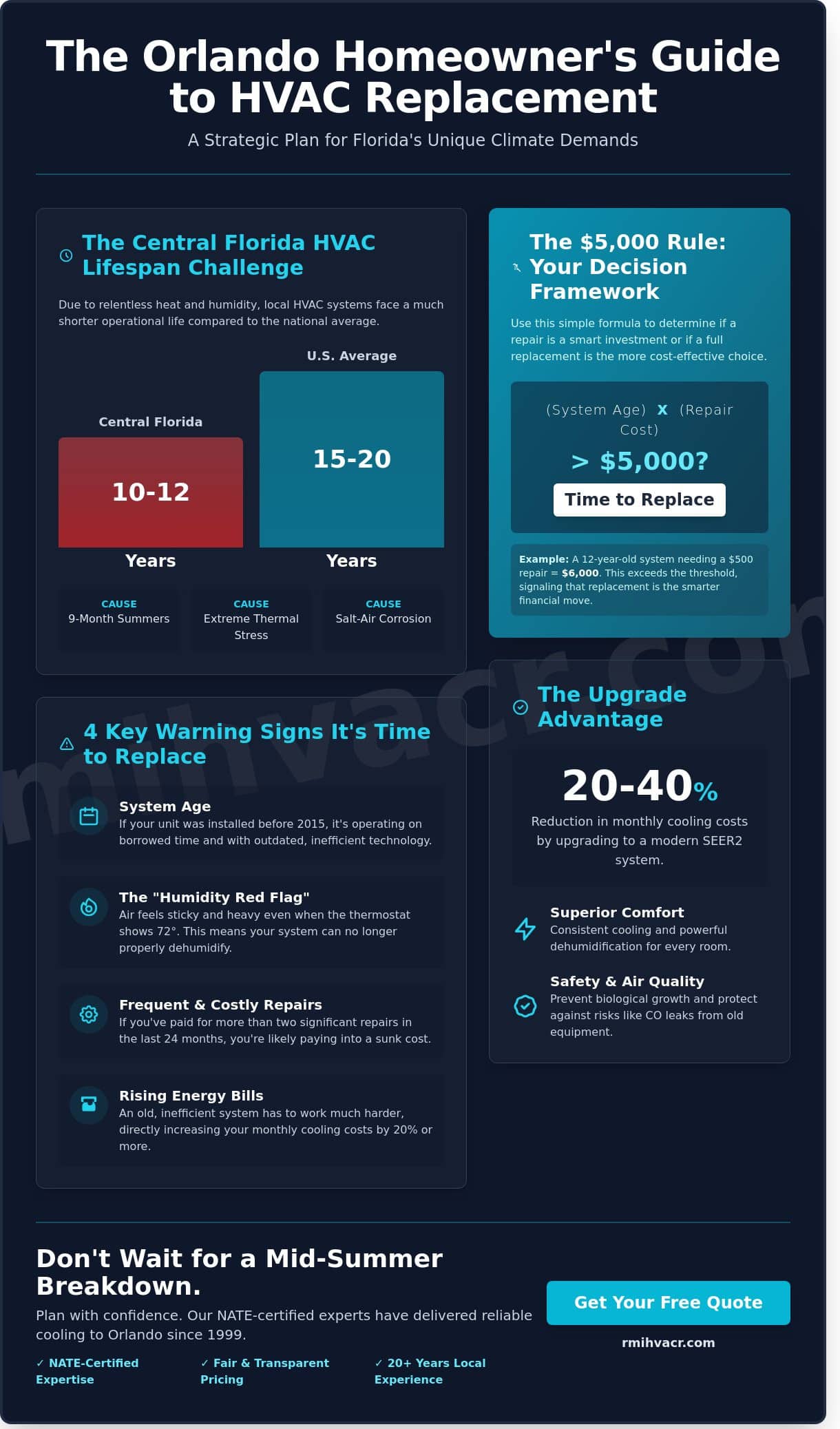
Most HVAC systems in the United States last between 15 and 20 years. However, Central Florida homeowners face a different reality. Because of our 24/7 cooling demands, a typical unit here has a functional lifespan of just 10 to 12 years. Constant operation during 9-month summers puts immense strain on the compressor and fan motors. If your system was installed before 2015, it is likely approaching the end of its reliable service life.
One of the most common warning signs is the “Humidity Red Flag.” You might notice that your thermostat reads 72 degrees, yet the air feels heavy and sticky. When indoor humidity levels consistently climb above 55%, it means your evaporator coil is no longer effectively stripping moisture from the air. This inefficiency often precedes a total mechanical failure. Tracking your repair history is also essential for a smart hvac replacement orlando strategy. If you have paid for more than two significant repairs in the last 24 months, you are likely throwing money into a “sunk cost” rather than investing in a long-term solution.
Energy consumption provides the final piece of the puzzle. Systems manufactured a decade ago often operate at 14 SEER or lower. Modern SEER2 standards, which became mandatory in 2023, offer significantly higher efficiency. Upgrading from an aging unit to a high-efficiency 18 SEER2 model can reduce monthly cooling costs by 20% to 30% based on Department of Energy data.
The Impact of the Central Florida Climate on System Longevity
Orlando’s heat index frequently exceeds 100 degrees for more than 60 days each year. This extreme thermal stress causes the oil in your compressor to break down faster than in cooler climates. Additionally, while Orlando is inland, salt-air particles from both coasts frequently travel across the peninsula. These particles cause “pitting” corrosion on aluminum fins and copper coils. While environmental factors vary by region, the commitment to proactive maintenance is a priority for experienced providers like E.R.S. Heating & Cooling, who understand how climate stress impacts long-term performance. Waiting until a system fails in the middle of a July heatwave often results in longer wait times and higher emergency costs. Trusted since 1999, we recommend proactive planning to ensure cooling you can count on.
Safety and Air Quality Warning Signs
An aging HVAC system isn’t just an efficiency problem; it’s a health and safety concern. Old air handlers can become breeding grounds for biological growth if the condensation drainage slows down. For homes with gas heating components, a cracked heat exchanger can leak carbon monoxide into your living space. If you are noticing persistent dust, odd smells, or rising allergy symptoms, you may still be in the diagnostic phase. Many homeowners begin by seeking air conditioning repair to address these symptoms. However, if the technician finds structural damage to the coils or heat exchanger, a full hvac replacement orlando is the safest path forward for your family.
The Repair vs. Replace Dilemma: A Decision Framework for 2026
Deciding whether to fix an aging unit or invest in an hvac replacement orlando homeowners often find themselves at a crossroads. We recommend using the $5,000 Rule to remove the guesswork. Multiply the age of your system by the cost of the estimated repair. If the total exceeds $5,000, a replacement is usually the more financially sound choice. For example, a 12 year old system needing a $500 repair equals $6,000. This exceeds the threshold and suggests your money is better spent on new equipment.
The refrigerant landscape has changed significantly. As of January 2025, the EPA mandated a transition to A2L refrigerants with lower Global Warming Potential. If your current system uses R-22 or even R-410A, service costs are rising. Supplies of these older refrigerants are tightening, which means a simple recharge could cost 200% more than it did five years ago. Beyond the cost, there is the “Comfort Gap” to consider. An old, repaired unit often struggles to maintain a consistent 72 degree temperature when Orlando humidity peaks at 90%. A repair might keep the air moving, but it rarely restores the dehumidification power of a factory new system.
Analyzing Repair Costs vs. Long-term Energy Savings
Modern systems offer a high ROI through monthly utility reductions. Since the SEER2 standards took effect in 2023, new units are at least 7% more efficient than previous models. Many homeowners see their cooling costs drop by 20% to 40% immediately after an hvac replacement orlando. Modern inverter technology is a key driver here. Unlike old single stage compressors that blast on and off, inverters ramp up slowly. This lowers starting amperage and reduces mechanical wear. If you are unsure about your system’s health, our team provides professional evaluations through our air conditioning replacement services to help you calculate your potential savings.
Warranty Considerations: Protection You Can Count On
A major repair on an out of warranty system is a gamble. You might pay for a new compressor today, only to have the fan motor fail three months later. New installations typically come with 10 year parts warranties, providing a decade of predictable costs. At RMI HVACR, we’ve been a trusted name in Florida since 1999. We back our work with robust labor guarantees that provide the security Orlando families need. 2026 is a critical year for this transition. With new efficiency standards fully in place, upgrading now ensures your home value is protected with a system that meets all future regulatory requirements. You can count on us to guide you through these technical choices with total transparency.
Choosing the Right System for Orlando’s Humidity and Heat
Selecting a new unit involves more than just picking a brand. In Central Florida, your choice dictates your comfort and energy expenses for the next 15 years. Since January 1, 2023, the Department of Energy requires a minimum of 14.3 SEER2 for all residential systems in the South. While this is the legal floor, the sweet spot for an hvac replacement orlando project is typically between 16 and 18 SEER2. These mid-to-high efficiency systems provide a faster return on investment through lower monthly utility bills without the massive price tag of ultra-high-end 25 SEER2 units.
Heat pumps are the logical choice for our climate. Unlike straight cool systems that rely on inefficient electric heat strips, heat pumps move heat out of your home in July and pull it in during our brief January cold snaps. Since Orlando temperatures rarely drop below freezing for extended periods, a heat pump operates at peak efficiency year-round. It’s a dependable solution that RMI HVACR has recommended since 1999 to keep local families comfortable.
We highly recommend variable-speed blowers for superior dehumidification. These motors don’t just blast air at one speed; they ramp up and down based on real-time demand. This allows the system to run longer, lower-intensity cycles. These extended cycles are far more effective at removing the heavy moisture typical of Florida afternoons, preventing that sticky feeling inside your living room.
Avoid the common mistake of thinking bigger is better. An oversized system will cool your home too quickly and shut off before it has a chance to remove humidity. This leads to uneven temperatures and potential mold growth in your ductwork. Trusting a professional to size your system correctly is the only way to ensure long-term reliability.
The Critical Role of Manual J Load Calculations
RMI HVACR technicians perform a Manual J load calculation for every hvac replacement orlando. This process accounts for your home’s square footage, attic insulation R-values, and the orientation of your windows. We don’t guess based on your old unit’s size because your home’s needs likely changed since the original installation. An oversized unit short-cycles, leaving your home humid and clammy. Proper sizing ensures the evaporator coil stays cold long enough to condense and drain water vapor effectively.
Advanced Air Quality and Smart Tech Integration
A new installation is the best time to upgrade your indoor air quality. We often integrate UV lights directly into the air handler to prevent biological growth on the coils. Combining this with MERV 13 filtration helps capture allergens and dust that traditional filters miss. Modern systems also pair perfectly with smart thermostats. These allow you to adjust your Orlando home’s climate from your phone, ensuring you never waste energy cooling an empty house. Explore our air conditioning installation page for equipment options that fit your specific needs.
Navigating the Replacement Process: Permits, Rebates, and Logistics
Orlando permitting is a non-negotiable step in our process. Professional filing protects you by ensuring the installation meets the latest Florida Building Code requirements. We manage the entire permit application process with the local building department. This prevents future headaches during home inspections and ensures your manufacturer warranty stays valid. Our team arrives in fully stocked trucks, a hallmark of our service since 1999, so we have every part needed to finish your job efficiently.
Local Orlando Utility Rebates and Financing Options
Saving money on a new system is easier when you leverage local incentives. In 2026, Duke Energy and OUC provide rebates for high-efficiency upgrades that can total between $100 and $500 depending on the SEER2 rating. You can also take advantage of the federal Energy Efficient Home Improvement Credit, which offers a tax credit of up to $2,000 for qualified heat pump installations. Because we’re a certified contractor, we help you navigate the specific documentation required to claim these rewards. We also offer flexible financing solutions to help you get the comfort you need without draining your savings.
Preparing Your Home for a Seamless Transition
You can expect the hvac replacement orlando process to take between 4 and 8 hours. Please clear a three-foot path to the indoor air handler and move any lawn furniture or debris away from the outdoor condenser area. We’ll handle the heavy lifting, but keeping pets in a separate room ensures their safety while our technicians move through the house. Once the unit is in place, we perform rigorous post-installation testing. This includes static pressure checks and refrigerant charge verification to guarantee peak performance. We won’t leave until we’ve conducted a final walkthrough to show you how to manage your new system’s features and maintenance needs.
Why Orlando Trusts Roberts Mechanical for HVAC Replacement
Roberts Mechanical (RMI) has been a fixture in the Central Florida community since 1999. For over 25 years, we’ve helped homeowners manage the intense humidity and heat that define our region. Our NATE-certified technicians deliver “Cooling You Can Count On” through every step of the process. We understand that a new system is a major investment, which is why we’ve streamlined our operations to prioritize your time and comfort. Our team doesn’t just install equipment; we provide tailored solutions based on two decades of local climate expertise.
The RMI Difference is built on two practical pillars: preparedness and speed. Every service vehicle in our fleet is a “fully stocked truck,” meaning we carry the most common parts and tools to avoid unnecessary delays. We also commit to a 48-hour service window for our clients. This ensures you aren’t left waiting in a sweltering house for days on end. From your initial onsite consultation to the final quality check, our team provides comprehensive support that larger, impersonal franchises often skip. We take pride in being a reliable partner for your hvac replacement orlando project.
A Legacy of Reliability in Central Florida
Our residential and commercial expertise extends across Orlando, Kissimmee, and Sanford. We’ve spent decades refining our approach to ensure your comfort always comes first. Whether you’re upgrading an old unit or installing a high-efficiency system for a new build, our local knowledge makes the difference. We understand how Florida sand, salt air, and humidity impact system longevity. You can protect your new investment with our HVAC maintenance plans to ensure your system runs at peak efficiency for years to come.
Get Started with Your Free Replacement Estimate
Scheduling your hvac replacement orlando shouldn’t be a stressful experience. We offer no-obligation onsite consultations where our experts evaluate your home’s specific cooling needs and ductwork integrity. Our quoting process is transparent and benefit-driven, focusing on long-term energy savings rather than just the sticker price. We provide clear data on SEER2 ratings and expected performance so you can make an informed decision for your family. Our goal is to fix the problem correctly the first time. Contact RMI HVACR today for your Orlando HVAC replacement quote and experience the professional service your home deserves.
Secure Your Home Comfort for 2026 and Beyond
Investing in a new system isn’t just about staying cool; it’s about long-term efficiency and superior indoor air quality. By 2026, modern units offer significant energy savings compared to models from just a decade ago. You’ve learned how to spot the early warning signs of mechanical failure and how to navigate the complex permit and rebate process. Choosing a system specifically designed for Florida’s intense humidity ensures your home stays dry and comfortable through every summer heatwave. It’s a proactive step that prevents emergency breakdowns when you need cooling the most.
When you’re ready to move forward with hvac replacement orlando, trust the team that’s been serving this community since 1999. Our NATE-certified experts arrive in fully stocked trucks to ensure your installation happens quickly and correctly the first time. We focus on reliable, high-performance solutions that protect your investment and lower your monthly utility bills. Don’t wait for your old unit to fail in the middle of a Florida afternoon. Take control of your home’s climate today with a partner dedicated to your total satisfaction.
Request Your Free HVAC Replacement Estimate
You deserve a home that feels like a perfect oasis every single day of the year.
Frequently Asked Questions
How much does a typical HVAC replacement cost in Orlando in 2026?
An HVAC replacement in Orlando typically costs between $6,000 and $13,000 based on 2024 industry data from Angi and HomeAdvisor. Your final price depends on the square footage of your home and the SEER2 efficiency rating you select. Our certified experts provide a detailed, transparent estimate before any work begins. We have provided dependable service since 1999 to ensure homeowners receive the best value for their investment.
How long does it take to replace an entire AC system in a Florida home?
A standard installation usually takes 4 to 8 hours to complete. If your home requires complex ductwork modifications or structural repairs, the process can extend to 2 business days. Our team arrives in fully stocked trucks to ensure we have every tool and part needed for a quick transition. We prioritize your comfort by working efficiently to restore your cooling as fast as possible.
Can I just replace the outdoor unit and keep my old indoor air handler?
You should not replace only the outdoor unit because modern SEER2 standards require a matched indoor air handler to function correctly. Mixing old and new components often voids the manufacturer’s 10 year warranty and can reduce system efficiency by 25% or more. Our technicians ensure your entire system is synchronized for reliable performance. This professional approach prevents premature breakdowns and keeps your home comfortable year round.
What is the best SEER2 rating for an Orlando home to maximize ROI?
A SEER2 rating between 16 and 18 offers the best return on investment for Florida homeowners. While the 2023 federal minimum for the Southeast is 14.3 SEER2, choosing a higher rating can reduce your annual cooling costs by an additional 15%. We help you calculate the specific payback period for your property. Our goal is to balance upfront costs with long term energy savings you can count on.
Are there any tax credits or utility rebates available for new AC units in Florida?
The federal Energy Efficient Home Improvement Credit provides a tax credit of up to $2,000 for qualified heat pump installations through 2032. Local utilities like Duke Energy and OUC also offer rebates ranging from $100 to $500 for high efficiency upgrades. Our team helps you identify every available incentive to make your upgrade more affordable. These programs significantly lower the net cost of your new equipment.
How do I know if my ductwork needs to be replaced along with my HVAC unit?
Your ductwork likely needs replacement if it is over 15 years old or shows signs of 20% air leakage. We check for collapsed sections, mold growth, and degraded insulation during our initial inspection. New equipment attached to leaky ducts won’t cool your home effectively. Replacing damaged ducts ensures your new system reaches its full efficiency potential and improves your indoor air quality immediately.
What is the best time of year to schedule an HVAC replacement in Orlando?
The best time to schedule an hvac replacement orlando is during the shoulder seasons of March through May or October through December. Demand is lower during these months, which allows for more flexible scheduling and faster service. Avoiding the peak summer heat ensures you aren’t stuck in a 95 degree house while waiting for an installation. We have provided reliable scheduling for local families since 1999.
Will a new HVAC system really lower my Orlando electric bill significantly?
Upgrading an old 10 SEER unit to a new 16 SEER2 system can lower your monthly cooling costs by 40% according to Department of Energy estimates. Modern inverter technology allows the system to run at lower speeds, which uses less electricity while maintaining a consistent temperature. You will notice the difference on your first utility bill. It is an efficient way to manage your budget while staying cool.