
How to Prevent HVAC Breakdown in Summer: The Florida Homeowner’s Guide
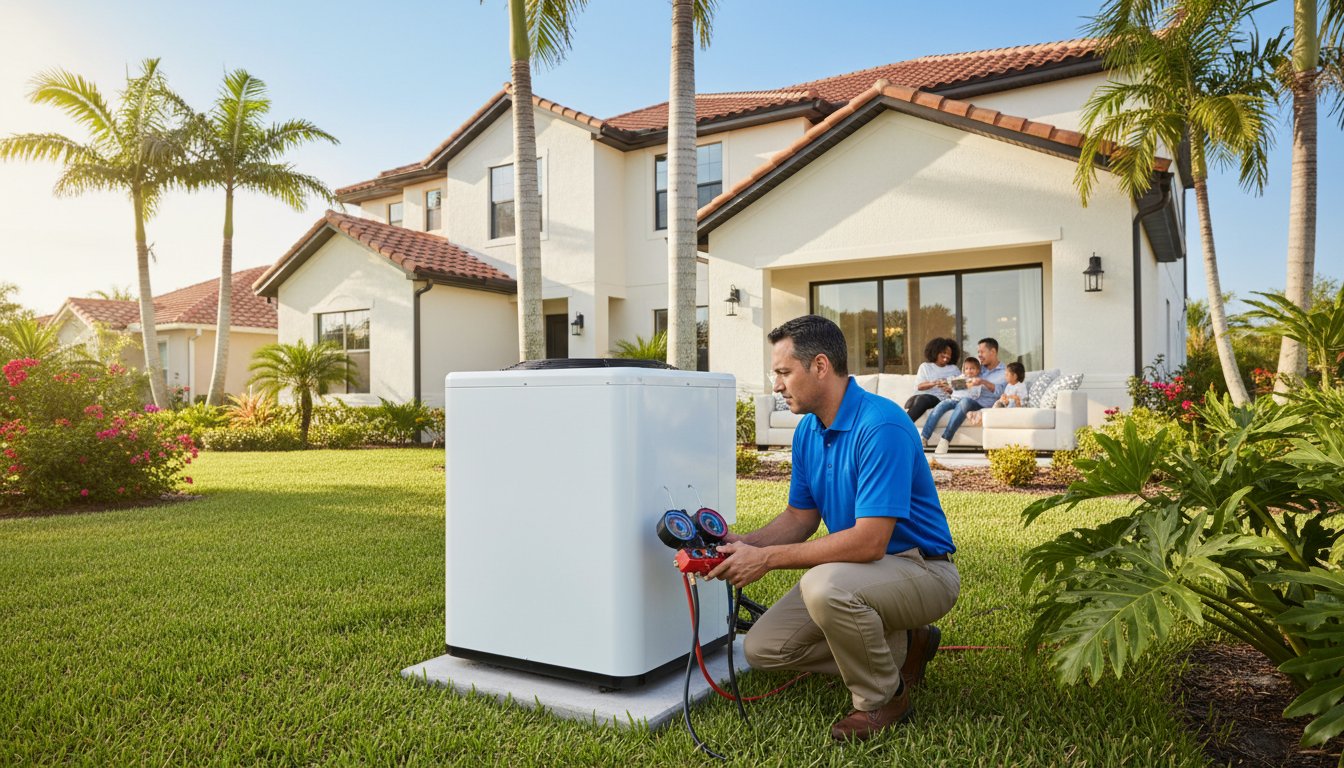
It’s 9 PM on a sweltering July evening in Orlando, and the only sound you hear is the drip of sweat on your forehead. The reassuring hum of your air conditioner has vanished, leaving a heavy, 85-degree silence in its place. Your home, once a cool sanctuary, has become an unbearable sauna, and the thought of a costly 24/7 emergency repair bill is already causing a headache.
That feeling of panic is a real and valid fear for every Florida homeowner. You depend on your HVAC system to work reliably, and when it doesn’t, it disrupts your comfort, your sleep, and your budget. This guide is your expert-backed plan to prevent hvac breakdown in summer and keep that nightmare scenario from becoming your reality.
We’re pulling back the curtain on the professional maintenance secrets and straightforward DIY steps that keep Central Florida AC units running efficiently through the 2026 heat and beyond. You’ll discover how to lower your monthly utility bills, extend the life of your expensive investment, and gain the peace of mind that comes with cooling you can count on, all season long.
Key Takeaways
- Discover why Central Florida’s intense humidity creates unique stress on your AC, leading to five common and expensive component failures.
- Learn which monthly DIY checks you can safely perform and which tasks require a certified technician to avoid voiding your warranty.
- Use our step-by-step 2026 survival checklist to proactively prevent hvac breakdown in summer and ensure reliable cooling.
- Understand how a minor part failure can trigger a catastrophic chain reaction and why professional calibration is your best defense.
The Central Florida Summer Stress Test: Why Systems Fail
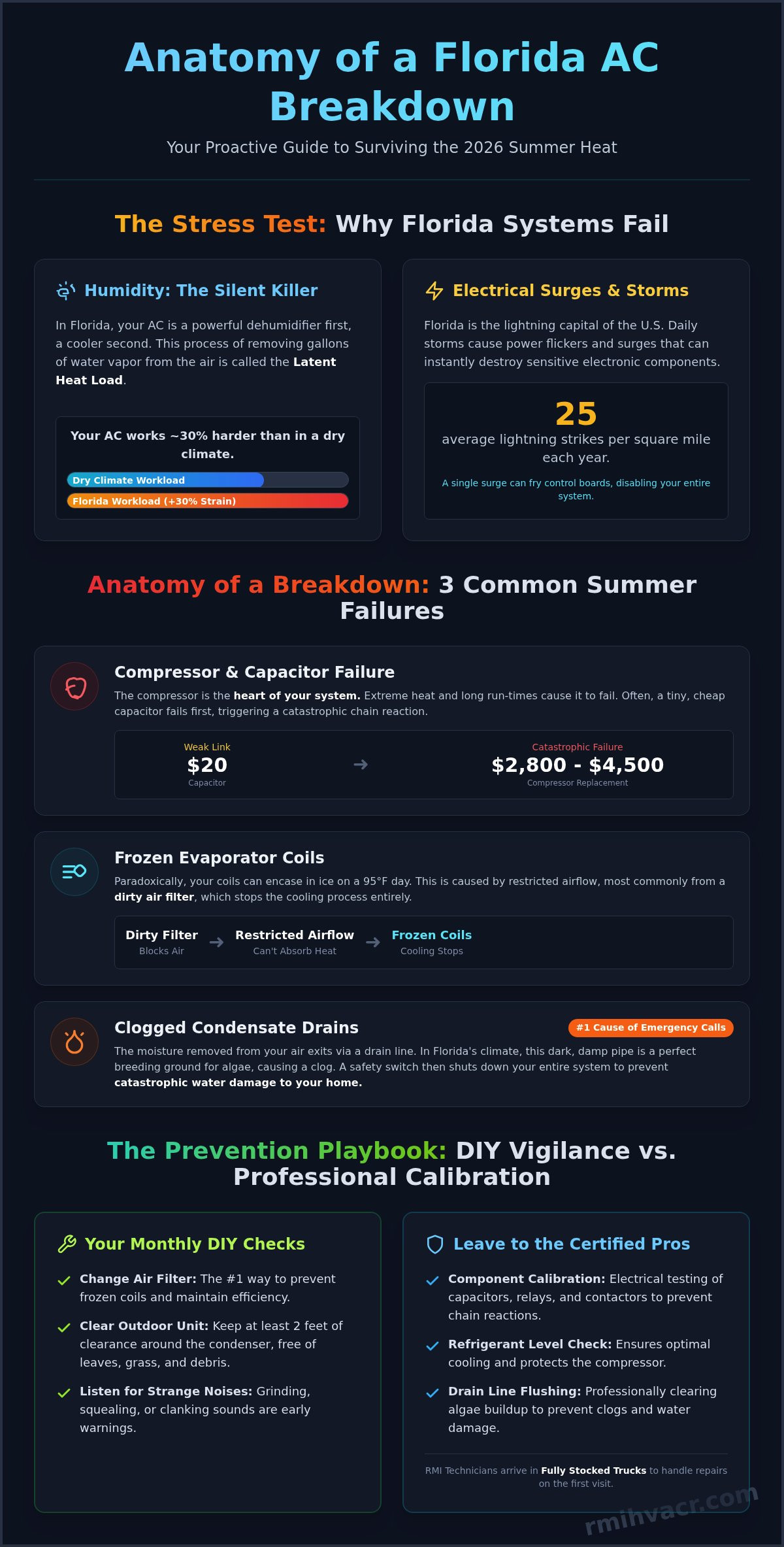
Living in Orlando means paying a “subtropic tax” on your air conditioner. The relentless heat is only half the story. It’s the oppressive, near-constant 90%+ humidity that forces your system to work approximately 30% harder than the same unit in a drier climate like Phoenix. This intense workload creates immense thermal stress, a cycle of constant starting and stopping that fatigues critical electrical components. The longer a heatwave lasts, the greater the risk of failure. Understanding this unique environment is key to being able to prevent hvac breakdown in summer.
As a trusted local provider since 1999, RMI has documented these extreme weather patterns for over two decades. We’ve seen firsthand how our climate pushes equipment to its absolute limit. With energy analysts forecasting that the summer of 2026 will set new records for cooling demand across the state, the strain on your system will be unprecedented. Preparing your home now is not just about comfort; it’s about avoiding an expensive and stressful emergency.
Humidity: The Silent HVAC Killer
Your AC is a powerful dehumidifier first and a cooler second. This process of removing moisture is incredibly energy-intensive. Latent heat load is the energy your system must use to pull gallons of water vapor from the air before it can even begin to lower the temperature. When modern HVAC systems are overwhelmed by moisture, it can lead to biological growth in ductwork and clogged drain pans, creating indoor air quality issues and potential water damage.
Electrical Surges and Summer Storms
Florida isn’t just the Sunshine State; it’s the lightning capital of the U.S., with an average of 25 strikes per square mile each year. These daily afternoon storms cause frequent power flickers and surges that can instantly fry the sensitive electronic control boards in modern, high-efficiency inverter heat pumps. A single surge can disable your entire system. This is precisely why our certified technicians arrive in Fully Stocked Trucks, equipped with the replacement boards and surge protectors needed to get your system back online quickly when a storm causes widespread component failure.
The combination of extreme humidity, thermal stress, and electrical threats makes our local environment a true endurance test for any air conditioner. Recognizing these challenges is the first step to implementing a proactive strategy. The following tips are designed specifically to help you prepare your system for the fight and prevent hvac breakdown in summer, ensuring you have reliable cooling you can count on, no matter what the forecast holds.
The Anatomy of a Breakdown: 5 Common Summer HVAC Failures
Your air conditioner works harder from June through August than at any other time of the year. This relentless demand exposes any weakness in the system, often leading to a sudden and stressful failure. Many homeowners don’t realize that a catastrophic breakdown is rarely a single event. It’s a chain reaction, where the failure of a $20 part, left unchecked, can systematically destroy a $3,000 compressor. Understanding these common failure points is the first step to truly prevent hvac breakdown in summer and protect your investment.
Compressor and Capacitor Failure
Think of the compressor as the heart of your AC system. It’s responsible for circulating refrigerant to move heat from inside your home to the outside. During a 100-degree Florida heat dome, it can run for over 12 hours a day. This extreme workload generates immense heat and pressure, causing older or poorly maintained compressors to seize permanently. The component that gives the compressor its starting jolt of electricity, the capacitor, is often the first to go. These small cylindrical parts degrade quickly in our intense humidity and heat. A key warning sign is a “bulging” or swollen top. By 2026, the average cost to replace a failed compressor in Central Florida is projected to be between $2,800 and $4,500, a staggering cost that often starts with a weak capacitor.
Frozen Evaporator Coils and Clogged Drains
It sounds impossible, but one of the most common summer failures is a block of ice encasing your indoor evaporator coils, even when it’s 95 degrees outside. This happens when airflow is restricted, usually by a dirty air filter. Without enough warm air moving over the super-chilled coils, condensation freezes solid, stopping the cooling process entirely. Meanwhile, the humidity your system removes has to go somewhere. It exits through a condensate drain line, a perfect dark, damp environment for algae to thrive. In fact, a clogged drain line is the #1 cause of emergency AC service calls in Orlando. When it clogs, a safety switch shuts down your entire system to prevent water from backing up and leaking into your ceiling.
Your system will almost always give you warning signs before it stops working. Paying attention to these signals is critical. You can spot trouble early if you notice:
- Unusual Noises: Grinding or squealing can indicate a failing motor or belt.
- Reduced Airflow: Weak or warm air blowing from vents points to issues like a frozen coil or a blower problem.
- Constant Operation: If your AC runs nonstop but never reaches the set temperature, it’s struggling.
- Sudden Bill Increases: A spike in your electric bill means the unit is working inefficiently, a common symptom before a failure.
The financial reality is clear. A preventative service call to clear a drain line might cost around $95, while repairing the resulting water damage and system failure can cost thousands. Understanding the basic principles of energy-efficient heating and cooling helps you recognize when your system is overworking. Ignoring these signs is a costly gamble. A pre-season inspection is the most reliable way to prevent hvac breakdown in summer and ensure your system is ready for the heat. Our certified technicians can diagnose these common failure points before they become emergencies, giving you peace of mind you can count on.
DIY Vigilance vs. Professional Calibration: Finding the Balance
Keeping your air conditioner running smoothly through a Florida summer is a partnership. Your monthly diligence plays a critical role, but it must be balanced with the technical precision only a certified expert can provide. Understanding what you can do versus what you must leave to a professional is the key to reliable, efficient cooling and avoiding costly emergency calls. This balanced approach is the most effective way to prevent hvac breakdown in summer.
The Homeowner’s Monthly Responsibility
Your role as the first line of defense is simple but powerful. Consistent, basic checks can catch over 50% of the issues that lead to system failure. Focus your efforts on three key areas every 30 days:
- Filter Physics: It’s tempting to grab the highest MERV-rated filter for better air quality, but a MERV 13 filter can reduce airflow by up to 30% compared to a standard MERV 8. During peak summer heat, this restriction forces your system to work much harder. Stick to the filter rating recommended by your unit’s manufacturer to ensure optimal airflow.
- Clearance Check: Florida’s lush foliage grows incredibly fast. Your outdoor condenser unit needs space to breathe. Once a month, ensure there is at least a 24-inch clearance on all sides and above the unit. Trim back any encroaching vines, shrubs, or tree branches that could obstruct airflow and cause the compressor to overheat.
- Thermostat Discipline: The “Set it and Forget it” rule is your best friend for efficiency. Constantly adjusting your thermostat from 72°F to 78°F and back again creates unnecessary strain. Pick a comfortable, energy-saving temperature, like 78°F, and let the system maintain it. This consistency saves energy and reduces wear on components.
What Only a Certified RMI Expert Can Do
Certain tasks are complex, require specialized diagnostic tools, and can be dangerous if performed incorrectly. Attempting them yourself can void your manufacturer’s warranty. These are the jobs for a trusted, certified technician:
- Refrigerant Level Testing: A system that is even 10% low on refrigerant can lose 20% of its efficiency. Our experts don’t just “top off” the system; they use digital gauges to measure “subcooling” and “superheat.” These precise calculations are critical for ensuring your unit meets modern SEER2 efficiency standards and isn’t being stressed by incorrect pressures.
- Amp-Draw Analysis: We can predict the future. By measuring the precise electrical current (amperage) that your fan motors and compressor are drawing, we can spot trouble weeks before it happens. A motor pulling even 15% more amps than its factory rating is a clear sign of impending failure, allowing for a planned replacement instead of an emergency breakdown.
- Internal Coil Sanitation: While the U.S. Department of Energy maintenance guide rightly emphasizes cleaning coils, the dark, damp interior of your indoor evaporator coil is a prime breeding ground for the “Florida funk”-a mix of mold and bacteria. DIY aerosol sprays can’t penetrate deep into the coil fins. Our technicians use professional-grade, non-corrosive cleaners and specialized tools to completely sanitize the coil, restoring airflow and protecting your home’s air quality.
A professional “Cooling You Can Count On” tune-up is far more than a simple cleaning. It’s a comprehensive calibration of over 21 critical points, from tightening electrical connections to measuring motor performance. By establishing a yearly Maintenance Contract with RMI, you aren’t just scheduling a service; you are protecting your investment, ensuring peak efficiency, and securing peace of mind. It’s the ultimate strategy to prevent hvac breakdown in summer and protect your long-term property value.
The Ultimate Summer HVAC Survival Checklist for 2026
As summer temperatures continue to climb, a reactive approach to air conditioning is a recipe for disaster. Getting ahead of the heat is the only guaranteed way to prevent hvac breakdown in summer. This checklist is your chronological guide to ensuring your system is not just running, but running at peak performance for 2026 and beyond. It starts with fortifying your home itself.
Your home’s “envelope” is its first line of defense. A high-performance AC unit is wasted if it’s fighting a constant influx of heat. Upgrading attic insulation from a standard R-19 to an R-49 can cut cooling costs by up to 20%. Similarly, using caulk and weatherstripping to seal air leaks around windows and doors can reduce your cooling energy demand by over 15% according to the Department of Energy. It’s a simple step that provides a massive return, allowing your HVAC system to work smarter, not harder.
The Pre-Summer “Tune-Up” Protocol
A professional tune-up isn’t just a recommendation; it’s a critical system health check. Our certified experts follow a meticulous protocol designed to identify and fix issues before they become emergencies. This includes:
- Step 1: Professional Condenser Coil Deep-Clean. Dirt and debris on your outdoor unit’s coils act like an insulator, trapping heat and forcing your system to work up to 30% harder. We use specialized cleaners to restore heat transfer efficiency.
- Step 2: Clearing the Condensate Line. We use professional-grade suction tools to clear any blockages in your condensate drain line, then apply anti-algae treatments to prevent future clogs that can cause water damage and system shutdowns.
- Step 3: Tightening Electrical Connections. Years of vibration and thermal cycles can loosen critical electrical connections, creating a significant fire hazard and causing component failure. Our technicians inspect and tighten all connections for guaranteed safety.
Optimizing Efficiency for 2026
Modern technology offers powerful tools to enhance reliability. Upgrading to a smart thermostat with “Peak Demand” sensing allows your system to automatically pre-cool your home before peak energy rates kick in, saving you as much as 10-12% on utility bills. These devices also provide real-time diagnostic alerts, giving you an early warning of potential problems. But technology inside is only half the battle. Leaky ductwork in your attic is a silent budget killer. A mere 10% leak can force your system to run twice as long to cool your home, effectively doubling your summer energy costs. Our comprehensive ductwork inspections pinpoint these leaks with precision.
This level of detailed preparation is exactly why our RMI maintenance plans are so valuable. Members receive priority 24/7 emergency response, ensuring you’re never left waiting during a heatwave. Don’t wait for a failure to happen. Ensure your system is ready for 2026 and schedule your professional tune-up with RMI today.
If you do notice the temperature rising unexpectedly, don’t panic. First, check that your thermostat is set to “cool” and the temperature is correct. Second, check your home’s circuit breaker panel for a tripped breaker. Finally, check for a severely clogged air filter. If these simple checks don’t solve it, turn the system off at the thermostat to prevent further damage and call our emergency line immediately. We have fully stocked trucks ready to go.
Reliable Cooling Since 1999: How RMI Prevents Your Summer Crisis
Following preventative tips is the first step, but having a trusted partner is the key to true peace of mind. Since 1999, RMI has been Central Florida’s go-to expert for reliable air conditioning services. We aren’t just a company; we are your neighbors, dedicated to keeping our community cool through the most demanding heatwaves. Our deep, 25-year history in this region means we understand the unique challenges your system faces, from relentless humidity to long, punishing cooling seasons. This isn’t just experience; it’s specialized knowledge that we use to help you prevent hvac breakdown in summer before it ever starts.
We built our reputation on a foundation of preparedness and trust. The RMI difference starts with our “Fully Stocked Trucks” promise. Each service vehicle is a mobile warehouse, equipped with over 200 of the most common parts needed for AC repairs. This simple commitment allows our certified technicians to resolve more than 90% of service calls in a single visit, saving you time and restoring your comfort quickly. This efficiency is matched by our dedication to transparency. You will always receive a clear, accurate estimate before any work begins. There are no hidden fees or surprises, just professional service from technicians you can count on.
The best way to avoid a mid-July crisis is by taking proactive steps today. By joining our maintenance family, you aren’t just scheduling a service; you’re investing in uninterrupted comfort. Our “Stay Cool” maintenance plan is designed to catch minor issues before they escalate into costly failures. Members benefit from priority scheduling, discounts on potential repairs, and the confidence that comes with knowing your system has been professionally inspected and tuned for peak summer performance. It’s the most effective strategy for preventing a summer breakdown and ensuring your AC runs reliably, no matter what the thermostat says outside.
Expert Air Conditioning Repair & Installation
When you need us, we’re here. We guarantee a service window within 48 hours for standard calls and provide 24/7 emergency availability for urgent failures. For homeowners in Orlando, Kissimmee, Sanford, and surrounding areas, we also offer expert guidance on when to stop repairing an aging unit. If your system is over 12 years old and struggling, we can explain the long-term savings of upgrading to a modern, high-efficiency SEER2 system.
Your Comfort Always Comes First
At RMI, our work is guided by a single principle: your comfort is our top priority. Our guarantee is that every technician will treat your home with respect and go “above and beyond” to ensure your complete satisfaction. Don’t wait for the heat to expose a weakness in your AC system. To secure your comfort and protect your investment, Schedule Your Summer AC Tune-Up Today. A cool, worry-free summer begins with a partner you can count on.
Secure Your Cool, Calm Florida Summer
The Central Florida summer puts every air conditioner to the test. Staying ahead of the heat comes down to two critical actions: consistent homeowner vigilance and expert professional maintenance. This proactive approach is the single most effective way to prevent hvac breakdown in summer and avoid the stress of an emergency repair.
You don’t have to manage it alone. Since 1999, RMI has been the trusted partner for homeowners across Orlando, Kissimmee, and beyond. Our certified technicians arrive in fully stocked trucks, ready to deliver the expert tune-up your system needs to perform efficiently all season long. If the unexpected does happen, our 24/7 emergency service is always ready to restore your comfort quickly and reliably.
Ready to lock in your peace of mind? Keep your home cool and your bills low-Schedule your RMI maintenance visit now. With the right team on your side, you can relax and enjoy a perfectly cool, worry-free summer.
Frequently Asked Questions
How often should I change my AC filter during a Florida summer?
You should change your AC filter every 30 days during a Florida summer. The combination of high humidity, dust, and pollen causes filters to clog much faster than in other climates. A clogged filter restricts airflow, forcing your system to work harder and increasing the risk of a freeze-up or component failure. This simple task is one of the most effective ways to maintain system efficiency and prevent an unexpected breakdown during peak heat.
Is it normal for my AC to run constantly when it is over 95 degrees outside?
Yes, it’s often normal for an AC unit to run almost constantly on days when the temperature soars above 95°F. Your system is working at maximum capacity to remove the extreme heat and humidity from your home. However, if the unit runs constantly but fails to reach your set temperature, or if your energy bills have spiked more than 30% month-over-month, it could indicate an issue like low refrigerant or dirty coils that needs professional attention.
What are the signs that my AC compressor is about to fail?
The three most common signs of a failing compressor are loud, unusual noises like clanking or rumbling, the system frequently tripping its circuit breaker, and the unit blowing warm or lukewarm air. You may also notice moisture or refrigerant leaks around the outdoor unit. Because the compressor is the heart of your AC system, addressing these symptoms immediately with a certified technician is critical to avoid a complete and costly system failure.
Can I pour bleach down my AC drain line to prevent clogs?
No, you should not pour bleach down your AC drain line. While bleach kills algae, its corrosive properties can damage PVC pipes and the drain pan over time, leading to cracks and expensive water leaks. A much safer and effective DIY solution is to flush the line every 60 days with a 50/50 mixture of distilled white vinegar and warm water. For stubborn clogs, it’s best to have a professional technician perform a pressure flush during a maintenance visit.
Why is my AC blowing warm air but the fan is still running?
Your AC is likely blowing warm air because the outdoor condenser unit isn’t running, even though the indoor fan is. This is often caused by a tripped circuit breaker for the outdoor unit, a severely clogged air filter restricting airflow, or a refrigerant leak. First, check your breaker box and replace your filter. If neither of those solves the problem, turn the system off to prevent damage and call a professional for diagnosis.
How much does a professional AC maintenance tune-up cost in Orlando?
A professional AC maintenance tune-up in the Orlando area typically costs between $89 and $199. The price depends on the company and the depth of the service, which should include a comprehensive 21-point inspection of all electrical and mechanical components. Investing in an annual tune-up is a proven, cost-effective strategy to improve efficiency by up to 15% and help prevent hvac breakdown in summer when you need your system most.
Will a smart thermostat really help prevent a summer breakdown?
Yes, a smart thermostat can significantly help prevent a breakdown by reducing your system’s overall runtime and strain by up to 25%. By creating optimized cooling schedules and using features like geofencing, it prevents the constant starting and stopping that wears out motors and compressors. Many models also provide filter change reminders and runtime alerts, giving you an early warning of potential issues before they cause a complete failure.
What should I do if my AC stops working in the middle of the night?
First, perform a quick check of your thermostat to ensure the settings are correct and then check your home’s circuit breaker panel to see if the AC breaker has tripped. If these simple checks don’t solve the problem, turn the system completely off at the thermostat to prevent further damage. Then, call a reliable 24/7 emergency HVAC service. Our expert technicians are always ready to restore your comfort, no matter the hour.