
How to Improve Indoor Air Quality: A Practical Guide for Your Home

Are you tired of dealing with constant allergy flare-ups, a persistently stuffy feeling, or unpleasant odors that just won’t go away? Your home should be a sanctuary, but it’s hard to relax when you’re worried about invisible pollutants like dust, mold, and chemicals affecting your family’s health. Feeling overwhelmed by all the information out there is understandable, but creating a healthier living space is within your reach. As trusted experts in home comfort, we know that learning how to improve indoor air quality is the first step toward lasting peace of mind.
For homeowners considering a foundational upgrade, consulting with a specialized contractor is key. For instance, high-efficiency heat pump installers like SumZero Energy Systems focus on designing systems that not only provide superior heating and cooling but also integrate advanced filtration and humidity control, directly addressing many IAQ concerns at their source.
This practical guide is designed to give you a clear, dependable action plan. We’ll walk you through a range of proven strategies, from simple DIY fixes you can implement immediately to professional, high-efficiency HVAC solutions that deliver guaranteed results. Say goodbye to guesswork and hello to a home where you and your family can breathe cleaner, fresher, and safer air. Let’s get started on creating the healthy environment you deserve.
Key Takeaways
- Begin improving your home’s air quality immediately with several simple, no-cost habits that target common household pollutants.
- Understand how your HVAC system can be either your greatest ally or a primary source of contaminants, depending on its maintenance.
- Discover a practical roadmap on how to improve indoor air quality, progressing from daily routines to strategic equipment upgrades for your home.
- Identify which advanced solutions, like air purifiers or ventilators, are the right investment for addressing specific health concerns like allergies and asthma.
Understanding the Culprits: What Causes Poor Indoor Air Quality?
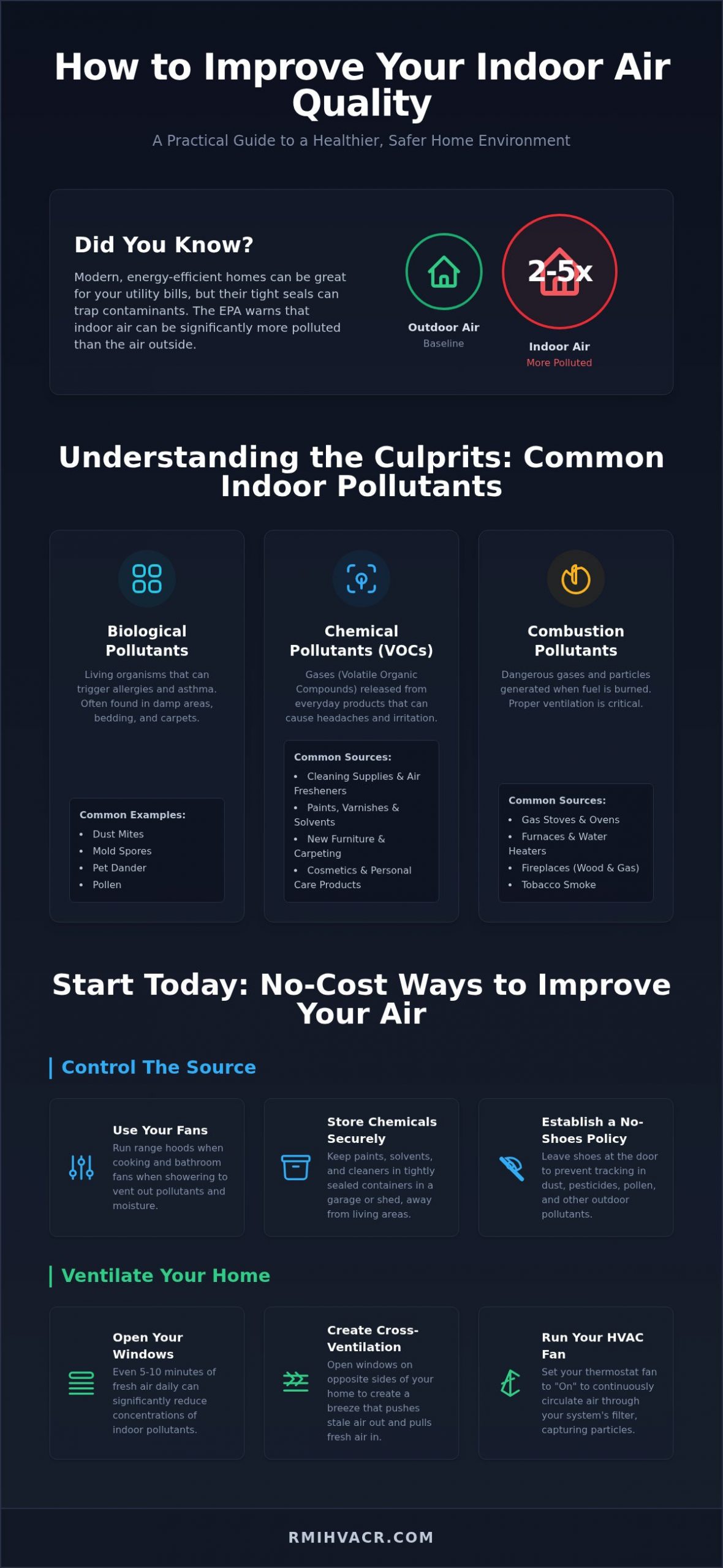
Many homeowners are surprised to learn that the air inside their home can be two to five times more polluted than the air outside. While modern, energy-efficient homes are excellent for lowering utility bills, their tight seals can also trap contaminants, degrading your home’s environment. The first step in finding a reliable solution is identifying the source of the problem. Understanding these common culprits is essential for anyone asking how to improve indoor air quality and protect their family’s health.
Indoor air pollutants generally fall into three main categories. Our certified experts can help you identify and address each one to ensure your home is a safe, comfortable space.
Biological Pollutants: The Unseen Guests
These living organisms are often invisible to the naked eye but can have a significant impact on your well-being. Common biological pollutants include dust mites, mold spores, pet dander, and pollen. They are a primary trigger for allergies and asthma, causing symptoms like sneezing, coughing, and irritated eyes. You can typically find them in damp areas like basements, in bedding and carpets, and brought in by pets or through open windows.
Chemical Pollutants: VOCs and Household Products
Volatile Organic Compounds (VOCs) are gases released from various everyday products. Think of the “new” smell from paint, carpeting, or furniture-that’s often caused by VOCs. For a comprehensive overview of indoor air quality and the chemicals involved, it’s clear these sources are widespread. Common sources include:
- Cleaning supplies and air fresheners
- Paints, varnishes, and solvents
- New furniture and building materials
- Cosmetics and personal care products
Exposure to high levels of VOCs can lead to headaches, dizziness, and irritation of the eyes, nose, and throat.
Combustion Pollutants: Gases and Particles
These pollutants are generated any time fuel is burned. Common sources in a home include gas stoves, furnaces, water heaters, fireplaces, and tobacco smoke. These activities can release dangerous gases like carbon monoxide (CO) and nitrogen dioxide (NO2), which are harmful even at low levels. This is why proper ventilation is not just a recommendation-it’s a critical safety measure when using any fuel-burning appliance. Ensuring your systems are professionally maintained is a key part of creating a healthier home.
Start Today: 8 No-Cost Ways to Immediately Improve Your Air
Improving the air you breathe doesn’t require an expensive investment. In fact, the foundation of better air quality starts with simple, consistent habits you can adopt today-at no cost. These reliable strategies are your first line of defense against common indoor pollutants. By focusing on ventilation, source control, and smart cleaning, you can make a significant and immediate difference in your home’s environment, proving that small changes can yield powerful results.
Control the Source
The most efficient way to manage indoor pollutants is to stop them from entering or spreading in the first place. Here’s how you can control common sources:
- Use Your Fans: Always turn on the range hood when cooking to vent smoke and combustion gases. Similarly, run the exhaust fan in your bathroom during and after a shower to reduce moisture and prevent mold growth.
- Store Chemicals Securely: Household chemicals, paints, and solvents can release volatile organic compounds (VOCs). Store them in a well-ventilated area outside the main living space, like a garage or shed, and ensure all containers are tightly sealed.
- Establish a No-Shoes Policy: Your shoes track in a surprising amount of dust, pesticides, pollen, and other outdoor pollutants. Leaving them at the door is one of the easiest ways to keep your indoor air cleaner.
Ventilate Your Home
Your home can trap airborne pollutants, causing them to build up over time. Proper ventilation is a simple and effective solution to flush out stale air and introduce fresh air. Even government agencies highlight ventilation as a primary strategy to improve the indoor air quality in your home. Start with these trusted habits:
- Open Your Windows: Just 5-10 minutes of fresh air daily can significantly reduce concentrations of indoor pollutants.
- Create Cross-Ventilation: For a more effective air exchange, open windows on opposite sides of your home. This creates a natural breeze that pushes stale air out and pulls fresh air in.
- Run Your HVAC Fan: Set your thermostat’s fan to “On” instead of “Auto.” This circulates air through your system’s filter, even when not actively heating or cooling, helping to capture airborne particles.
Clean Smarter, Not Harder
A consistent cleaning routine is a fundamental part of learning how to improve indoor air quality for the long term. The key is using methods that trap and remove particles instead of just spreading them around.
- Dust with a Damp Cloth: Dry dusting often just kicks allergens and dust into the air. A damp microfiber cloth effectively traps and removes these particles from surfaces.
- Vacuum Regularly: Vacuum carpets, rugs, and upholstery at least once a week. If possible, use a vacuum with a HEPA filter, which is designed to capture even the smallest microscopic particles.
Your HVAC System: The Lungs of Your Home
Think of your HVAC (Heating, Ventilation, and Air Conditioning) system as the respiratory system of your home. It breathes air in, filters it, and circulates it through every room to keep you comfortable. However, if this system isn’t properly maintained, it can become a primary source of indoor air pollution, distributing dust, allergens, and mold spores. Understanding how to improve indoor air quality starts with ensuring the lungs of your home are healthy, clean, and functioning efficiently.
The Power of the Right Air Filter
One of the simplest and most effective ways to enhance your air quality is by using the right air filter. Filters are rated on the MERV (Minimum Efficiency Reporting Value) scale-a higher number means finer filtration. For most residential homes, a filter with a MERV rating between 8 and 13 provides an excellent balance of capturing airborne particles like pollen and dust mites without overworking your system. For this to be effective, you must change your filter regularly, typically every 1 to 3 months.
Why Regular HVAC Maintenance is Crucial
While changing filters is a great start, professional maintenance addresses issues deep within your system. During an annual tune-up, our certified experts clean crucial components like the evaporator coils, where moisture can otherwise lead to mold and bacteria growth. This type of source control is a key principle mentioned in the official EPA guide to improving indoor air quality. A clean, well-maintained system not only provides healthier air but also runs more efficiently, saving you money on energy bills. Your comfort and health are our priority. Schedule your professional HVAC tune-up today.
Ductwork: The Hidden Highway for Pollutants
Your air ducts are the unseen highways that carry conditioned air throughout your home. If these ducts are dirty or have leaks, they can distribute dust, dander, and other contaminants into the air you breathe. Leaky ductwork can also pull in poor-quality air from attics, basements, or crawlspaces. A professional duct inspection and cleaning can remove years of buildup, while duct sealing closes gaps to improve both air quality and system efficiency, ensuring clean air is delivered exactly where you need it.
Level Up Your IAQ: Equipment and Advanced Solutions
While regular cleaning and filter changes are fundamental, achieving the best possible indoor environment sometimes requires specialized equipment. For families with specific health concerns like allergies or asthma, or for those who simply want the freshest, cleanest air, investing in advanced IAQ technology is a direct investment in your well-being and comfort. These systems work alongside your existing HVAC unit to provide a higher level of filtration and control.
Determining the right solution depends on your home’s unique needs. Our certified experts can help you understand your options and make a confident choice.
Air Purifiers: Portable and Whole-Home
Air purifiers are designed to remove microscopic airborne contaminants. A portable unit is ideal for a single room, like a bedroom, to reduce allergens where you sleep. For comprehensive coverage, a whole-home air purifier integrates into your HVAC system, cleaning the air in every room. Most high-quality purifiers use HEPA filters, which are certified to capture 99.97% of particles as small as 0.3 microns, including dust, pollen, pet dander, and mold spores.
Humidity Control: Finding the Right Balance
The ideal indoor humidity level is between 30-50%. Air that is too damp (above 50%) can encourage mold and mildew growth, while air that is too dry (below 30%) can cause dry skin, irritated sinuses, and damage to wood furnishings. In a humid climate like Florida’s, a whole-home dehumidifier is essential. It works with your air conditioner to efficiently remove excess moisture, improving comfort and protecting your home. In drier climates, a humidifier can add necessary moisture back into the air.
UV Air Sanitizers and Advanced Ventilation
For the ultimate defense against biological contaminants, consider these top-tier solutions. If you want to know how to improve indoor air quality to the highest standard, this is the next step.
- UV Air Sanitizers: These systems use powerful UV-C light, installed directly inside your ductwork, to neutralize airborne viruses, bacteria, and mold spores before they can circulate through your home.
- Energy Recovery Ventilators (ERVs): An ERV is the solution for stale, stuffy indoor air. It systematically pushes stale air out while pulling in fresh, pre-conditioned, and filtered air from outside, without wasting heating or cooling energy.
These advanced systems provide reliable, around-the-clock protection for your family. Ask our experts about advanced air quality solutions.
Take the Next Step to Cleaner, Healthier Air
Improving the air inside your home is an achievable and vital goal. As this guide has shown, you can start with simple, no-cost habits like increasing ventilation and dusting more frequently to make an immediate impact. For more powerful, long-term results, your HVAC system is your greatest ally, acting as the lungs of your home to filter out dust, allergens, and other harmful contaminants. Understanding how to improve indoor air quality is the first step toward creating a healthier, more comfortable living environment for your family.
When you’re ready to explore advanced solutions like air purification systems or professional duct cleaning, you need an expert partner you can trust. At RMI Heating and Air Conditioning, we’ve been the region’s trusted HVAC experts since 1999. Our professional, certified technicians deliver comprehensive air quality and ductwork services you can count on. We arrive prepared to provide reliable, efficient solutions tailored specifically to your home’s needs.
Take control of your home’s health today. A breath of fresh, clean air is closer than you think.
Frequently Asked Questions About Indoor Air Quality
How can I test the indoor air quality in my home?
For a reliable overview, you can purchase a consumer-grade indoor air quality monitor. These devices track common pollutants like particulate matter (PM2.5), volatile organic compounds (VOCs), and humidity in real-time. For a more comprehensive and accurate analysis, especially if you suspect issues like mold or radon, we recommend a professional assessment. Our certified technicians can perform detailed tests and provide expert solutions based on the results, ensuring your home’s air is safe and healthy.
Do air-purifying plants actually work to improve indoor air quality?
While plants do filter trace amounts of airborne pollutants, their impact in a typical home environment is minimal. Studies show you would need an extremely high number of plants-hundreds, in most cases-to match the efficiency of a mechanical air purifier. We see plants as a great natural addition to your home, but for a dependable air quality solution, you should rely on proven technology like high-efficiency air filters and dedicated air purification systems for measurable results.
What is the best MERV rating for my AC air filter?
For most residential HVAC systems, a filter with a MERV rating between 8 and 13 offers an excellent balance of air filtration and system efficiency. These filters are effective at capturing common particles like pollen, dust mites, and pet dander. Using a filter with a MERV rating higher than 13 can restrict airflow, potentially straining your system. Always check your HVAC manufacturer’s recommendations or consult one of our trusted technicians to find the perfect fit for your unit.
How often should I have my air ducts cleaned?
We recommend professional air duct cleaning on an as-needed basis rather than as routine maintenance. You should consider having your ducts cleaned every 3 to 5 years, or immediately if you notice visible mold growth, a pest infestation, or excessive dust after a home renovation. If a family member suffers from unexplained allergies or respiratory issues, a duct inspection and cleaning by a certified expert can provide significant relief and peace of mind.
Can improving indoor air quality help with my allergies?
Yes, absolutely. A key part of knowing how to improve indoor air quality is understanding how to reduce airborne allergens. High-efficiency air filters and whole-home air purifiers are designed to capture common triggers like pollen, pet dander, dust mites, and mold spores before they can circulate. By removing these irritants from the air you breathe, you can significantly reduce allergy symptoms and create a more comfortable, healthier living environment for your entire family.
What’s the difference between an air purifier and a dehumidifier?
The primary difference is their function. An air purifier is designed to clean the air by trapping and removing airborne particles like dust, smoke, and allergens using a filter. Its goal is to improve breathability. A dehumidifier, on the other hand, is designed to dry the air by removing excess moisture. Its goal is to lower humidity levels to prevent mold growth and musty odors. One cleans the air, while the other removes water from it.