
Why Is Your AC Unit Making a Loud Buzzing Noise? A Homeowner’s Guide
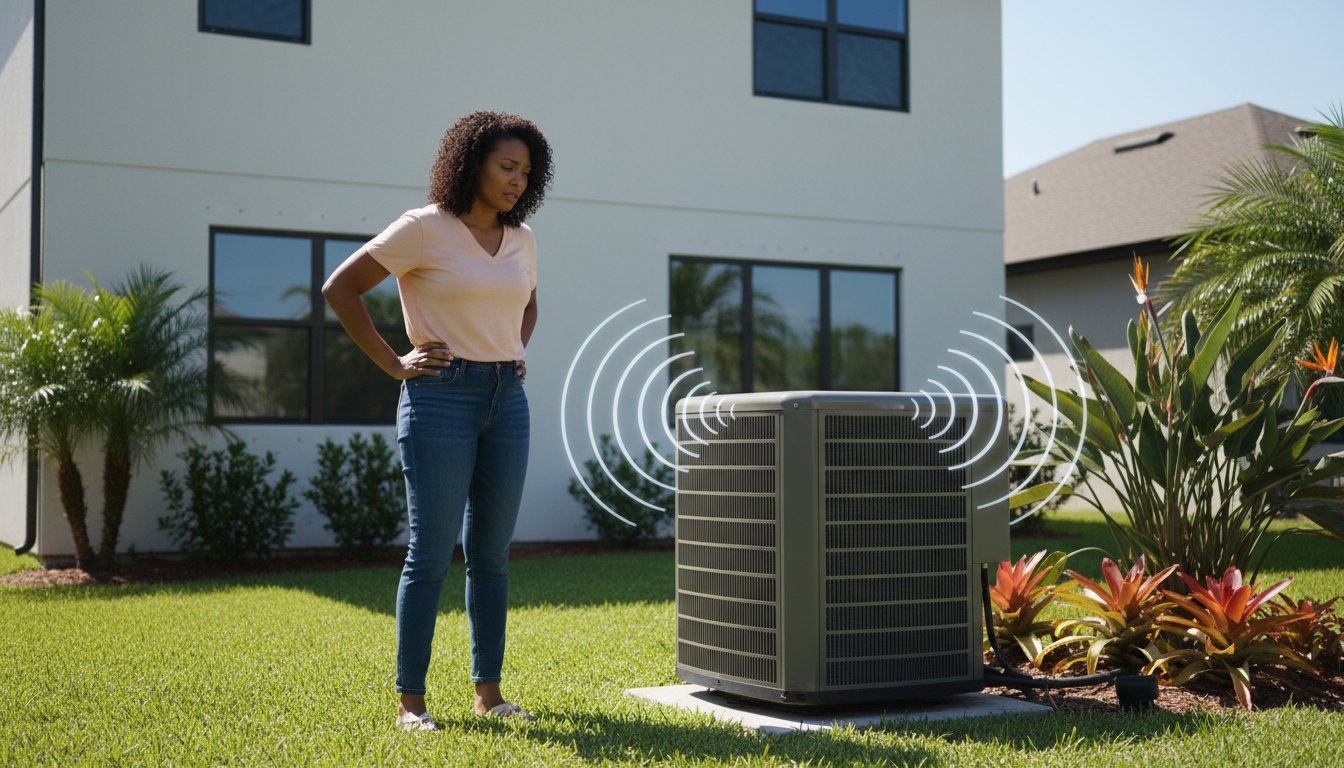
That sudden, insistent hum from your air conditioner is more than just an annoyance-it’s an urgent warning sign. When you have an ac unit making loud buzzing noise, it’s natural to feel a surge of concern. Is it dangerous? Is a small issue about to become a major, expensive breakdown? While your home struggles to stay cool, you’re left wondering if this is a problem you can handle yourself or if you need an expert. Ignoring the sound isn’t an option when your family’s comfort and safety are at stake.
For more details on what to expect during a professional service call, you can read more.
We’re here to provide the clear, dependable answers you need. This guide will help you identify the common causes behind that disruptive buzzing. We’ll walk you through the immediate, safe steps to take to prevent further damage and, most importantly, help you know when it’s time to call a trusted professional for a fast, reliable fix. Our goal is to give you the confidence to make the right call and get your system fixed quickly, restoring peace and comfort to your home.
Key Takeaways
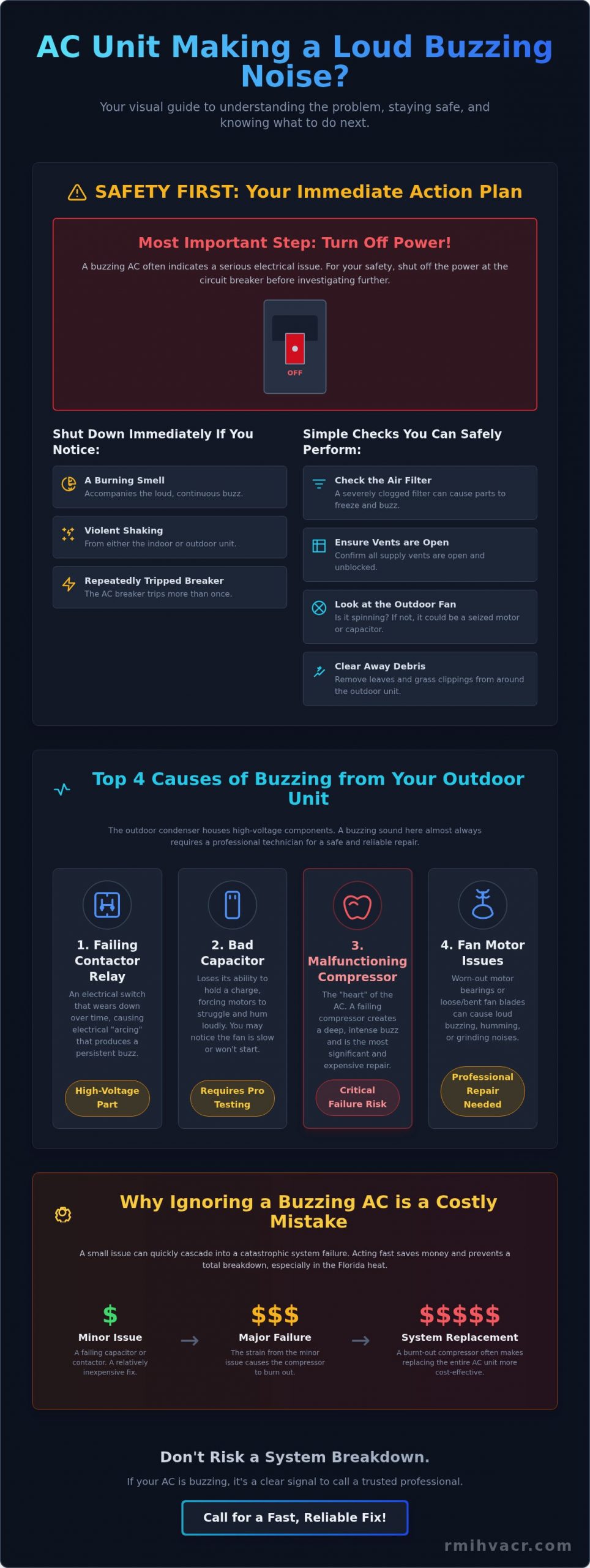
- Your first and most important step is to turn off the power to your AC at the circuit breaker to ensure your safety before investigating further.
- An ac unit making loud buzzing noise is most often caused by a failing electrical component in your outdoor condenser, which requires professional attention.
- Learn how to identify whether the buzz is coming from the indoor or outdoor unit, as this helps pinpoint the likely cause, from fan issues to serious electrical faults.
- Ignoring a buzzing sound can cause a minor issue to cascade into a catastrophic system failure, leading to much more expensive repairs or a full replacement.
First: Your Immediate Safety Checklist for a Buzzing AC
Hearing your ac unit making loud buzzing noise can be alarming. While your first instinct might be to investigate the sound, safety must be your top priority. A loud, persistent buzz often signals a serious electrical problem inside the unit, which requires an expert technician to diagnose and fix reliably.
For your protection, never attempt to open service panels or touch any internal wiring. Following these immediate steps can protect your home and prevent a minor issue from becoming a costly system failure. Knowing when to power down the system is the most important first step you can take.
When to Shut Down Your AC System Immediately
Certain sounds and signs demand immediate action to prevent further damage. If you notice any of the following red flags, it’s critical to power down your system right away:
- A loud, continuous buzz is accompanied by a distinct burning smell.
- The buzzing sound is paired with violent shaking or rattling from either the indoor or outdoor unit.
- The circuit breaker connected to your air conditioner has tripped more than once.
If you experience any of these emergency signs, go to your home’s main electrical panel and switch the dedicated AC breaker to the ‘OFF’ position. Then, call a certified professional for urgent service.
Simple Checks You Can Safely Perform
Not every buzz is a sign of a major electrical fault. If the noise is less severe and not accompanied by the warning signs above, there are a few simple things you can check safely from a distance. A basic understanding of how air conditioners work highlights the importance of proper airflow, which you can quickly assess with these checks:
- Check the air filter: A severely clogged filter can restrict airflow, causing parts like the evaporator coil to freeze over and create a buzzing or humming sound.
- Ensure vents are open: Walk through your home and confirm that all supply vents are open and not blocked by furniture, drapes, or rugs.
- Look at the outdoor unit: Is the fan on top of the unit spinning while it’s buzzing? If not, the sound could be from a seized fan motor or a faulty capacitor.
- Clear away debris: Remove any leaves, branches, or grass clippings packed around the outdoor condenser unit to ensure it can operate efficiently.
Top 4 Causes of Buzzing from Your Outdoor Condenser Unit
If you’ve noticed your ac unit making loud buzzing noise, the problem is almost always located in the outdoor condenser. This unit houses high-voltage electrical components and powerful mechanical parts that can fail over time. While regular AC maintenance recommended by the U.S. Department of Energy helps extend the life of these parts, some issues are inevitable with age. Ignoring these sounds is a costly mistake, as a minor electrical issue can quickly lead to a catastrophic system breakdown. An expert diagnosis is essential to protect your investment and restore your comfort.
Here are the four most common culprits our certified technicians find:
1. Failing Contactor Relay
The contactor is an electrical switch that sends power to your outdoor unit’s compressor and fan motor. Constant use causes its internal contacts to wear down and pit. This degradation can lead to electrical arcing-a small, contained electrical spark-that produces a distinct and persistent buzzing sound. While a contactor is a common wear-and-tear part, its high-voltage nature means replacement should only be handled by a trained HVAC professional.
2. Bad Capacitor
Your AC’s motors need a powerful jolt of energy to start, which is provided by a component called a capacitor. When a capacitor begins to fail, it can no longer hold an adequate charge. This forces the motors to struggle to start, causing them to hum or buzz loudly. You might also notice that your condenser fan is slow to start spinning or doesn’t start at all. This is a clear sign that a certified technician needs to test and replace the capacitor.
3. Malfunctioning Compressor
The compressor is the heart of your entire air conditioning system, responsible for circulating refrigerant. An aging or failing compressor can begin to draw excessive electrical current, creating a loud, low-frequency buzz or hum. If your ac unit making loud buzzing noise is deeper and more intense than usual, it could signal a serious compressor problem. This is one of the most significant and expensive AC repairs, making an immediate and accurate diagnosis crucial.
4. Condenser Fan Motor Issues
The large fan in your outdoor unit is critical for dissipating heat. If the motor’s internal bearings wear out, they can create a loud buzzing or grinding noise. Similarly, if the fan blades become loose, bent, or obstructed by debris, the resulting vibration will cause a loud buzzing sound. A malfunctioning fan motor will quickly cause the compressor to overheat and shut down, leaving your home without cool air until it’s repaired.
Potential Reasons Your Indoor Air Handler is Buzzing
While most homeowners focus on the outdoor condenser, the indoor air handler can also be the source of a troubling buzz. An ac unit making a loud buzzing noise from inside your home often points to problems with airflow or the electrical components that move conditioned air through your vents. Because buzzing can indicate an electrical fault, it’s crucial to approach the issue with caution and a focus on electrical safety. Pinpointing the noise to the indoor unit gives a certified technician a valuable head start in diagnosing the problem correctly and efficiently.
Not sure where the noise is coming from? Our experts can diagnose it fast.
Frozen Evaporator Coils
One of the most common causes of indoor buzzing is a frozen evaporator coil. This typically happens when a clogged air filter severely restricts airflow over the coils. Without enough warm air to absorb, the refrigerant temperature drops and causes ice to form. The buzzing you hear is often the sound of refrigerant struggling to flow through the frozen, constricted passages. Other clear signs of this issue include:
- Noticeably weaker airflow from your vents
- The air conditioner is not cooling effectively
- Water dripping or pooling around the indoor unit
Failing Blower Motor
Just like the fan in your outdoor unit, the indoor blower motor is a critical component that can wear out. This motor is responsible for pushing cooled air through your home’s ductwork. If you hear a distinct electrical hum or buzz coming directly from your vents when the AC kicks on, it’s a strong indicator that the blower motor is failing or has seized. A complete failure of this part will stop all airflow, even if you can still hear the outdoor unit running.
Loose Parts or Debris
Sometimes, the cause is much simpler. A persistent buzzing or rattling can be caused by a loose access panel on the air handler vibrating while the system is running. It’s also possible for a small object or debris to fall into the ductwork and get stuck in the blower wheel, causing an unbalanced rotation and a loud buzzing sound. Before calling for service, you can safely check to ensure all exterior panels on the indoor unit are securely fastened.
Why Ignoring a Buzzing AC is a Costly Mistake in Florida
That humming or buzzing sound from your AC isn’t just background noise-it’s a critical warning sign. In the relentless heat of Central Florida, an air conditioner is under constant stress. Ignoring a strange noise can mean the difference between a quick, affordable fix and a complete system breakdown when you need cooling the most. An ac unit making loud buzzing noise is your system’s cry for help, and delaying a professional inspection is a gamble you can’t afford to take.
The Risk of Compounded Damage
A buzzing sound often points to a single failing component, but running your system in this condition creates a dangerous domino effect. What starts as a simple issue can quickly escalate, causing far more expensive damage. For example, a faulty capacitor can strain and destroy the compressor-turning a minor repair into a major system replacement. Similarly, electrical arcing from a bad contactor isn’t just damaging your unit; it’s a serious fire hazard. Addressing the problem early is the most reliable way to prevent a chain reaction of costly failures.
Why Professional Diagnosis is Crucial
While it can be tempting to troubleshoot on your own, AC systems contain high-voltage components that are dangerous for anyone without certified training. An expert technician can safely test electrical parts to pinpoint the exact cause of the buzz. They can accurately determine if it’s a simple fix or a symptom of a deeper system issue that needs immediate attention.
At RMI, our certified experts are equipped to deliver reliable solutions fast. Our service vehicles are fully stocked trucks, carrying the most common parts needed for AC repairs. This preparedness means we can often fix the issue on the very first visit, saving you time and restoring your comfort without delay.
When you hear your air conditioner making that loud buzzing noise, don’t wait for the problem to get worse. Protect your investment, ensure your family’s safety, and get the peace of mind that comes with a job done right. For expert diagnostics and dependable repairs you can count on, contact the trusted team at RMI today.
Restore Your Peace and Quiet: Trusted AC Repair in Central Florida
A buzzing air conditioner is more than a simple annoyance; it’s a critical warning sign. Whether it’s a failing capacitor, a loose part, or a serious electrical issue, your first step should always be to turn off the power at the breaker for safety. Ignoring the sound, especially in the Florida heat, is a costly mistake that often leads to complete system failure and more expensive repairs down the road.
If your ac unit making loud buzzing noise is causing you stress, you don’t have to solve the problem alone. For a safe, reliable, and fast solution, the best course of action is to call a certified professional. At RMI Heating and Air Conditioning, we’ve been the trusted choice for Central Florida homeowners since 1999. Our expert technicians are ready to help with 24/7 emergency service, and our fully stocked trucks ensure we can fix the issue on the first visit. Don’t risk a breakdown. Schedule your 24/7 emergency AC repair with RMI today. Let us restore your peace of mind and the quiet comfort of your home.
Frequently Asked Questions About a Buzzing AC
How much does it cost to fix a buzzing AC unit?
The cost to fix a buzzing AC varies depending on the cause. A minor issue like tightening a loose panel may just involve a standard service call fee ($75-$200). However, replacing a failed component like a contactor or capacitor typically ranges from $150 to $450. A more serious problem, such as a failing compressor, can be significantly more expensive. An accurate estimate requires a diagnosis from a certified HVAC expert.
Can I still run my air conditioner if it’s making a buzzing noise?
We strongly advise against running an AC that is making a buzzing noise. This sound often signals a serious electrical issue, such as a failing motor or a bad capacitor. Continuing to operate the unit can lead to more severe and costly damage to critical components, including the compressor. For your safety and to protect your system, turn it off at the circuit breaker and schedule a professional inspection right away.
Is a buzzing AC considered an emergency?
Yes, a buzzing AC should be treated as an urgent problem requiring immediate attention. Because the noise is frequently tied to electrical faults, it can present a safety hazard or cause catastrophic system failure if ignored. If the buzzing is loud or you notice a burning smell, shut off power to the unit immediately. Our certified technicians are available for emergency service to safely diagnose and solve the problem quickly and efficiently.
What does a bad AC capacitor sound like?
A failing AC capacitor typically creates a distinct, low-pitched humming or buzzing sound. You will usually hear this noise coming directly from your outdoor condenser unit. In many cases, you might also hear a click as the system attempts to start, immediately followed by the continuous buzz. This happens because the capacitor can no longer supply the electrical jolt needed to start the fan motor or compressor, causing them to hum under electrical load.
Could my thermostat be causing the buzzing sound?
While less common, a faulty thermostat can create a low-volume electrical buzz. This sound would come from the thermostat on your wall, not from the indoor or outdoor units. However, if your ac unit making loud buzzing noise is coming from the condenser outside or the air handler inside, the problem is almost certainly within the main HVAC system. An expert technician can quickly determine the source of the issue.
Why does my AC buzz but the fan isn’t spinning?
This is a classic sign of a failed capacitor. The capacitor’s job is to provide the initial surge of energy to get the fan motor and compressor started. When it fails, the motors receive electrical power and try to run-which creates the buzzing sound-but they don’t have the necessary torque to begin spinning. This is a common repair that a certified technician can fix quickly by replacing the faulty capacitor, restoring your comfort.