
Why Is My AC Leaking Water? A Central Florida Homeowner’s Guide
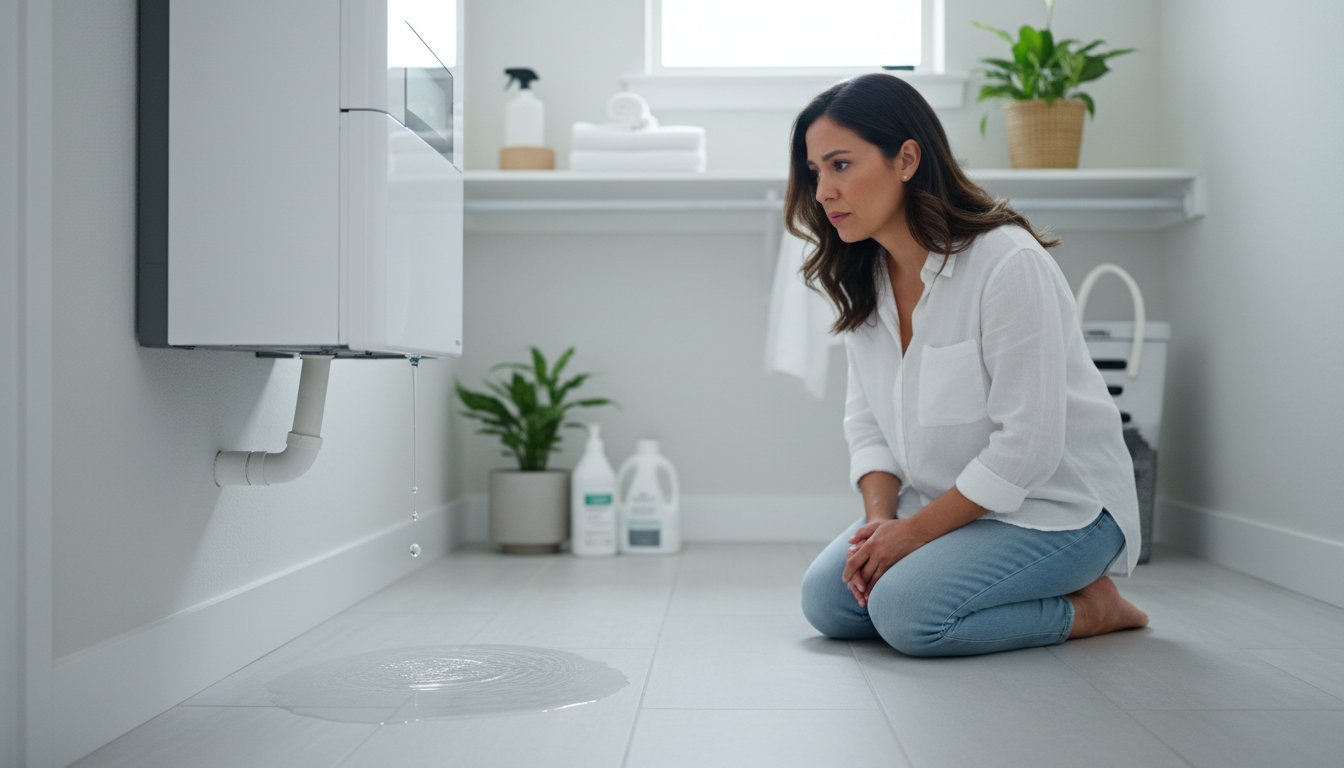
That sinking feeling when you spot a puddle forming around your indoor AC unit is something no Central Florida homeowner wants to experience. Questions immediately race through your mind: Is this going to cause expensive water damage? Is my AC about to die? Should I turn it off right now? Before you panic, it’s important to know that you’re not alone in asking, why is my ac leaking water? This is one of the most common issues our trusted technicians see, and the cause is often simpler than you might fear.
In this straightforward guide, we will help you take immediate control of the situation. You will learn how to quickly diagnose the most frequent causes of an air conditioner leak, from a simple clogged drain line to more complex issues. We’ll provide the crucial first steps to prevent property damage and give you a clear plan to determine if it’s a quick fix you can handle yourself or a job that requires a certified professional. Consider this your reliable roadmap to solving the problem quickly and efficiently.
Key Takeaways
- Before you do anything else, follow our quick emergency checklist to turn off your system and prevent costly water damage to your home.
- The answer to “why is my ac leaking water” is often a clogged condensate drain line, a frequent and simple-to-fix issue for Florida homeowners.
- Discover which common leak problems you can safely fix yourself in minutes and which critical warning signs mean it’s time to call a trusted professional.
- Learn how routine professional maintenance not only prevents future water leaks but also keeps your system running efficiently all year long.
First Steps: What to Do Immediately When Your AC is Leaking
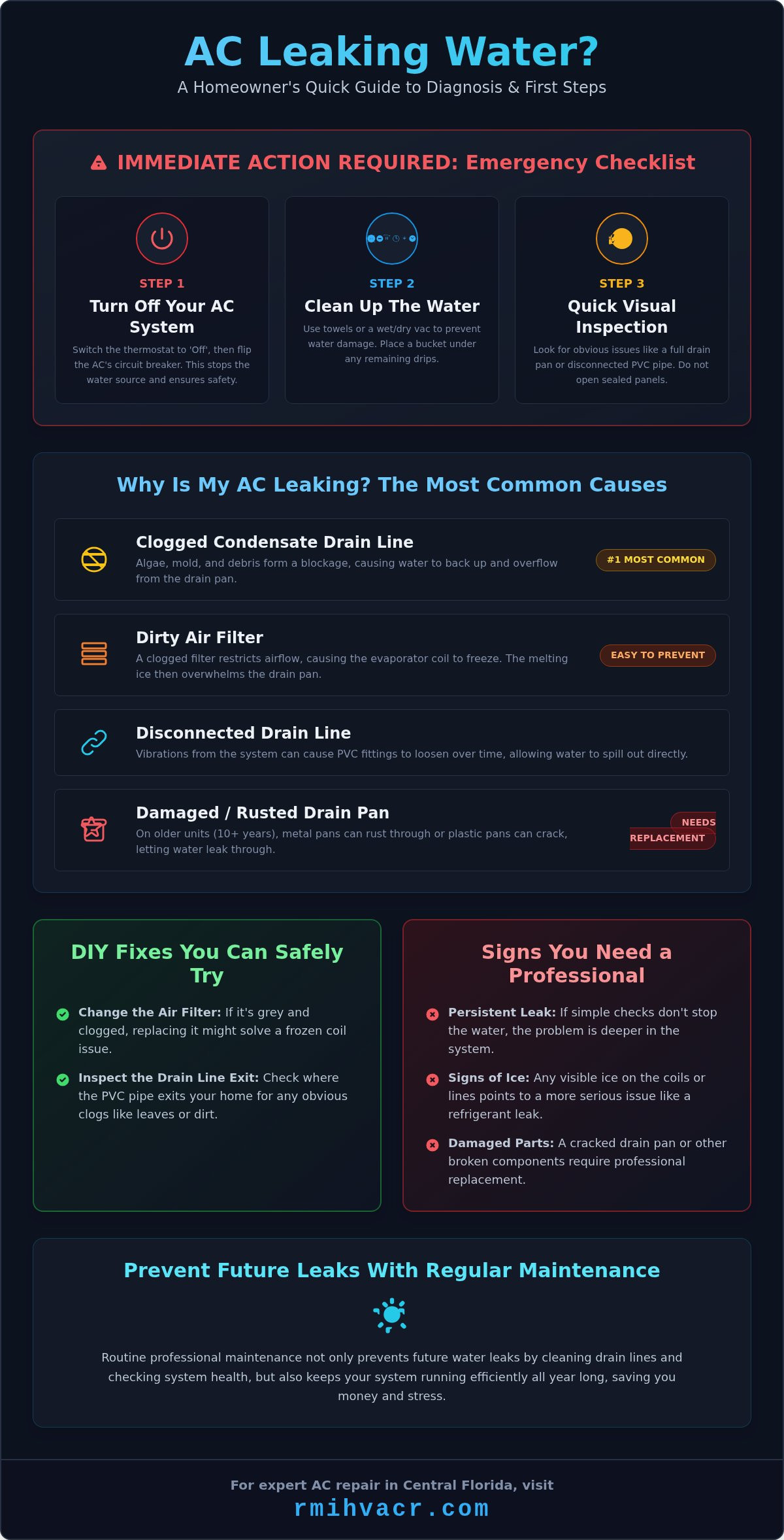
Discovering a puddle of water around your indoor air conditioning unit can be alarming. While you may be asking, “why is my ac leaking water?”, the most important thing is not to panic. This is a common issue, but taking quick, decisive action is essential to prevent costly water damage to your home. Before attempting to diagnose the cause, follow this simple emergency checklist.
This guide from our trusted experts will help you secure the area safely and minimize any potential harm to your property. Remember, your safety is the top priority, so always use caution when dealing with water and electricity.
Step 1: Turn Off Your AC System
The very first and most critical step is to stop your air conditioner from running. This immediately halts the cooling cycle, which is what produces the condensation causing the leak. Taking this step prevents more water from being generated and gives you a safe environment to work in.
- At the Thermostat: Locate your wall thermostat and switch the system setting to ‘Off’.
- At the Circuit Breaker: For complete safety, find your home’s electrical panel and flip the circuit breaker that powers your AC unit and air handler to the ‘Off’ position.
Step 2: Clean Up the Water
Once the system is safely powered down, your next priority is damage control. Water can quickly seep into flooring, subfloors, drywall, and ceilings, leading to mold growth and expensive structural repairs. Use absorbent towels or a wet/dry vacuum to thoroughly remove all standing water from the area. If the unit is still dripping, place a bucket or a sturdy pan underneath to catch any residual moisture.
Step 3: Perform a Quick Visual Inspection
With the area safe and dry, you can perform a brief visual check to gather information. A basic understanding of how your Heating, ventilation, and air conditioning (HVAC) system functions can help you spot the source. Note exactly where the water is coming from, as this information is a key clue for a professional diagnosis. Under no circumstances should you attempt to open any sealed panels or handle electrical wiring.
- Check if the drain pan directly under the indoor unit is full or overflowing.
- Look for any obvious clogs or kinks in the visible PVC drain line.
- Note if water is dripping from the vents or the unit’s housing itself.
The 5 Most Common Causes of an AC Water Leak (Simple to Serious)
Finding a puddle of water under your air conditioner can be alarming, but understanding the root cause is the first step toward a reliable fix. If you’re asking, “why is my ac leaking water,” the answer is almost always related to the condensate drainage system. This system is designed to safely remove moisture that your AC pulls from the air-a job that’s especially demanding in Florida’s high humidity.
We’ve organized the most common causes from simple fixes you might handle yourself to more serious issues that require an expert technician. This will help you diagnose the problem and determine the right course of action.
1. Clogged Condensate Drain Line
This is, by far, the number one reason for an AC water leak. Over time, the drain line can become blocked with a buildup of algae, mold, and debris. When this blockage occurs, the water has nowhere to go. It backs up into the primary drain pan and eventually overflows, causing water damage inside your home. This is often a straightforward fix for a professional.
2. Dirty or Clogged Air Filter
A dirty air filter does more than just reduce air quality-it can cause a serious leak. A clogged filter severely restricts airflow across your system’s evaporator coil, which can cause the coil to get too cold and freeze over completely. When your unit cycles off, that large block of ice melts, producing far more water than the drain pan can handle. The U.S. Department of Energy states that regular maintenance of your air conditioner, especially changing filters, is crucial to prevent this exact problem.
3. Disconnected Drain Line
Sometimes the issue is as simple as a loose connection. The constant vibration from your air handler can cause the PVC fittings of the condensate line to work themselves loose over time. If a connection separates, water will spill directly from the unit instead of being routed outside. A quick inspection can often reveal if this is the source of the leak.
4. Damaged or Rusted Drain Pan
If your air conditioner is more than 10 years old, the drain pan itself could be the culprit. Over many years of service, metal pans can rust through and plastic pans can crack. When this happens, water will leak directly through the damaged pan, bypassing the drain line entirely. This problem requires a part replacement, a job best left to a certified HVAC expert.
5. Broken Condensate Pump
For systems installed in a basement or attic where gravity can’t drain the water away, a small appliance called a condensate pump is used to actively pump the water outside. If this pump malfunctions or fails completely, the water will back up and overflow. A broken pump is a mechanical failure that requires professional repair or replacement to restore proper function and prevent water damage.
DIY Fixes You Can Safely Try (and What to Avoid)
If you’re asking, “why is my ac leaking water?” the answer might be simpler than you think. Fortunately, not every puddle of water requires an emergency service call. Some of the most common causes can be resolved with a few simple steps, saving you time and money. Your comfort and safety are our top priorities, so we’ll guide you through what’s safe to try on your own.
Important Safety First: Before you attempt any maintenance, your first and most critical step is to turn off the power to your AC unit at both the thermostat and the breaker box. This ensures your safety while you work.
How to Change Your Air Filter
A dirty air filter restricts airflow, causing the evaporator coils to get too cold and freeze over. When the ice melts, it overwhelms the drain pan, leading to a leak. Regularly changing your filter is a simple yet crucial maintenance task. In fact, the U.S. Department of Energy highlights clean filters as essential for efficient operation. Here’s how to do it:
- Locate the filter: Find the filter slot on your indoor air handler unit, typically a wide slot along the side, bottom, or top.
- Remove and inspect: Slide the old filter out and note the size printed on its cardboard frame.
- Insert the new filter: Slide the new, clean filter in, making sure the airflow arrow printed on the frame points toward the air handler unit, not away from it.
How to Clear Your Condensate Drain Line
A clogged drain line is the most common reason for an AC leak. Over time, algae, mold, and debris can create a blockage, causing water to back up and spill out. Here’s a reliable method to clear it:
- Find the drain line: Locate the white PVC pipe near your indoor unit. Follow it to where it terminates outside your home.
- Use a wet/dry vacuum: Securely attach the vacuum hose to the end of the outdoor pipe. Let it run for a few minutes to suck out the clog.
- Flush the line: Pour a cup of distilled white vinegar down the access tee (a T-shaped pipe with a cap) near the indoor unit to kill any remaining algae.
What NOT to Do Yourself
While some fixes are straightforward, other issues require certified expertise and specialized tools to ensure a safe and lasting repair. For your safety, avoid attempting the following:
- Never handle refrigerant. It is a hazardous material that requires an EPA-certified professional to handle.
- Do not patch a cracked drain pan. A temporary patch will likely fail, leading to significant water damage. The pan needs to be professionally replaced.
- Avoid complex electrical repairs. Working with capacitors, motors, or wiring without proper training is extremely dangerous.
Problem still not solved? Some issues are best left to the experts. Schedule a professional repair with RMI. Our certified technicians have the tools and experience to fix it right the first time.
When to Call a Professional: Signs You Need an Expert
While some AC water leaks can be resolved with simple DIY cleaning, certain symptoms are clear indicators of a more serious problem. Ignoring these warning signs can lead to extensive water damage, mold growth, and even catastrophic system failure. When you’re facing a complex issue, a certified HVAC technician has the expertise and tools to diagnose the root cause safely and provide a reliable, long-term solution. At RMI, our trusted experts are equipped to handle any AC leak, ensuring your comfort and protecting your home.
Don’t hesitate to call for professional help if you notice any of the following signs:
You See Ice on the Evaporator Coils
A layer of ice or frost on your indoor unit’s evaporator coils is a major red flag. This often signals a refrigerant leak or a severe airflow restriction that is starving the coils of warm air. Continuing to run your AC in this condition can severely damage the compressor-the most expensive component of your system. This is not a DIY fix; it requires an expert to safely handle refrigerant and diagnose the underlying cause.
The Leak Persists After DIY Cleaning
You’ve cleaned the condensate drain line and replaced the filter, but the water leak continues. If you’ve tried the basics and are still wondering why is my ac leaking water, the problem lies deeper within the system. The blockage may be too severe for home tools to clear, or another component, like the condensate pump, may have failed. Our technicians use specialized equipment to locate and resolve stubborn clogs and identify failing parts quickly and efficiently.
Your System is Over 10 Years Old
Air conditioners work hard, and after a decade of service, parts begin to wear out. Older systems are more prone to issues like corroded drain pans that rust through, creating leaks that can’t be patched. A professional can perform a thorough inspection to assess your system’s overall health and provide an honest recommendation on whether a repair is cost-effective or if it’s time to consider a replacement. For an expert diagnosis you can trust, Call RMI for 24/7 emergency service.
How to Prevent Future AC Leaks with Regular Maintenance
After dealing with a water leak, the last thing you want is a repeat performance. The most effective way to fix a leak is to prevent it from happening in the first place. Simple, routine maintenance not only keeps your system running efficiently but also serves as your first line of defense against unexpected breakdowns. By taking a proactive approach, you protect your home from costly water damage and significantly extend the life of your air conditioner.
The best way to stop asking “why is my ac leaking water” is to ensure your system receives the care it needs to perform reliably all season long.
Monthly Homeowner Checklist
These simple tasks can be performed in just a few minutes and make a major difference in your AC’s health and performance. We recommend setting a recurring reminder to stay on top of this checklist.
- Inspect and Change Your Air Filter: A clogged filter restricts airflow, which can cause the evaporator coil to freeze and lead to leaks. Check your filter every 30 days and replace it as needed, typically every 1-2 months.
- Clear the Condensate Line: Every three months, pour a cup of distilled white vinegar down your condensate drain line. This simple step helps kill algae, mold, and sludge buildup that causes clogs.
- Keep Units Clear of Debris: Ensure the area around your indoor air handler and your outdoor condenser unit is free of obstructions. Remove any leaves, grass clippings, or stored items that could block airflow.
Benefits of an Annual Professional Tune-Up
While homeowner maintenance is crucial, it can’t replace the deep inspection and cleaning performed by a certified expert. An annual tune-up is the single best investment you can make to prevent future problems and ensure you get cooling you can count on.
A professional service from a trusted company like RMI Heating and Air Conditioning addresses issues you can’t see, ensuring you won’t be wondering why is my ac leaking water in the middle of a heatwave. During a tune-up, our expert technicians will:
- Perform a deep cleaning of evaporator and condenser coils.
- Thoroughly flush and inspect the entire condensate drainage system.
- Check refrigerant levels to ensure optimal cooling performance.
- Inspect all electrical components for safety and wear.
A professional tune-up catches small issues before they become major, expensive leaks. Protect your investment and gain peace of mind. Learn about our HVAC maintenance plans.
Stay Cool and Dry: Your Next Steps for a Leaking AC
A water leak from your AC unit can be alarming, but understanding the potential causes is the first step toward a solution. From a simple clogged drain line to a frozen evaporator coil, figuring out why is my ac leaking water is key to preventing costly damage. While some minor fixes are manageable, the most important takeaway is knowing when to step back and call a professional to protect your home and your system.
For a fast, reliable fix you can count on, trust the experts at RMI HVACR. As Central Florida’s trusted choice since 1999, our certified technicians are ready to help. We offer 24/7 emergency service and arrive in fully stocked trucks to ensure a quick and efficient repair. Don’t let a small leak turn into a major headache.
Facing an AC leak? Don’t wait for water damage. Schedule your expert repair with RMI today! Let us restore your comfort and peace of mind.
Frequently Asked Questions About Leaking AC Units
Is a leaking AC unit an emergency?
While a small drip might not require an immediate evacuation, it should be treated as an urgent issue. A leak indicates a problem that can quickly lead to significant water damage to your ceilings, walls, and floors. It can also create an electrical hazard or promote mold growth. We recommend turning off your system and calling a certified technician promptly to prevent more extensive and costly damage to your home and your HVAC system.
How much does it cost to fix a leaking air conditioner?
The cost to fix a leaking AC varies depending on the cause. A simple repair, like clearing a clogged condensate drain line, may cost between $75 and $250. However, more complex issues, such as replacing a cracked drain pan or repairing a refrigerant leak, can range from $250 to over $1,500. An expert diagnosis is the only way to determine the exact cause and provide an accurate estimate for the repair. Our technicians deliver clear, upfront pricing.
Can I still run my AC if it’s leaking a little bit of water?
We strongly advise against running an air conditioner that is actively leaking water. Continuing to operate the unit can worsen the underlying problem and cause the overflow pan to fill, leading to much more significant water damage inside your home. It also poses a potential safety risk if water comes into contact with electrical components. For your safety and to protect your property, shut the system down and schedule a professional inspection.
Why is my AC leaking water outside? Is that normal?
Many homeowners asking “why is my ac leaking water outside?” are relieved to hear that some dripping is normal. Your AC removes humidity from indoor air, and that moisture is drained outside through a condensate line. A steady drip from this pipe is a sign the system is working correctly. However, if you see a large puddle of water around the outdoor unit or water leaking from the casing itself, it could indicate a problem that requires an expert diagnosis.
What happens if I don’t fix my leaking AC?
Ignoring a leaking AC can lead to a cascade of expensive problems. The most immediate risk is water damage to your home’s structure, including drywall, flooring, and insulation. This excess moisture also creates the perfect environment for mold and mildew to grow, which can harm your indoor air quality and health. In the worst-case scenario, the leak could cause electrical shorts or lead to a complete and irreversible failure of your entire HVAC system.
Does homeowners insurance cover water damage from a leaking AC?
Coverage for water damage from a leaking AC depends entirely on your specific policy and the cause of the leak. Most insurance policies cover damage from “sudden and accidental” events, like a burst pipe. However, they typically exclude damage resulting from gradual leaks or a lack of routine maintenance. It is essential to review your policy and consult your insurance agent. The most reliable approach is to prevent these issues with regular, professional AC tune-ups.