
Air Conditioning Installation: A Complete Guide for Homeowners
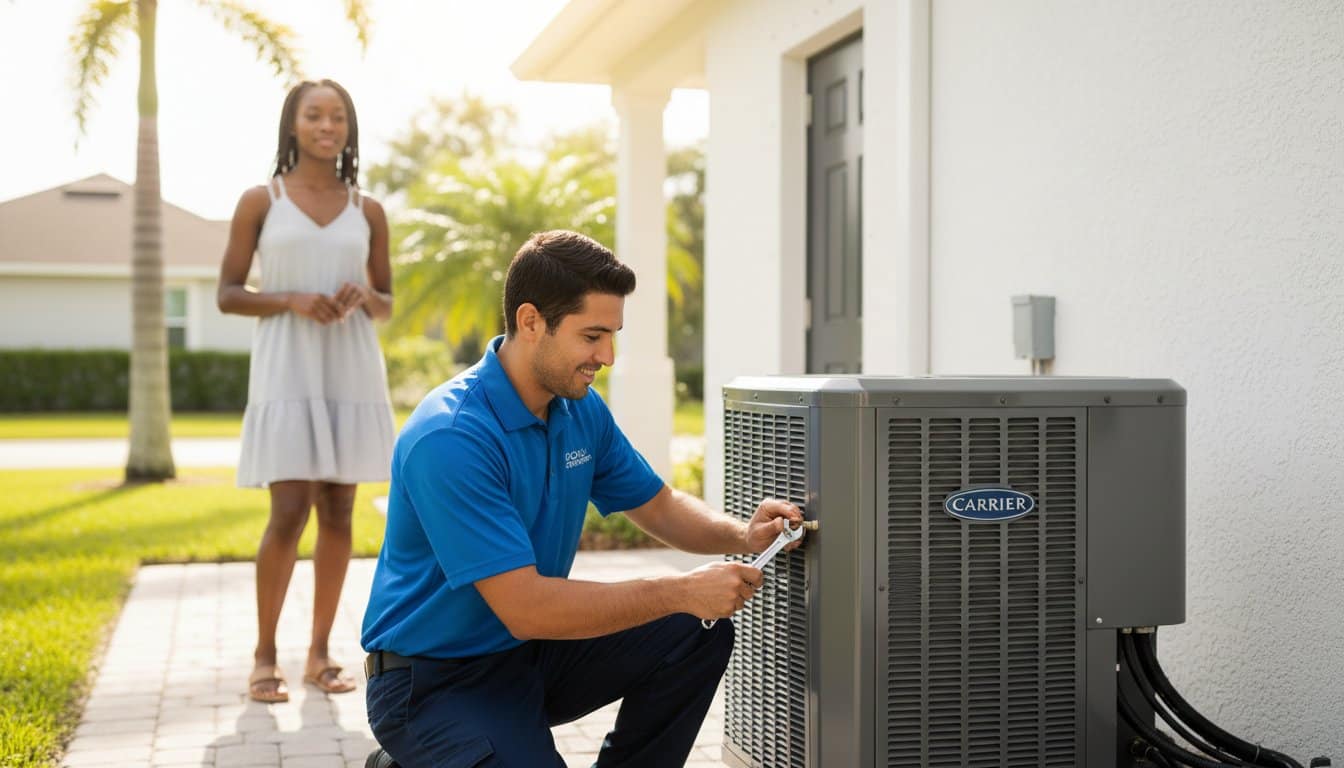
Choosing a new air conditioner can feel overwhelming. It’s a major investment in your home’s comfort, but the process is often filled with anxiety. Will you be overcharged? Are you picking the right size? And what about confusing terms like SEER2 and tonnage? The fear that a messy, disruptive, or incorrect air conditioning installation will lead to years of problems is a genuine concern for many homeowners. A poor installation can quickly turn your investment into a source of constant frustration and unnecessarily high energy bills.
This guide is here to provide the clarity and confidence you need. We’re here to give you the trusted, expert information required to make an informed decision. You’ll learn how to choose the perfect energy-efficient AC unit for your home, what to look for in a reliable contractor, and exactly what to expect during the installation process from start to finish. Our goal is simple: to empower you with the knowledge to secure a fair price and a professional installation, ensuring years of dependable cooling and the peace of mind you deserve.
Key Signs It’s Time for a New Air Conditioning Installation
Knowing when to repair your air conditioner versus replacing it is a crucial decision for any homeowner. While a quick fix might seem tempting, pouring money into an aging or inefficient system can be a costly mistake. Recognizing the warning signs helps you make a smart, proactive choice, ensuring your home stays comfortable and your budget stays intact. A new, professional air conditioning installation is often the most reliable and cost-effective solution in the long run.
If you notice any of the following issues, it may be time to consider a full system replacement:
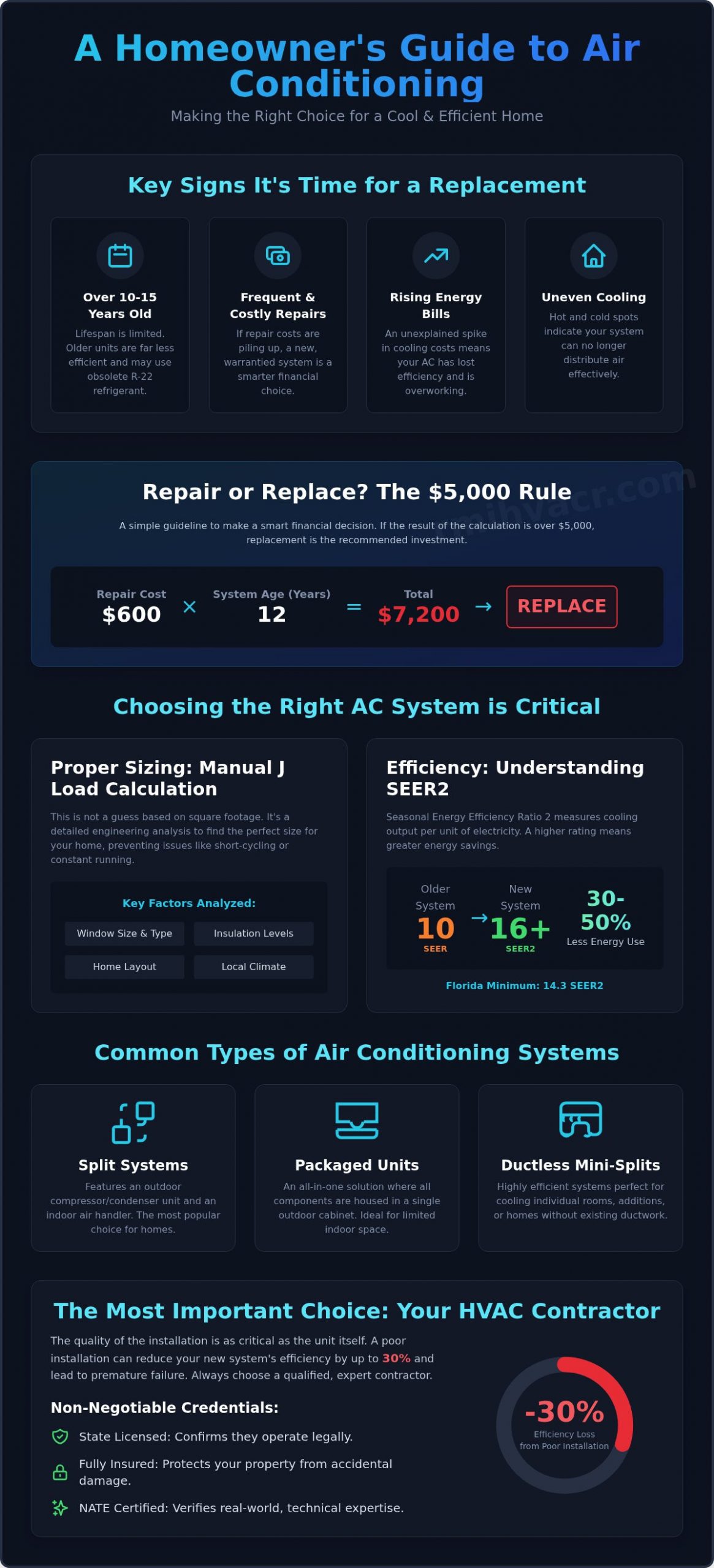
- Your System is Over 10-15 Years Old: Most AC units have a dependable lifespan of about 15 years. If yours is approaching or has surpassed this age, it’s operating on borrowed time and is likely far less efficient than modern equipment.
- Frequent and Costly Repairs: Are you on a first-name basis with your HVAC technician? If one repair call quickly leads to another, the cumulative cost can easily approach the price of a new, warrantied unit.
- Noticeably Rising Energy Bills: A sudden, unexplained spike in your summer cooling costs is a classic sign that your AC has lost its efficiency and is working much harder than it should to cool your home.
- Uneven Cooling and Hot Spots: If some rooms feel like a sauna while others are comfortable, your system may no longer have the capacity to distribute cool air effectively throughout your home.
Age and Efficiency Decline
An air conditioner’s age is more than just a number; it represents a significant gap in technology. Units built over a decade ago are far less efficient and may use the older R-22 refrigerant, which has been phased out due to environmental concerns. The technological leaps across all different types of air conditioning systems mean that a modern, high-efficiency unit can use 30-50% less energy to produce the same amount of cooling, delivering substantial savings on your monthly utility bills.
Repair Costs vs. Replacement Value
To make a sound financial decision, our experts often use a simple guideline: the ‘5,000 rule.’ Multiply the estimated repair cost by the age of your AC unit in years. If the total exceeds $5,000, a new air conditioning installation is almost always the smarter investment. This is especially true for major component failures, such as a dead compressor or a leaking evaporator coil, where the repair cost alone can be a significant portion of a full replacement. Investing in a new, reliable system provides peace of mind and cooling you can count on.
Choosing the Right AC System for Your Florida Home
Selecting a new air conditioner is the most critical decision you’ll make for your home’s long-term comfort and energy expenses. The right unit must perfectly match your home’s unique needs in size, efficiency, and type. A common mistake is assuming ‘bigger is always better,’ which often leads to wasted energy and poor performance. The U.S. Department of Energy provides excellent guidance on Choosing the Right AC System, reinforcing that a professional evaluation is the only way to guarantee you get reliable, efficient cooling you can count on.
Proper Sizing: The Manual J Load Calculation
The only way to guarantee your system is sized correctly is with a professional Manual J load calculation. This isn’t a simple guess based on square footage; it’s a detailed engineering analysis of your home’s specific heat gain. Our certified experts consider factors like:
- Window size, type, and orientation
- Insulation levels in walls and attics
- Home layout and ceiling height
- Local Florida climate conditions
An oversized unit will short-cycle-turning on and off too frequently-failing to properly dehumidify your home. An undersized unit will run constantly, driving up energy bills and wearing out prematurely. A proper load calculation is the foundation of a successful air conditioning installation.
Decoding Efficiency Ratings: What is SEER2?
SEER2 (Seasonal Energy Efficiency Ratio 2) is like the MPG rating for your car-it measures how much cooling your AC delivers for each unit of electricity it consumes. The new SEER2 standard uses more realistic testing conditions than the old SEER rating, making it a more accurate predictor of real-world performance. In Florida, new systems must meet a minimum rating of 14.3 SEER2. While a higher-rated unit may cost more upfront, the significant monthly energy savings can quickly offset the initial investment.
Types of Air Conditioning Systems
Understanding the basic system types helps you know what to expect during your air conditioning installation consultation. The three most common residential options are:
- Split Systems: The most popular choice, featuring an outdoor compressor/condenser unit and an indoor air handler unit.
- Packaged Units: An all-in-one solution where all components are housed in a single outdoor cabinet, often used in homes with limited indoor space.
- Ductless Mini-Splits: Highly efficient systems perfect for cooling individual rooms, home additions, or houses without existing ductwork.
How to Select a Qualified and Trustworthy HVAC Contractor
Choosing the right AC unit is only half the battle. The quality of your air conditioning installation is just as critical, directly impacting your home’s comfort, energy bills, and the system’s lifespan. A poor installation by an unqualified technician can reduce your new system’s efficiency by up to 30% and lead to premature failure. That’s why selecting a reliable, expert contractor is the most important investment you can make-far more than simply choosing the lowest bid.
Essential Credentials: Licensed, Insured, and Certified
Before you hire anyone, verify they have the proper credentials. These are non-negotiable for your protection. A trustworthy contractor will gladly provide proof of:
- State Licensing: Confirms they meet state requirements to perform HVAC work legally.
- Liability Insurance: Protects you and your property from accidental damage during the installation.
- NATE Certification: Technicians certified by North American Technician Excellence (NATE) have proven their real-world knowledge, ensuring a higher level of expertise.
What a Professional Estimate Should Include
A professional estimate is more than a number on a business card; it’s a detailed plan. Insist on a written quote that clearly outlines:
- A Manual J Load Calculation: This detailed analysis, also highlighted in the Department of Energy’s guide to air conditioning, ensures the equipment is perfectly sized for your home’s unique needs, preventing inefficiency and wear.
- Specific Equipment Details: The quote should list the exact make and model numbers for the proposed air conditioner and indoor coil.
- Warranty Information: Look for clear details on coverage for both parts and labor.
Red Flags to Watch Out For
Be cautious of contractors who exhibit unprofessional behavior. Common warning signs include:
- High-Pressure Sales Tactics: Be wary of “today only” deals designed to rush your decision. A quality air conditioning installation is a major investment that deserves careful consideration.
- Vague Estimates: A refusal to provide a detailed, written quote is a major red flag.
- Sizing Without Inspecting: Suggesting a system size over the phone or without a thorough home inspection is a sign of inexperience or corner-cutting.
A dependable partner provides clear answers and stands behind their work. See why Roberts Mechanical Incorporated has been trusted since 1999.
The Air Conditioning Installation Process: What to Expect
A professional air conditioning installation is a well-organized, multi-step process designed to be as smooth and non-disruptive as possible. Our goal is to provide you with a perfectly functioning new system while treating your home with the utmost respect. For a standard replacement, the entire process typically takes a full day. You can count on our certified team to protect your property and perform a thorough cleanup, leaving your space cleaner than we found it.
Preparation and Arrival
Your comfort and peace of mind are our top priorities from the very start. Our team will confirm your appointment and arrive on time, ready to work. We begin by laying down protective drop cloths in all work areas and wearing shoe covers to keep your floors pristine. Before any work starts, our lead installer will walk through the entire job plan with you, ensuring you know what to expect and answering any questions you may have.
Removal of Old Equipment and System Placement
Once your home is protected, our technicians will safely disconnect and remove your old, inefficient air conditioning unit. We handle the complete removal and environmentally sound disposal of the old equipment, so you don’t have to worry about a thing. We then prepare the area for the new system, ensuring the outdoor concrete pad is perfectly level and secure before expertly placing the new condenser and indoor air handler for optimal performance and airflow.
Connections and Commissioning
This final phase is where precision is key to your new system’s efficiency and longevity. Our expert technicians meticulously complete a series of critical steps:
- System Connections: We securely connect the refrigerant lines, high and low-voltage electrical wiring, and the condensate drain line.
- Pressure and Vacuum Test: We perform a deep vacuum on the refrigerant lines to remove all moisture and air, then conduct a pressure test to guarantee a leak-free, sealed system.
- Refrigerant Charging: The system is charged with the exact amount of refrigerant specified by the manufacturer-a crucial step for achieving peak efficiency and preventing future damage.
- Final Testing: We calibrate your new thermostat, start the system, and test the airflow from every vent to ensure balanced, powerful cooling throughout your home.
This meticulous process is how we deliver cooling you can count on. To schedule your expert air conditioning installation, contact our team today.
After Installation: Warranty, Maintenance, and Next Steps
Congratulations on your new AC system! While our expert technicians have completed the work, our commitment to your comfort is ongoing. A successful air conditioning installation is the first step; the next is protecting that significant investment for years to come. Think of us as your long-term partner in maintaining a cool, comfortable, and reliable home.
Understanding Your Warranty Coverage
Your new system is protected by two distinct warranties, and understanding them is crucial for your peace of mind. Both work together to provide comprehensive coverage for your equipment and our workmanship.
- Manufacturer’s Parts Warranty: This covers the equipment itself-the compressor, motors, and coils. Most major brands offer a 10-year limited parts warranty, but only if you register your product online within 60-90 days of installation. Failing to register can automatically reduce your coverage to just five years.
- Installer’s Labor Warranty: As a trusted contractor since 1999, RMI HVACR provides a warranty on our workmanship. This guarantees that your air conditioning installation was performed to the highest professional standards and covers the labor costs for any adjustments related to the installation process.
We cannot stress this enough: register your unit immediately to secure the maximum protection available from the manufacturer.
The Importance of Regular Maintenance
Just like a car, your new air conditioner requires regular service to perform at its best. In fact, most manufacturers require proof of annual professional maintenance to keep their parts warranty valid. A proactive maintenance plan is the single best way to ensure your system runs reliably and efficiently.
Regular tune-ups deliver benefits you can count on:
- Maintains Peak Efficiency: Our certified technicians keep components clean and calibrated, which helps lower your monthly energy bills.
- Prevents Costly Breakdowns: We can spot and fix minor issues like worn parts or minor leaks before they lead to a system failure on the hottest day of the year.
- Extends System Lifespan: A well-maintained unit can last years longer than a neglected one, maximizing the return on your investment.
Don’t leave the long-term health of your new AC to chance. Our experts deliver the dependable service needed to keep you cool season after season. Explore our HVAC maintenance plans to protect your new system.
Secure Your Comfort with a Professional AC Installation
Investing in a new air conditioner is a significant decision for your home’s comfort, air quality, and long-term value. As this guide has outlined, the key to a successful outcome lies in recognizing the signs for an upgrade, selecting the ideal high-efficiency system for Florida’s unique climate, and entrusting the work to a qualified HVAC contractor.
A flawless air conditioning installation is not just about placing a unit; it’s about ensuring optimal performance, energy efficiency, and reliable comfort for years to come. At RMI HVACR, we’ve been that trusted partner for Central Florida homeowners since 1999. Our team of NATE-certified expert technicians is dedicated to delivering superior workmanship and guaranteed customer satisfaction on every project.
Ready for reliable cooling you can count on? Request Your Free Installation Estimate Today.
Take the next step toward a cooler, more comfortable, and energy-efficient home with a team that puts your comfort first.
Frequently Asked Questions About Air Conditioning Installation
How long does a typical AC installation take?
A standard replacement of an existing AC unit typically takes our certified technicians between 4 to 8 hours to complete. For a more complex project, such as a first-time installation that requires new ductwork, the process may take 2 to 3 days. Our expert team works efficiently to minimize disruption to your home, ensuring a professional and timely installation so you can enjoy your new, reliable cooling system as quickly as possible.
What is the best brand of air conditioner to install?
While we work with leading, trusted brands known for their reliability and efficiency, the “best” brand often depends on your specific needs and budget. The most critical factor for performance and longevity is the quality of the installation itself. Our experts will assess your home’s requirements and recommend a high-quality system that is perfectly sized for your space, ensuring you get dependable and efficient cooling you can count on for years to come.
Will my existing ductwork need to be replaced with the new AC unit?
Not necessarily. During our initial consultation, our experienced technicians will thoroughly inspect your existing ductwork for proper sizing, airflow, and condition. If your ducts are in good shape and correctly sized for the new, high-efficiency unit, they can often be used. However, if we find leaks, damage, or sizing issues that would compromise performance, we will provide a clear recommendation for repair or replacement to guarantee optimal efficiency and comfort.
How much does a new air conditioning installation cost in Central Florida?
The cost for a new air conditioning installation in Central Florida can range from approximately $4,500 to over $12,000. This price depends on several key factors, including the unit’s size (tonnage), its energy efficiency rating (SEER), the brand you choose, and the complexity of the installation. For a precise and reliable quote tailored to your home, we provide a free, no-obligation estimate where our experts can assess your specific needs.
What is the difference between a single-stage and a variable-speed air conditioner?
A single-stage air conditioner operates on an all-or-nothing basis, running at 100% capacity to cool your home and then shutting off. A variable-speed unit, however, functions more like a dimmer switch, running continuously at various speeds to precisely match your home’s cooling demands. This results in more consistent temperatures, superior humidity control, quieter operation, and significantly higher energy efficiency, leading to lower utility bills over time.
Can I get financing for my new AC installation?
Yes, absolutely. We understand that a new air conditioner is a significant investment in your home’s comfort and value. To make the process more manageable, we offer flexible financing options with approved credit. Our goal is to ensure you don’t have to delay getting the reliable cooling you need. Please ask our comfort advisors about our current financing plans during your free estimate, and we will help you find a solution that fits your budget.