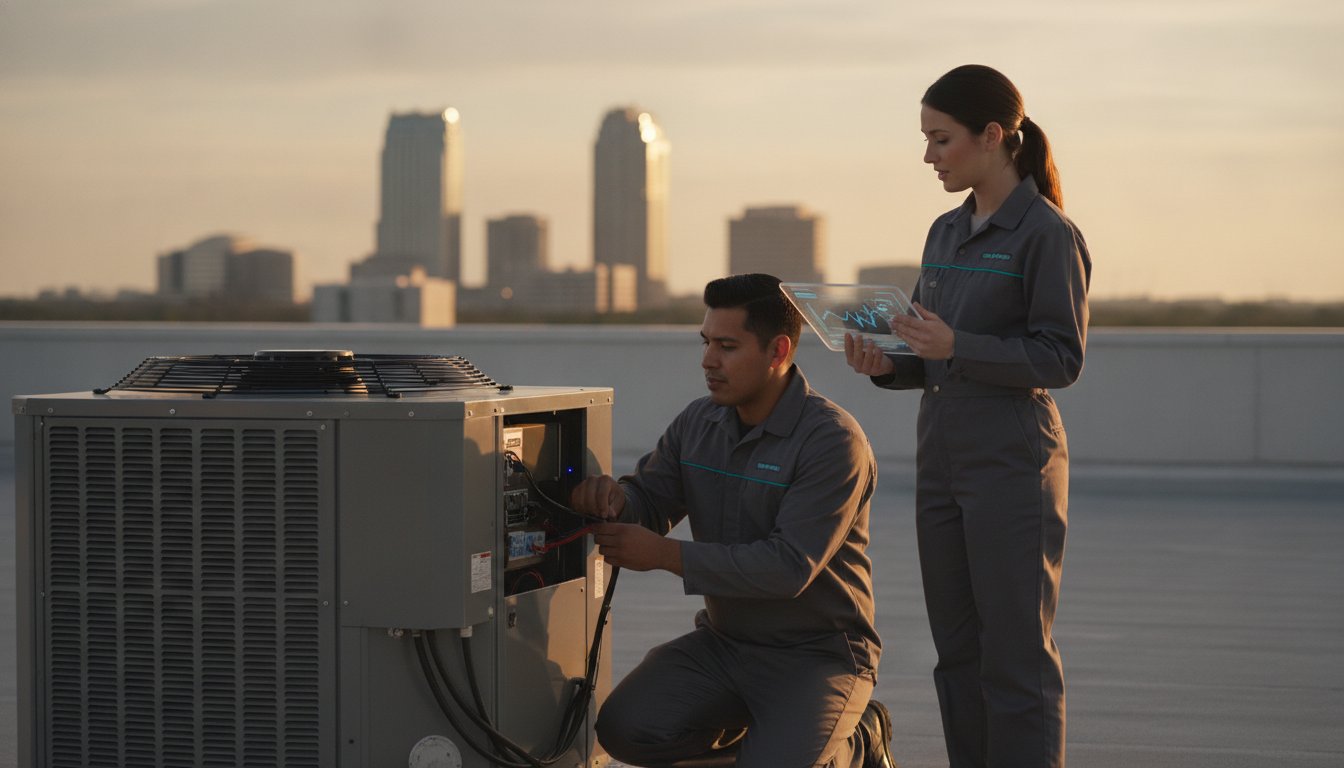
HVAC System Inspection for Home Purchase: The Complete Florida Buyer’s Guide (2026)

Imagine closing on your dream Orlando home on a Tuesday, only to have the air conditioning fail by Friday afternoon when it’s 98 degrees outside. You call for help and discover the unit is 14 years old, leaving you with a sudden $15,000 replacement bill. This is why a specialized hvac system inspection for home purchase is critical before you sign the final papers. It’s a common reality for 1 in 5 buyers who rely solely on a general home inspector’s basic checklist. We know you want to feel confident in your investment, not worried about whether the cooling will hold up during a July heatwave.

Since 1999, RMI Heating and Air Conditioning has helped homeowners avoid these costly surprises by providing clear, jargon-free reports that translate technical data into real-world savings. Our expert evaluations empower you to negotiate better terms and ensure your family stays comfortable from day one. This guide covers everything from checking SEER2 efficiency ratings to identifying moisture risks in the ductwork, giving you the leverage you need to save thousands at the closing table. We’ll walk you through the entire process so you can move in with total peace of mind.

Key Takeaways

  • Understand why a standard home inspection often misses critical defects that only a specialized diagnostic can uncover in Florida’s demanding climate.
  • Identify high-stakes red flags like mismatched tonnage and “micro-leaks” that signal a system is nearing the end of its economic life.
  • Learn how to leverage a professional hvac system inspection for home purchase to negotiate thousands off your closing costs or secure immediate repairs.
  • Discover the essential technical checks for heat exchangers and condenser coils that protect both your family’s safety and your long-term budget.
  • Gain peace of mind by partnering with NATE-certified experts who have provided reliable, efficient cooling solutions to Central Florida since 1999.

Why a General Home Inspection Isn’t Enough for Your HVAC System

Buying a home in Orlando is a major investment that requires due diligence. You likely trust your inspector to find every flaw before you sign the closing papers. However, a standard general home inspection is a broad overview rather than a technical deep dive. These professionals examine everything from the foundation to the electrical outlets. They don’t have the time or the specific diagnostic tools to dismantle your air handler or check the chemistry of the refrigerant. At RMI, we’ve provided cooling you can count on since 1999. We’ve seen too many homeowners face an $8,500 replacement bill just weeks after moving in because a “passed” system had a rusted drain pan or a failing compressor that a visual check missed.

A specialized hvac system inspection for home purchase is the only way to truly protect your wallet. Replacing a central air unit is frequently the most expensive hidden cost in a real estate transaction. While a roof leak is often visible to the naked eye, a compressor can sound perfect one day and seize the next. Our internal data shows that roughly 15% of systems that “pass” a general inspection require major repairs within the first 30 days of ownership. These aren’t small fixes; they’re catastrophic failures that a generalist simply isn’t trained to catch.

Generalist vs. Specialist: Understanding the Scope

General inspectors perform a “performance check.” They turn the AC on, wait for the air to feel cold, and check the age on the manufacturer label. A specialist from RMI goes much deeper. We use manometers to measure static pressure and infrared cameras to find electrical hot spots. If the static pressure is above 0.5 inches of water column, your blower motor is working too hard and will fail prematurely. Most general reports will simply state “recommend HVAC specialist” if they see dust, but they won’t tell you if the evaporator coil is leaking 410A refrigerant.

The Hidden Dangers of the Central Florida Climate

Orlando’s environment is brutal on mechanical equipment. With humidity levels regularly exceeding 90%, internal components face constant moisture exposure. This leads to “short-cycling,” where the system turns on and off too quickly. It keeps the house cool, but it fails to remove humidity, leading to mold growth inside the ducts. Additionally, even in inland Central Florida, salt-laden air from both coasts travels on wind currents. This causes “white rust” on aluminum fins, a type of corrosion that a hvac system inspection for home purchase can identify before it destroys the unit’s efficiency.

Our team at RMI takes a different approach to these inspections. We don’t just look at the unit; we test the integrity of the entire system. In 2023, our technicians identified over 50 units with cracked heat exchangers that had been completely overlooked during the initial home walkthrough. These aren’t just expensive problems; they’re safety risks for your family. We arrive in fully stocked trucks, ready to provide a level of detail that generalists can’t match. You need to know if the system will last five years or five days. Don’t settle for a visual “thumbs up” when your comfort and bank account are on the line.

The Technical Deep Dive: What a Professional HVAC Inspection Covers

A standard home inspector usually checks if the air coming out of the vents feels cold or warm. While helpful, this surface-level check doesn’t reveal the true condition of the equipment. A specialized hvac system inspection for home purchase involves a rigorous analysis of internal components that could fail shortly after you move in. Our technicians, who have provided trusted air conditioning services since 1999, look for specific mechanical red flags that general inspectors often miss.

The heat exchanger is the first priority during any furnace evaluation. Even a hairline crack as small as 1/16th of an inch can allow carbon monoxide to leak into the living space. We use infrared cameras to spot these defects. Beyond safety, we analyze the evaporator and condenser coils for micro-leaks. Debris buildup on these coils often forces the system to work 25% harder to achieve the same cooling effect, which significantly shortens the equipment’s lifespan.

Technicians also measure the system’s static pressure. This is the resistance the blower motor must overcome to move air through the house. If the static pressure exceeds the manufacturer’s rating, usually 0.5 inches of water column, it indicates the ductwork is undersized for the system’s tonnage. This mismatch leads to frequent breakdowns and uneven temperatures. During this phase, we also check refrigerant levels. If the unit still uses R-22, a gas that became illegal to produce or import on January 1, 2020, you face massive costs for even minor repairs. Identifying these issues gives you the data needed for negotiating repairs with the seller before you sign the final papers.

Finally, we perform an amp draw test on the compressor. By comparing the actual electrical pull against the Rated Load Amps (RLA) listed on the nameplate, we can predict if the motor is nearing its end. A compressor pulling 20% more than its rating is a ticking time bomb.

The Core Components: Coils, Compressors, and Motors

Efficiency depends on compatibility. We often find “Frankenstein systems” where a modern 16 SEER condenser is paired with an outdated indoor coil. This mismatch can drop efficiency by 15% and cause the compressor to fail prematurely. Our experts also test the blower motor for bearing wear. A motor that draws excessive power or makes a subtle grinding noise might require a $500 replacement within your first year of ownership. If you want to avoid these hidden costs, requesting a professional evaluation is a smart move for any buyer.

Air Quality and Ductwork Integrity

Duct leaks are a silent budget killer, often wasting 20% to 30% of your cooling energy before it ever reaches a room. We inspect the plenum and trunk lines for gaps or disconnected sections. We also check the air handler for biological growth or mold. If the previous owners didn’t maintain the filtration system, the internal cabinet could be a breeding ground for allergens. We evaluate the existing filter rack to ensure it can accommodate high-efficiency MERV 13 filters without restricting airflow.

Interpreting the Results: High-Stakes Red Flags for Buyers

Buying a home is one of the biggest investments you’ll ever make. You need to know if the climate control system is a reliable asset or a ticking time bomb. When you’re conducting an hvac system inspection for home purchase, the “economic life” of the unit is your first metric. Most modern systems are designed to last 12 to 15 years. If a unit is 10 years old, it’s already entered a high-risk phase where repair costs often exceed 50% of the unit’s total value. At this stage, you aren’t just buying a furnace; you’re inheriting a pending 48-hour emergency replacement.

Technical compatibility is another hidden danger. We often find a 3-ton furnace paired with a 2-ton evaporator coil. This 33% discrepancy in capacity is a recipe for disaster. The oversized blower forces too much air over a small surface area, which causes the coil to freeze and eventually kills the compressor. Since 1999, we’ve seen these “franken-systems” lead to skyrocketing utility bills and premature total system failure. You should also check the SEER2 ratings. The Department of Energy updated efficiency standards in 2023, and by 2026, parts for older, low-efficiency systems will be significantly harder to source. If the current unit is below the 14.3 SEER2 threshold, you’re looking at a full system replacement much sooner than expected.

A professional evaluation follows the ASHI Standard of Practice to ensure every vital component is vetted. This standard helps identify if a system is actually safe for your family to use the day you move in. Don’t let a clean exterior fool you; the real story is hidden inside the cabinet and the service history logs.

The ‘Big Three’ Deal-Breakers

Three specific failures usually mean the system is a total loss. A cracked heat exchanger is the most serious because it’s an immediate carbon monoxide hazard. If our technicians find even a hairline fracture, the unit must be shut down for safety. Similarly, a grounded or failing compressor is the “heart” of the system. Replacing a compressor costs roughly 70% of a new outdoor unit’s price. Finally, look for corroded evaporator coils. Once the copper or aluminum begins to pit and leak refrigerant, “recharging” the system is just throwing money away. You’ll need a new coil, which often requires a full system update to match modern refrigerants.

Identifying ‘Seller Shortcuts’

Sellers sometimes use cosmetic fixes to mask deep-seated mechanical issues. Watch out for fresh spray paint on the outdoor condenser or the indoor furnace cabinet. This is often used to hide heavy rust or chemical corrosion that indicates a history of leaks. Our experts also look for disconnected sensors or bypassed safety switches. These are dangerous “Band-Aid” repairs meant to keep a failing unit running just long enough to close the sale. A lack of service records is the biggest red flag of all. Statistics show that 90% of premature HVAC failures are caused by a lack of professional maintenance. If the seller can’t produce at least two years of biannual tune-up receipts, assume the system has been neglected.

Our goal is to give you the facts so you can negotiate with confidence. Whether the system needs a simple fix or a total overhaul, knowing the truth protects your budget and your comfort. We’ve been providing trusted air conditioning services for over two decades, and we’re here to ensure your new home stays cool and safe from day one.

Negotiation Strategy: Turning Inspection Reports into Savings

A professional inspection report is more than a status update for your potential new home. It’s a powerful financial tool. When you invest in a professional hvac system inspection for home purchase, you’re buying leverage that can save you thousands of dollars at the closing table. Since 1999, RMI has helped Central Florida buyers transform technical findings into real world savings. You shouldn’t just accept a “working” system; you need to know exactly what that system will cost you over the next three years.

Step one is securing a line-itemized repair estimate from a licensed contractor. Vague statements like “AC needs service” carry no weight in a negotiation. You need a document that lists specific parts, refrigerant types, and labor hours. If a technician finds a pitted contactor or a leaking evaporator coil, having a quote for $850 in hand makes the request for a price reduction undeniable. It moves the conversation from “we think there’s an issue” to “here is the documented cost to fix it.”

Step two requires you to differentiate between immediate repairs and future replacements. A broken capacitor is an immediate $250 fix that the seller should handle. An R-22 unit that’s 14 years old is a looming $10,000 replacement. You can’t always expect a seller to buy you a brand new unit, but you can use the age to negotiate a “useful life” credit. If the system is at 90% of its expected lifespan, the purchase price should reflect that upcoming burden. Use the SEER2 efficiency gap to your advantage as well. Units installed before the 2023 federal mandate are significantly more expensive to operate. Pointing out that a 13 SEER unit will cost the buyer 25% more in monthly utilities than a modern 16.2 SEER2 unit is a valid reason to request a price adjustment.

Credit vs. Repair: Why You Want the Credit

We always recommend requesting a seller credit rather than asking the seller to perform the repairs. When a departing seller is responsible for a fix, they have a financial incentive to choose the cheapest possible solution. This often leads to “band-aid” repairs by uncertified handymen. By securing a credit, you maintain total control. You can choose the high-quality equipment and the trusted team you want in your home for the long haul. Presenting a professional RMI report to the listing agent shows you’re serious and backed by 25 years of local expertise.

Estimating Replacement Costs in 2026

Budgeting for a replacement in 2026 requires looking at current Central Florida market data. A 3-ton high-efficiency system in Orlando currently ranges from $9,200 to $13,800 depending on the SEER2 rating. Labor rates in the region now average $115 to $160 per hour for licensed installs. If the hvac system inspection for home purchase reveals undersized ductwork or old insulation, you should factor in an additional $2,500 to $5,000. Modern systems also require compatible smart thermostats, which typically add $350 to the total project cost.

Don’t leave your comfort or your bank account to chance during a home closing. Our team provides the detailed, professional documentation you need to negotiate with confidence. We’ve been the trusted name in Central Florida cooling for over two decades, and we’re ready to help you make an informed investment.

Ready to protect your investment? Schedule your expert pre-purchase inspection with RMI HVACR today and get the clarity you deserve.

RMI HVACR: Your Trusted Inspection Partner Since 1999

Since 1999, RMI HVACR has served as the backbone of home comfort across Central Florida. We understand that a Florida home’s cooling system works harder than almost anywhere else in the country. Our team brings 25 years of specific regional knowledge to every hvac system inspection for home purchase. We don’t just look at the age of the unit; we analyze how the salt air, high humidity, and intense heat cycles have impacted the internal components over time. This specialized local perspective ensures that you won’t be surprised by a system failure just weeks after moving into your new property.

Our NATE-certified technicians arrive in trucks that function as mobile service centers. Each vehicle carries over 500 essential parts and advanced diagnostic tools, including thermal imaging cameras and digital manifolds. This level of preparedness means we don’t just identify a potential problem. We provide an immediate, expert diagnosis backed by data. If a capacitor is failing or a compressor is drawing too much amperage, we’ll find it during the initial walk-through. This efficiency saves you time and prevents the need for multiple return visits during your stressful moving period.

We provide comprehensive reports that speak the language of real estate. These aren’t messy, handwritten notes; they’re professional, digital documents designed to be shared with sellers, lenders, and insurance agents. We focus on clarity because we know these reports are often the deciding factor in price negotiations. Whether we’re identifying a minor duct leak or a major evaporator coil issue, our goal is to give you the leverage you need. From the initial inspection to a full system installation, our promise remains the same: your comfort always comes first.

The RMI Difference in Central Florida

Our roots run deep in Orlando, Kissimmee, and the surrounding communities. Local realtors trust our “No-Nonsense” assessment because we prioritize technical facts over sales pitches. We’ve seen how the 100-degree days in Osceola County can stress an undersized unit. Because real estate transactions move at a breakneck pace, we offer 24/7 emergency availability. If your inspection window is closing and you need a reliable expert on-site within 24 hours, we’re the team that answers the call. Our reputation is built on being there when our neighbors need us most.

Next Steps: Schedule Your Pre-Purchase Inspection

Most Florida real estate contracts include a strict 10-day due diligence window. It’s vital to book your hvac system inspection for home purchase within the first 48 hours of an executed contract. This timing ensures you have enough room to request repairs or credits based on our findings. To make the process seamless, please ensure the seller provides full access to the air handler, outdoor condenser, and thermostat. We also recommend asking the seller for the last 3 years of service history and ensuring the power is active at the property. This allows us to perform a full load test on the compressor and verify the system’s true performance. Don’t leave your future comfort to chance. Protect your investment-Schedule your specialist inspection with RMI today.

Secure Your Florida Home Investment Today

Buying a home in Central Florida means you’ll rely on air conditioning for 12 months a year. A standard home inspection often misses critical technical failures like cracked heat exchangers or leaking evaporator coils that can cost $5,000 or more to replace. By prioritizing a specialized hvac system inspection for home purchase, you obtain the precise data needed to negotiate repair credits or price reductions before you reach the closing table. It’s the only way to ensure your new property doesn’t come with an immediate, expensive mechanical failure.

RMI HVACR has served as a dependable partner for local families since 1999. Our NATE-Certified technicians arrive in fully stocked service vehicles, ready to perform a deep-dive analysis of any unit. We provide the technical clarity you need to make an informed decision, backed by our 25-year history of excellence in the region. Don’t leave your comfort or your bank account to chance when you’re making such a significant investment.

Request a Professional HVAC Inspection for Your New Home to protect your future and enjoy cooling you can count on. You deserve a stress-free start in your new Florida residence.

Frequently Asked Questions

Is an HVAC inspection required for a home purchase in Florida?

Florida law doesn’t mandate a separate HVAC inspection, but most insurance providers require a 4-point inspection for homes older than 20 years. You’ll likely need proof that the system has at least 3 years of remaining life to secure a standard homeowners policy. Since 1999, we’ve seen many buyers lose their financing because an old unit didn’t meet these specific carrier guidelines.

How much does a professional HVAC-only inspection cost?

A specialized hvac system inspection for home purchase typically costs between $150 and $350 depending on the number of zones. This investment is separate from your general home inspection fee and provides a much deeper technical analysis. Our certified experts deliver a detailed report that includes refrigerant levels and electrical amp draws, which are details a generalist often misses.

What is the typical lifespan of an AC unit in Central Florida?

The average air conditioner in Central Florida lasts between 10 and 12 years due to our extreme humidity and high run times. While units in northern states might reach 20 years, our local systems work 2,500 to 3,000 hours annually. If the manufacturing date on the cabinet is more than 10 years old, you should prepare for a replacement in the near future.

Can I use a general home inspector’s report to negotiate AC repairs?

You can use a general report, but a specialist’s diagnostic carries significantly more weight during a hvac system inspection for home purchase. General inspectors usually only verify that the air is 15 to 20 degrees cooler than the intake. An HVAC professional identifies specific mechanical failures and provides exact repair quotes that you can take directly to the closing table for credits.

What happens if the HVAC system uses R-22 refrigerant?

If the system uses R-22, it’s an obsolete unit that will be very expensive to maintain. The EPA officially banned the production and import of R-22 on January 1, 2020. Because the supply is limited to recycled gas, a simple recharge can cost $150 per pound or more. Most homeowners find it’s more cost-effective to replace these systems rather than fixing a leak.

Should I buy a house with a 15-year-old HVAC system?

You can safely buy the home if you negotiate a price reduction or credit of $6,000 to $10,000 for a new installation. A 15-year-old system is past its expected lifespan and likely operates at a 10 SEER rating or lower. Upgrading to a modern SEER2 compliant unit can reduce your monthly cooling costs by 30% to 40% immediately while providing much better humidity control.

How long does a specialist HVAC inspection take?

A thorough inspection by a licensed technician takes 60 to 90 minutes to complete. We spend this time checking the evaporator coils for mold, testing the compressor’s starting components, and examining the ductwork for leaks. This process is methodical and ensures that your cooling you can count on starts the moment you get the keys to your new property.

What is a ‘Manual J’ load calculation and do I need one during an inspection?

A Manual J is a calculation used to determine the exact BTU capacity your home needs based on its square footage and insulation. You don’t usually need one for a standard inspection unless the home has a new addition or feels consistently humid. It’s the only way to prove a system is sized correctly, which prevents the equipment from cycling on and off 10 times an hour.

Why Does My House Feel So Humid With the AC On? (2026 Central Florida Guide)

It’s a familiar story for countless Central Florida homeowners: the thermostat is set to a crisp 72 degrees, but you’re still dealing with that damp, clammy air that makes everything feel sticky. You know the system is running and blowing cold air, which makes it even more frustrating. If you’re constantly asking, why does my house feel so humid with the ac on, you’re not alone and the answer is often more complex than just the temperature setting.

You can count on this guide to solve that problem. We promise to uncover the technical reasons your home feels this way, from an oversized unit to a blocked drain line, without the confusing jargon. Our certified experts will provide the exact, actionable steps you need to take to restore crisp, dry comfort to your living space, lower your energy bills, and protect your home from the threat of mold growth. This guide will show you how to diagnose the issue and finally achieve that ideal 45-55% indoor humidity level you deserve.

Key Takeaways

  • Understand how your air conditioner’s cooling process is also its primary way of removing humidity, and what can interrupt this critical function.
  • Discover the most common reasons why your house feels so humid with the ac on, from incorrect fan settings to dirty internal components.
  • Learn the “Oversized AC” paradox and why a unit that’s too powerful for your home often fails to properly dehumidify your living space.
  • Find actionable troubleshooting steps you can take right now, like checking your air filter, to potentially solve the problem without a service call.

The Dual Mission: Why Your AC is Actually a Dehumidifier

You’re not imagining it. That sticky, damp feeling in your home, even when the thermostat proudly displays a cool 72 degrees, is a real and common problem for Florida homeowners. The reason is simple: your air conditioner has two critical jobs, not just one. Its primary mission is to cool the air, but its equally important secondary mission is to remove moisture. When it fails at the second task, you’re left wondering, why does my house feel so humid with the ac on?

To understand this, we need to look at two types of heat. The first is Sensible Heat, which is the temperature you can feel and measure with a thermostat. The second, and more elusive, is Latent Heat. This is the energy held within the water vapor in the air. Your AC must fight both. An air conditioner removes sensible heat to lower the temperature, but it must also remove latent heat to reduce humidity. This is why a home at 72 degrees with humidity above 60% feels far more uncomfortable and warmer than the same temperature with humidity at a comfortable 50%.

How the Condensation Process Works

Your air conditioner performs its dehumidifying magic through a process of condensation, much like a glass of ice water “sweating” on a hot day. At the heart of this process is the indoor evaporator coil. This is a fundamental part of how air conditioning works. When your system runs, refrigerant makes this coil intensely cold. As warm, humid air from your home is pulled across it, the dramatic temperature drop forces the invisible water vapor in the air to turn back into liquid water. This condensation collects on the coil, drips into a drain pan, and is safely routed outside your home. The result is cooler, drier air being circulated back into your living space.

Defining “Ideal” Indoor Humidity for Florida Homes

For maximum comfort and health in Florida, the ideal indoor relative humidity level is between 45% and 55%. This “sweet spot” feels comfortable on your skin and protects both your family and your home. When humidity levels consistently rise above 60%, it creates an environment where problems can multiply quickly. Our expert technicians have seen firsthand the damage that uncontrolled humidity can cause.

  • Health Risks: High humidity is a breeding ground for biological contaminants. Mold spores can begin to grow, dust mite populations explode, and other allergens thrive, potentially triggering asthma and allergy symptoms.
  • Structural Risks: Excess moisture gets absorbed by porous materials in your home. This can lead to warping wood floors, peeling paint or wallpaper, damp spots on ceilings, and a persistent musty odor in carpets and upholstery.

Effectively managing both temperature and humidity is the key to true home comfort. If your system is only winning half the battle, it’s not delivering the reliable, efficient performance you deserve.

5 Common Culprits: Why Your House Feels Like a Sauna with the AC On

Your air conditioner’s job is twofold: cool the air and remove excess moisture. When it only does the first part, you’re left with a cold, clammy environment that feels uncomfortable and inefficient. If you’re constantly asking, “why does my house feel so humid with the ac on?”, the answer often lies within the system itself. An expert diagnosis is always best, but the problem frequently traces back to one of five common, and often fixable, issues.

Let’s break down the most frequent reasons your home feels sticky even when the AC is running.

The “Fan On” vs. “Fan Auto” Mistake

This is the simplest problem to check and solve. Your thermostat has a fan setting, typically with “On” and “Auto” options. Setting it to “On” means the fan runs continuously, 24/7. When the cooling cycle stops, the fan keeps blowing air over the wet evaporator coil. This re-evaporates all the moisture the AC just worked hard to remove and pushes it right back into your home. The “Auto” setting, however, syncs the fan with the cooling cycle. When cooling stops, the fan stops, allowing collected water to drip off the coils and exit through the condensate drain.

Immediate Fix: Walk over to your thermostat right now. If the fan is set to “On,” switch it to “Auto.” This single change solves the problem for a surprising number of homeowners.

The Impact of Dirty Air Filters and Coils

Your AC dehumidifies by passing warm, moist air over the frigid evaporator coil. This rapid temperature drop causes condensation, effectively “squeezing” water from the air. But if your air filter is clogged or the coil itself is caked in grime, airflow is severely restricted. The system can’t pull enough air across the coil to remove humidity efficiently. You might notice musty odors or that your AC runs for much longer cycles. According to the U.S. Department of Energy, just 1/16th of an inch of dust on an evaporator coil can reduce its efficiency by up to 21%.

Beyond restricted airflow, several other mechanical issues can sabotage your comfort:

  • Leaky Ductwork: Your return ducts pull air from your home to be cooled. If these ducts have leaks and run through a humid attic or crawlspace, they will suck that heavy, moist air directly into your AC system. Your air conditioner is then fighting a losing battle, constantly trying to dehumidify a fresh supply of swampy air.
  • Frozen Coils: An evaporator coil covered in ice is completely ineffective. Ice forms a barrier that prevents warm air from making contact with the coil’s surface. This can be caused by dirty filters restricting airflow or a low refrigerant charge. Your AC will run and run, but no actual cooling or dehumidification can happen.
  • Clogged Condensate Line: The water pulled from your air needs a place to go. It drains out of your home through a condensate line. Over time, this line can become clogged with algae and debris. When it does, water backs up into the drain pan and can even re-enter your home’s air supply, increasing humidity. A blocked drain is a common issue our certified technicians can resolve during a scheduled AC tune-up, preventing both humidity problems and potential water damage.

The “Oversized Unit” Paradox: Why Bigger Isn’t Better

It seems logical: a bigger, more powerful air conditioner should cool your home better, right? In reality, when it comes to HVAC systems, an oversized unit is one of the most common reasons homeowners ask, “why does my house feel so humid with the ac on?” A system that is too large for your home’s square footage creates a frustrating and inefficient cooling experience through a process called “short-cycling.” It cools the air so quickly that it never gets a chance to perform its second, equally important job: dehumidification.

An air conditioner needs to run for a sustained period, typically 15-20 minutes per cycle, to effectively remove moisture from the air. An oversized unit might hit your thermostat’s target temperature in under 10 minutes, satisfying the call for cooling but leaving gallons of water vapor hanging in the air. This is a frequent issue in Central Florida, where some contractors mistakenly “over-spec” a system, believing more tonnage is the best way to fight our intense heat. This approach only leads to a cold, clammy indoor environment and higher energy bills.

What is Short-Cycling?

Short-cycling is exactly what it sounds like: your AC kicks on, blasts frigid air for 5-8 minutes, and then abruptly shuts off. During the first part of any cooling cycle, the system removes “sensible heat,” which is the heat you can measure with a thermometer. Only after running for about 10 minutes does the indoor evaporator coil become cold enough to start condensing and draining significant amounts of water vapor, or “latent heat.” A short-cycling unit rarely reaches this crucial stage, leaving your home feeling damp and uncomfortable, much like a chilly basement.

The Solution for Oversized Systems

If you already have an oversized system, you don’t necessarily need a full replacement. Our certified experts can often implement effective solutions to manage the excess humidity and improve your comfort. The key is to extend the system’s run time or to treat humidity as a separate issue.

  • Variable-Speed Technology: Modern air conditioners with variable-speed blowers and compressors can run at a lower, more consistent power level. This allows them to run for much longer cycles, giving them the time needed to pull moisture from the air without over-cooling your home.
  • Whole-Home Dehumidifiers: Installing a dedicated whole-home dehumidifier is the most reliable fix. This system integrates with your existing ductwork to manage humidity levels independently of your AC. A professional-grade unit can remove over 100 pints of water from your home’s air every 24 hours, guaranteeing a crisp, comfortable feel.
  • A Proper Manual J Load Calculation: For any new installation, this is non-negotiable. A Manual J calculation is an industry-standard protocol established by the Air Conditioning Contractors of America (ACCA). It analyzes dozens of factors, including window efficiency, insulation levels, home orientation, and local climate data, to determine the precise cooling load your home requires. It is the only guaranteed method to ensure your new system is sized for peak performance and comfort.

Getting the size right from the start prevents the frustrating feeling of a humid house with the AC on. It’s about finding the perfect balance of power and efficiency, a balance our trusted technicians have delivered since 1999.

Practical Troubleshooting: What to Check Before Calling the Pros

Before you pick up the phone, a few simple checks can often solve the problem or provide valuable information for a technician. If you’re wondering why does my house feel so humid with the ac on, starting with these five steps can save you time and money. These are the most common culprits our certified experts encounter, and many can be addressed without a service call.

Your air conditioner is a complex system, but its basic functions are straightforward. A problem in one area can easily disrupt its ability to dehumidify your home. Here is a reliable checklist to work through:

  • Check Your Air Filter: A dirty, clogged filter is the number one cause of reduced AC performance. It restricts airflow over the evaporator coils, preventing them from getting cold enough to condense water vapor effectively. Also, check the MERV rating. A filter with a MERV rating above 12 can be too restrictive for some residential systems, causing the same airflow problem as a clog.
  • Inspect the Outdoor Condenser Unit: Walk outside and look at your condenser unit. Is it covered in grass clippings, leaves, or dirt? The coils and fins on this unit are designed to release heat outside. If they are blocked, the system cannot cool efficiently, which directly impacts its ability to remove humidity indoors. Ensure there’s at least 24 inches of clear space around the entire unit.
  • Examine Windows and Doors: Check for failed seals or gaps around your windows and doors. Even a small opening can allow a significant amount of warm, moist air to infiltrate your home, forcing your AC to work overtime and struggle against a constant source of new humidity.

The 24-Hour Humidity Test

Your thermostat’s fan setting could be the hidden problem. If your fan is set to “On” instead of “Auto,” it runs constantly, even when the cooling cycle stops. This blows air over the wet evaporator coils, re-evaporating that collected moisture right back into your house. To test this, purchase an inexpensive digital hygrometer. Set your fan to “Auto,” note the humidity level, and check it again after 24 hours. A drop of 5% or more indicates the fan setting was the issue.

Visual Inspection of the Drain Line

Your AC removes gallons of water from the air each day, which exits through a PVC condensate drain line. Locate this pipe near your indoor air handler; it will have a U-shaped bend called a “P-trap.” If this line clogs with algae or sludge, water backs up. Look for standing water in the drain pan or signs of a “wet switch” (a safety device that shuts off your AC) activation. As a preventative measure, you can pour one cup of distilled white vinegar down the line every 90 days to clear out buildup.

If you’ve performed these checks and your home still feels muggy, or if you discover a significant clog in your drain line that a simple flush can’t fix, it points to a more complex issue. Don’t let a small problem turn into a major repair. Schedule a professional inspection with our certified technicians today for cooling you can count on.

Professional Solutions: How RMI Restores Your Comfort

Feeling that sticky, humid air inside your home even when the AC is running is more than just uncomfortable; it’s a sign that your system isn’t performing correctly. At RMI, we deliver “Cooling You Can Count On,” a promise that extends beyond just temperature to total home comfort, including proper humidity control. Since 1999, our NATE-certified technicians have specialized in diagnosing and solving the unique climate challenges of Central Florida. We understand the specific reasons why your house feels so humid with the ac on, and we have the expert solutions to fix it right the first time.

Your comfort shouldn’t have to wait. That’s why our service vehicles arrive fully stocked with the most common parts and tools needed to address humidity issues on the spot. This commitment to preparedness means our certified experts can often complete repairs in a single visit, restoring your home’s dry, cool feel without delay. We don’t just find the problem; we provide an immediate, reliable solution.

Precision Tune-Ups and Coil Cleaning

One of the most common culprits of indoor humidity is a neglected system. Our technicians perform deep cleaning services that restore your evaporator coil’s ability to “sweat” and pull moisture from the air. A dirty coil can reduce dehumidification performance by over 20%. We also precisely check refrigerant levels. If your system is low on refrigerant, the coils won’t get cold enough to condense water vapor, leaving your air feeling damp and clammy. Our comprehensive tune-ups are the core of our preventative strategy. Learn more about our maintenance plans and see how they protect your comfort year-round.

Advanced Air Quality and Dehumidification Upgrades

For persistent humidity, especially during Florida’s “shoulder seasons” in spring and fall, a system upgrade may be the most effective long-term solution. We can install a whole-home dehumidifier that works with your HVAC system to manage moisture levels independently. We also specialize in upgrading homeowners to modern variable-speed air conditioners. These advanced systems run longer at lower speeds, a process that can remove up to 50% more moisture than traditional single-stage units. Don’t keep wondering why your house feels so humid with the AC on. Get a definitive answer from the experts. Schedule your expert AC inspection with RMI today and let us restore the crisp, cool comfort you deserve.

Your Solution to a Cool, Dry Central Florida Home

Living in a sticky, humid home isn’t the comfort you pay for. You now know that an oversized AC unit, clogged evaporator coils, or even leaky ductwork can be the real culprits behind that clammy feeling. This knowledge is the first step to finally understanding why does my house feel so humid with the ac on. While some issues can be a simple fix, pinpointing the exact cause often requires expert diagnostics.

That’s where our team comes in. Since 1999, RMI Heating and Air Conditioning has been Central Florida’s trusted expert for creating cool, comfortable homes. Our A+ Rated professional technicians arrive ready to solve the problem with fully stocked trucks, available for 24/7 emergency service. Don’t spend another day in a home that feels like a swamp. Request an Expert Humidity Assessment from RMI Heating and Air Conditioning and let our certified team restore the crisp, cool comfort you deserve.

A perfectly balanced home environment is just a call away.

Frequently Asked Questions

Is 60% humidity in a house too high?

Yes, 60% humidity is too high for a healthy and comfortable home. The Environmental Protection Agency (EPA) recommends keeping indoor relative humidity between 30% and 50%. When levels exceed 60%, it creates an ideal environment for mold and dust mite growth, which can trigger allergies and respiratory problems. This excessive moisture can also damage wood floors, furniture, and paint over time, making it crucial to address the cause.

Why is my AC running but the house still feels sticky?

Your house feels sticky because the air conditioner is cooling the air but isn’t removing enough moisture. This is a classic sign of an oversized AC unit, which cools the space too quickly and shuts off before it can complete a full dehumidification cycle. This is a very common reason why your house feels so humid with the ac on. Other potential causes include dirty evaporator coils or incorrect fan settings that require a professional diagnosis.

Can a low refrigerant charge cause high humidity?

Absolutely. A low refrigerant charge is a primary cause of poor dehumidification and high humidity. Refrigerant is the substance that absorbs heat and moisture from your air. When the charge is low due to a leak, the system’s evaporator coil won’t get cold enough to effectively condense water vapor. This means moisture gets blown back into your house instead of draining away outside. This issue requires an expert technician to find and fix the leak.

Does a higher SEER2 rating mean better dehumidification?

Not always. A higher SEER2 rating guarantees better energy efficiency, but it doesn’t directly translate to superior dehumidification. While many high-efficiency systems include features that do help, like variable-speed fans, the rating itself only measures cooling output versus energy consumed. For the best moisture control, you need a system with features like a two-stage compressor or variable-speed technology, which allow for longer, more effective run times that pull more water from the air.

How long should my AC run to properly remove humidity?

A correctly sized air conditioner should run for 15 to 20 minutes per cycle, about two to three times an hour on a typical hot day. These longer run times are essential for pulling moisture from the air. If your system runs for less than 10 minutes before shutting off, it is likely too large for your home. These short cycles are a key reason why your house feels so humid with the ac on, even if the thermostat reading is low.

Will a dirty air filter make my house feel more humid?

Yes, a dirty air filter can definitely make your house feel more humid. When the filter is clogged with dust and debris, it severely restricts airflow across the evaporator coil. This lack of airflow can cause the coil to get too cold and freeze over, completely stopping the dehumidification process. Even if it doesn’t freeze, reduced airflow means less moisture is removed from the air. We recommend changing your filter every 30 to 90 days for optimal performance.

Should I buy a portable dehumidifier or call an HVAC pro?

You should call an HVAC professional, as a portable dehumidifier only masks the underlying problem. While a portable unit can provide temporary relief in one area, it doesn’t fix the root cause of why your central AC system isn’t working correctly. A certified technician can properly diagnose the issue, whether it’s an oversized unit, a refrigerant leak, or a dirty coil. Fixing the actual problem is the only reliable, long-term solution for whole-home comfort.

Commercial Walk-In Cooler Service Near Me: Central Florida’s Expert Guide for 2026

It’s 9 PM on a sweltering August Saturday in Orlando, and the hum from your walk-in cooler suddenly goes silent. Every minute the temperature climbs is another minute your valuable inventory inches closer to becoming a total loss. The panic sets in: Who can you call right now that will actually show up and fix the problem correctly?

It’s a nightmare scenario for any restaurant owner, grocer, or facility manager in Central Florida. You’ve likely dealt with the frustration of unreliable technicians or surprise invoices that inflate your operational costs. The constant worry about equipment failure, especially in our demanding climate, is a heavy burden. This guide is built to remove that burden. We’ll show you exactly how to find a dependable commercial walk-in cooler service near me that not only responds with urgency but also helps you lower energy bills and ensure you stay compliant with health codes. You will discover the critical signs your cooler needs immediate attention, the questions you must ask before hiring a technician, and how a proactive maintenance plan can protect your business from costly emergencies for years to come.

Key Takeaways

  • Learn why Central Florida’s unique heat and humidity require specialized walk-in cooler maintenance to prevent costly compressor failure.
  • Discover the critical warning signs of a failing system, helping you identify when to call for service before you lose valuable inventory.
  • Understand when to repair or replace your unit by calculating ROI, ensuring your search for a commercial walk-in cooler service near me leads to a smart financial decision.
  • Get a simple checklist for vetting local refrigeration partners, focusing on essential licensing, insurance, and 24/7 emergency availability to protect your business.

Why Local Expertise Matters for Commercial Walk-In Cooler Service

When your commercial walk-in cooler fails, every minute counts. It’s not just an inconvenience; it’s a direct threat to your inventory, your revenue, and your reputation. A professional service call is far more than a simple repair. It involves a comprehensive diagnostic process, precise refrigerant management, and detailed structural integrity checks to prevent future failures. For businesses in Central Florida, choosing a local expert isn’t a preference, it’s a strategic necessity.

The relentless Florida climate, with its 90% humidity and summer days consistently hitting 95 degrees, places extreme strain on refrigeration compressors. This intense heat load is the primary enemy of any cooling system, a fundamental challenge that has persisted throughout the history of mechanical refrigeration. When you search for a commercial walk-in cooler service near me, you’re really searching for two things: immediate response time and local parts availability. A technician from across the state can’t help you when you have $15,000 worth of produce creeping above the 41°F danger zone. The cost of a few hours of downtime can easily exceed the service fee by a factor of 10 or more, making a fast, local response your most valuable asset.

The Impact of Central Florida’s Climate on Refrigeration

In Orlando, high ambient temperatures force a walk-in cooler’s condenser to work up to 30% harder than it would in a milder climate. This constant overwork leads to short-cycling and premature compressor motor failure. The oppressive humidity creates another critical issue: evaporator coils rapidly accumulate ice, which severely restricts airflow and can cause drainage lines to block with algae and sludge. That’s why our expert local technicians prioritize aggressive condenser coil cleaning as a core part of any maintenance plan; it’s the single most effective task for ensuring system longevity in Florida.

Compliance and Health Standards in 2026

A functioning walk-in cooler is essential for meeting Florida Department of Health requirements, which mandate that cold-held foods remain at or below 41°F. Failure to comply can result in failed inspections and costly operational shutdowns. Maintaining calibrated digital thermometers and diligent temperature logs is your first line of defense during a safety audit. Furthermore, all refrigerant handling must adhere to federal law. Our technicians are EPA Section 608 certified, ensuring every repair involving refrigerants is performed legally and safely, protecting you from potential fines and ensuring your business remains fully compliant.

Common Walk-In Cooler Problems and When to Call for Service

A walk-in cooler doesn’t usually fail overnight. Your refrigeration system almost always gives off warning signs before a complete breakdown, and learning to spot them can save you thousands in lost inventory and emergency repair costs. Ignoring a small issue, like an unusual noise or a slight temperature change, can quickly escalate into a critical failure that shuts down your operations.

Understanding the difference between minor fluctuations and serious symptoms is key. For instance, a temperature that creeps up by one or two degrees and stays there may indicate a slow refrigerant leak, while wild temperature swings could point to a faulty thermostat or a defrost timer issue. Both scenarios compromise food safety. The U.S. Department of Agriculture (USDA) mandates that refrigerated foods be kept at or below 40°F to prevent bacterial growth, so maintaining consistent safe food storage temperatures isn’t just a best practice; it’s a legal requirement. When you notice these inconsistencies, it’s time to investigate.

Audible and structural clues are just as important. Can you hear a high-pitched squeal or a metallic rattle? That often points to a failing evaporator or condenser fan motor. A much more serious sound is a loud groan or clank from the compressor, which signals severe mechanical stress. Here in Florida, the high humidity also causes unique structural problems. Damaged door seals and sagging hinges allow warm, moist air to infiltrate your cooler, forcing the system to work harder. In severe cases, failed floor insulation can lead to “floor heaving,” where trapped moisture freezes and expands, causing permanent damage to your unit’s foundation. These are the moments when finding a reliable commercial walk-in cooler service near me becomes an urgent priority.

Top 5 Signs Your Cooler Needs Immediate Professional Attention

Some symptoms demand an immediate call to a certified technician. Delaying service for these issues can lead to catastrophic failure and significant product loss. Look out for these five critical signs:

  • Excessive Frost Buildup: A thick layer of ice on the evaporator coils or air vents blocks airflow, strangling your system. This is a classic sign of a defrost system failure or a refrigerant problem.
  • Water Pooling on the Floor: Puddles inside or outside your cooler often mean you have a clogged or frozen drain line. If left unaddressed, this can lead to dangerous slip hazards and mold growth.
  • The Compressor Runs Constantly: Your compressor should cycle on and off. If it runs nonstop without reaching the target temperature, you likely have a refrigerant leak or a failing compressor. Your energy bills will skyrocket just before the unit fails completely.
  • Strange Odors: A musty smell points to mold from a drainage issue. A chemical or “hot” smell can indicate an electrical problem or a refrigerant leak.
  • Rapid Food Spoilage: The most undeniable sign. If your products are spoiling faster than their expiration dates suggest, your cooler is not holding a safe temperature, regardless of what the thermostat reads.

DIY Checks Before You Call a Technician

Before scheduling a service call, a few quick checks can sometimes solve the problem or provide valuable information for our technicians. These steps can potentially save you the cost of a service visit for a simple fix.

  • Verify the Power Supply: It sounds simple, but it happens. Check your facility’s breaker panel to ensure the breaker dedicated to the walk-in cooler hasn’t tripped.
  • Inspect the Condenser Coils: Look at the outdoor unit. Are the coils clogged with dirt, leaves, or other debris? Gently cleaning the coils can significantly improve cooling efficiency.
  • Check the Door Seal (The Dollar Bill Test): Place a dollar bill between the door and the frame and close it. If you can pull the bill out with no resistance, the gasket is worn out and is leaking cold air. If these simple checks don’t resolve the issue, it’s time to have our certified technicians diagnose the problem.

Repair vs. Replacement: Calculating Your ROI

When your walk-in cooler fails, the immediate question is always: “Should I fix it or replace it?” The answer isn’t just about the upfront cost; it’s about the long-term return on your investment (ROI). A strategic decision today can save you thousands in operational costs over the life of your equipment. As your trusted partner since 1999, we provide the expert data you need to make the most profitable choice for your business.

A reliable guideline is the 50% Rule. If a proposed repair costs more than 50% of the price of a new, comparable unit, replacement is almost always the smarter financial move. For example, a $4,500 compressor repair on a unit that would cost $8,000 to replace is a clear signal to upgrade. This simple calculation prevents you from sinking money into equipment with a limited remaining lifespan.

Modern efficiency standards dramatically impact your ROI. New walk-in cooler models built to meet 2026 Department of Energy standards can be up to 40% more energy-efficient than units from a decade ago. This translates directly into lower monthly utility bills. Equally important is the condition of your walk-in’s box. Over time, insulation panels can degrade, losing their R-value and forcing your refrigeration system to run constantly. Finally, federal tax incentives, like the Section 179 deduction, and local utility rebates can significantly reduce the net cost of a new high-efficiency system, making replacement an even more attractive option.

When to Invest in a Repair

A quick repair is often the most cost-effective solution for newer systems. If your walk-in is less than 10 years old, replacing a failed component like a fan motor or a thermostatic expansion valve (TXV) makes perfect sense. Minor, professionally sealed refrigerant leaks or isolated electrical issues that don’t involve the main compressor are also clear candidates for repair, restoring your unit to peak performance without a major capital expense.

Signs It’s Time for a Complete Walk-In Replacement

If you find yourself frequently searching for commercial walk-in cooler service near me, it’s a sign of a larger problem. Widespread panel rot, condensation between seams, or ‘heaving’ floors indicate a total loss of insulation integrity. Repeated compressor failures or a system that uses phased-out refrigerants like R-22 are also definitive signs. As the U.S. EPA continues to regulate commercial refrigeration systems, sticking with obsolete technology becomes increasingly costly and unreliable. Lastly, if your business has grown, your old unit may simply lack the capacity to keep up.

Making the right call requires a professional assessment. Our certified technicians don’t just fix the immediate problem; we evaluate your entire system’s health, efficiency, and long-term viability. We provide a clear, data-driven analysis, so you can confidently decide whether a targeted repair or a full replacement will deliver the best return for your business. It’s cooling you can count on.

Choosing the Right ‘Near Me’ Refrigeration Partner in Central Florida

When your walk-in cooler fails, every minute of downtime directly impacts your revenue and inventory. Choosing a refrigeration partner isn’t just about finding a quick fix; it’s about safeguarding your business operations. A reliable partner ensures your equipment runs efficiently, prevents catastrophic failures, and responds with urgency when the unexpected happens. The right choice protects your investment and provides peace of mind.

The first mark of a professional operation is proper credentials. Always verify that a contractor holds a current state license and carries comprehensive general liability and worker’s compensation insurance. This isn’t just a formality. It protects your business from any liability in the event of an accident on your property. For critical businesses like restaurants, grocers, and medical facilities, 24/7 emergency availability is non-negotiable. A problem at 2 a.m. needs an immediate response, not a callback the next business day. Dependability means being there when it matters most.

Beyond availability, look for a company that prioritizes first-visit repairs. The gold standard for this is a fleet of fully stocked service trucks. A technician who arrives with the most common parts, diagnostic tools, and refrigerants can often resolve the issue in a single visit. This efficiency drastically reduces your equipment’s downtime and gets your business back to normal operations faster. When you’re searching for a commercial walk-in cooler service near me, this level of preparedness separates the experts from the amateurs.

Questions to Ask a Commercial Refrigeration Contractor

Before committing to a service provider, arm yourself with the right questions. Their answers reveal their level of expertise, responsiveness, and professionalism. A confident, transparent answer is a sign you’re dealing with a true partner. We recommend asking:

  • Are your technicians NATE-certified or factory-trained on my specific brand? Certifications like NATE (North American Technician Excellence) guarantee a technician has proven, real-world knowledge. Brand-specific training ensures they understand the unique engineering of your equipment.
  • What is your guaranteed response time for emergency cooling failures? Get a specific window. A vague promise of “soon” isn’t enough when your inventory is at risk. A professional service will commit to a clear timeframe, often within 2-4 hours for critical emergencies.
  • Do you provide detailed digital service reports for my records? Modern service providers offer digital reports outlining the work performed, parts used, and system diagnostics. This level of organization, often managed through platforms like Repair-CRM, creates an essential service history for your equipment, aiding in future troubleshooting and warranty claims.

The Value of a Customized Preventative Maintenance Plan

Reactive repairs are always more expensive than preventative care. A customized maintenance plan is the most effective strategy for extending equipment life and preventing costly breakdowns. Depending on your usage, a quarterly plan may be ideal for high-traffic restaurant kitchens, while a bi-annual check might suffice for a less-used storage cooler. The goal is to create a cadence that matches your operational demands. A key benefit is energy savings; according to the U.S. Department of Energy, routine condenser coil cleaning alone can reduce compressor energy consumption by up to 30%. For a holistic approach to facility care, you can review our Commercial AC Maintenance Checklist to see how integrated systems work together.

Don’t wait for a system failure to find a reliable commercial walk-in cooler service near me. Build a relationship with a trusted partner committed to your success. Protect your inventory and your bottom line. Request a customized preventative maintenance plan today.

RMI: Your Trusted Partner for Walk-In Cooler Service Since 1999

When your commercial walk-in cooler fails, you don’t just need a repair; you need a reliable partner who understands the urgency. Since 1999, RMI has been the trusted expert for businesses across Orlando, Kissimmee, and Central Florida. For over 25 years, we’ve built our reputation on providing dependable, expert service that protects your inventory, your customers, and your bottom line. We know that a malfunctioning cooler is more than an inconvenience; it’s a critical business emergency. That’s why our entire operation is built around providing a rapid, effective, and reassuring response every single time.

Our long history in the region means we have unparalleled experience with the specific challenges local businesses face. We deliver customized refrigeration solutions tailored to your industry’s precise demands. Whether you run a bustling restaurant requiring strict temperature control for food safety, a large grocery store protecting thousands of dollars in perishable goods, or a medical lab where specimen integrity is non-negotiable, our certified technicians have the expertise to solve your problem correctly the first time.

We guarantee a response for standard service calls within 48 hours, but we know that most cooler issues can’t wait. Our 24/7 emergency service is the cornerstone of our commitment to you. The key to our speed is our fleet of fully stocked service vehicles. Each truck is a mobile workshop, equipped with over 90% of the parts needed for common walk-in cooler failures, including compressors, fan motors, thermostats, and solenoids. This level of preparation means:

  • Faster Repairs: We complete most repairs in a single visit, eliminating the delay of ordering parts.
  • Reduced Downtime: Your system gets back online hours, or even days, sooner than with less-prepared providers.
  • Lower Costs: A first-visit fix saves you the cost of lost product and follow-up service appointments.

Rapid Response Across Central Florida

Our commitment to being the best commercial walk-in cooler service near me extends across the greater Orlando metro area, including Sanford, Winter Park, and Apopka. We use strategic dispatching to position our expert technicians throughout Central Florida, ensuring we are truly ‘near you’ when a crisis hits. Our emergency protocol guarantees a certified technician is dispatched immediately upon your call to diagnose and stabilize your system, protecting your valuable inventory.

Get Started with a Professional Diagnostic Visit

We believe in transparent, upfront communication. Our process begins with a professional diagnostic visit to accurately identify the problem. You’ll receive a clear, detailed quote before any repair work begins. While we provide free estimates on all new equipment installations, our focus is always on delivering the most cost-effective and reliable solution for your immediate needs. Scheduling is simple: use our convenient online portal or call our 24/7 phone line to speak directly with our team.

Don’t let a cooler failure disrupt your business. Trust the experts who have been delivering cooling you can count on for over two decades.

Schedule Your Emergency Walk-In Cooler Repair Now

Keep Your Central Florida Business Running Cool with a Trusted Partner

Protecting your inventory and your bottom line starts with choosing the right refrigeration partner. Local expertise is critical for rapid response times, and making the cost-effective call between repair and replacement can save your business thousands. When you need a commercial walk-in cooler service near me, you’re not just looking for a technician; you’re looking for a dependable partner who understands urgency.

Since 1999, RMI Heating and Air Conditioning has been that partner for businesses across Central Florida. Our commitment is your peace of mind. We deliver with 24/7 emergency availability because we know downtime isn’t an option for you. Our fully stocked service vehicles mean our certified technicians arrive ready to solve the problem on the first visit, not make you wait for parts. Don’t let a small issue become a major business disruption.

Request Emergency Walk-In Cooler Service Near You and get the reliable cooling you can count on. We’ll handle the chill, so you can focus on what you do best.

Frequently Asked Questions

How much does a commercial walk-in cooler repair typically cost in Florida?

A commercial walk-in cooler repair in Florida can range from $250 for a minor fix, like a thermostat replacement, to over $2,500 for a major component failure like a compressor. The final cost depends entirely on the specific part and the labor required. We provide transparent, upfront pricing before any work begins, so you’ll never face unexpected charges. Our goal is to deliver a reliable fix at a fair price.

What is the most common cause of walk-in cooler failure in humid climates?

The most common cause of failure in Florida’s humid climate is a dirty or blocked condenser coil, accounting for over 40% of service calls. High humidity and airborne debris force the system to work harder, leading to overheating and component failure. Another frequent issue is evaporator coil freeze-ups caused by excess moisture entering the cooler. Regular professional cleaning is the most effective way to prevent these specific problems and ensure reliable operation.

How often should I have my commercial walk-in cooler professionally serviced?

We recommend professional servicing for your commercial walk-in cooler at least two times per year. A bi-annual maintenance plan, typically scheduled in the spring and fall, prepares your system for seasonal temperature extremes and helps prevent costly breakdowns. When you need a dependable commercial walk-in cooler service near me for preventative maintenance, our certified technicians perform a 21-point inspection to guarantee your unit runs efficiently and reliably all year long.

Can you provide emergency walk-in cooler service on weekends or holidays?

Yes, we provide expert emergency walk-in cooler service 24 hours a day, 7 days a week, including all weekends and holidays. We understand that a cooler failure can happen at any time and puts your inventory at risk. Our service vehicles arrive fully stocked with the most common parts, allowing our technicians to complete over 90% of emergency repairs in a single visit, getting you back to business quickly and minimizing disruption.

What temperature should a commercial walk-in cooler stay at for food safety?

For food safety, a commercial walk-in cooler must be maintained at or below 40°F (4°C), as mandated by the FDA Food Code. It’s crucial that the internal temperature of your stored food products never rises above this threshold. For walk-in freezers, the standard is 0°F (-18°C). Our certified technicians can calibrate your thermostat and verify your system is holding the correct temperature to ensure you remain in full compliance with health regulations.

Is it worth repairing a walk-in cooler that is over 15 years old?

Repairing a walk-in cooler over 15 years old is worth considering if the repair cost is less than 50% of a replacement unit’s cost. However, systems of this age can consume up to 30% more energy than modern, efficient models. If you are facing a major component failure, like a compressor, investing in a new unit often provides a better long-term return through energy savings and improved reliability. We can provide an honest assessment to help you decide.

Do you service specific brands like Hobart, Nor-Lake, or Master-Bilt?

Yes, our technicians are certified and experienced in servicing all major commercial refrigeration brands. We regularly work on equipment from leading manufacturers including Nor-Lake, Master-Bilt, Kolpak, Hussmann, and Hobart. Our team receives continuous factory training to stay current on the latest technology and repair protocols for every brand, ensuring we can fix your equipment correctly the first time, regardless of the manufacturer.

What should I do with my inventory if my cooler stops working?

If your cooler stops working, immediately stop opening the doors to trap any remaining cold air. Assess your inventory and transfer the most temperature-sensitive or high-value products to any other available refrigeration units. For a major breakdown, a rented refrigerated truck is often the most effective temporary solution. Call us for 24/7 emergency service right away; a quick response is the best way to minimize product loss.

How to Prevent HVAC Breakdown in Summer: The Florida Homeowner’s Guide

It’s 9 PM on a sweltering July evening in Orlando, and the only sound you hear is the drip of sweat on your forehead. The reassuring hum of your air conditioner has vanished, leaving a heavy, 85-degree silence in its place. Your home, once a cool sanctuary, has become an unbearable sauna, and the thought of a costly 24/7 emergency repair bill is already causing a headache.

That feeling of panic is a real and valid fear for every Florida homeowner. You depend on your HVAC system to work reliably, and when it doesn’t, it disrupts your comfort, your sleep, and your budget. This guide is your expert-backed plan to prevent hvac breakdown in summer and keep that nightmare scenario from becoming your reality.

We’re pulling back the curtain on the professional maintenance secrets and straightforward DIY steps that keep Central Florida AC units running efficiently through the 2026 heat and beyond. You’ll discover how to lower your monthly utility bills, extend the life of your expensive investment, and gain the peace of mind that comes with cooling you can count on, all season long.

Key Takeaways

  • Discover why Central Florida’s intense humidity creates unique stress on your AC, leading to five common and expensive component failures.
  • Learn which monthly DIY checks you can safely perform and which tasks require a certified technician to avoid voiding your warranty.
  • Use our step-by-step 2026 survival checklist to proactively prevent hvac breakdown in summer and ensure reliable cooling.
  • Understand how a minor part failure can trigger a catastrophic chain reaction and why professional calibration is your best defense.

The Central Florida Summer Stress Test: Why Systems Fail

Living in Orlando means paying a “subtropic tax” on your air conditioner. The relentless heat is only half the story. It’s the oppressive, near-constant 90%+ humidity that forces your system to work approximately 30% harder than the same unit in a drier climate like Phoenix. This intense workload creates immense thermal stress, a cycle of constant starting and stopping that fatigues critical electrical components. The longer a heatwave lasts, the greater the risk of failure. Understanding this unique environment is key to being able to prevent hvac breakdown in summer.

As a trusted local provider since 1999, RMI has documented these extreme weather patterns for over two decades. We’ve seen firsthand how our climate pushes equipment to its absolute limit. With energy analysts forecasting that the summer of 2026 will set new records for cooling demand across the state, the strain on your system will be unprecedented. Preparing your home now is not just about comfort; it’s about avoiding an expensive and stressful emergency.

Humidity: The Silent HVAC Killer

Your AC is a powerful dehumidifier first and a cooler second. This process of removing moisture is incredibly energy-intensive. Latent heat load is the energy your system must use to pull gallons of water vapor from the air before it can even begin to lower the temperature. When modern HVAC systems are overwhelmed by moisture, it can lead to biological growth in ductwork and clogged drain pans, creating indoor air quality issues and potential water damage.

Electrical Surges and Summer Storms

Florida isn’t just the Sunshine State; it’s the lightning capital of the U.S., with an average of 25 strikes per square mile each year. These daily afternoon storms cause frequent power flickers and surges that can instantly fry the sensitive electronic control boards in modern, high-efficiency inverter heat pumps. A single surge can disable your entire system. This is precisely why our certified technicians arrive in Fully Stocked Trucks, equipped with the replacement boards and surge protectors needed to get your system back online quickly when a storm causes widespread component failure.

The combination of extreme humidity, thermal stress, and electrical threats makes our local environment a true endurance test for any air conditioner. Recognizing these challenges is the first step to implementing a proactive strategy. The following tips are designed specifically to help you prepare your system for the fight and prevent hvac breakdown in summer, ensuring you have reliable cooling you can count on, no matter what the forecast holds.

The Anatomy of a Breakdown: 5 Common Summer HVAC Failures

Your air conditioner works harder from June through August than at any other time of the year. This relentless demand exposes any weakness in the system, often leading to a sudden and stressful failure. Many homeowners don’t realize that a catastrophic breakdown is rarely a single event. It’s a chain reaction, where the failure of a $20 part, left unchecked, can systematically destroy a $3,000 compressor. Understanding these common failure points is the first step to truly prevent hvac breakdown in summer and protect your investment.

Compressor and Capacitor Failure

Think of the compressor as the heart of your AC system. It’s responsible for circulating refrigerant to move heat from inside your home to the outside. During a 100-degree Florida heat dome, it can run for over 12 hours a day. This extreme workload generates immense heat and pressure, causing older or poorly maintained compressors to seize permanently. The component that gives the compressor its starting jolt of electricity, the capacitor, is often the first to go. These small cylindrical parts degrade quickly in our intense humidity and heat. A key warning sign is a “bulging” or swollen top. By 2026, the average cost to replace a failed compressor in Central Florida is projected to be between $2,800 and $4,500, a staggering cost that often starts with a weak capacitor.

Frozen Evaporator Coils and Clogged Drains

It sounds impossible, but one of the most common summer failures is a block of ice encasing your indoor evaporator coils, even when it’s 95 degrees outside. This happens when airflow is restricted, usually by a dirty air filter. Without enough warm air moving over the super-chilled coils, condensation freezes solid, stopping the cooling process entirely. Meanwhile, the humidity your system removes has to go somewhere. It exits through a condensate drain line, a perfect dark, damp environment for algae to thrive. In fact, a clogged drain line is the #1 cause of emergency AC service calls in Orlando. When it clogs, a safety switch shuts down your entire system to prevent water from backing up and leaking into your ceiling.

Your system will almost always give you warning signs before it stops working. Paying attention to these signals is critical. You can spot trouble early if you notice:

  • Unusual Noises: Grinding or squealing can indicate a failing motor or belt.
  • Reduced Airflow: Weak or warm air blowing from vents points to issues like a frozen coil or a blower problem.
  • Constant Operation: If your AC runs nonstop but never reaches the set temperature, it’s struggling.
  • Sudden Bill Increases: A spike in your electric bill means the unit is working inefficiently, a common symptom before a failure.

The financial reality is clear. A preventative service call to clear a drain line might cost around $95, while repairing the resulting water damage and system failure can cost thousands. Understanding the basic principles of energy-efficient heating and cooling helps you recognize when your system is overworking. Ignoring these signs is a costly gamble. A pre-season inspection is the most reliable way to prevent hvac breakdown in summer and ensure your system is ready for the heat. Our certified technicians can diagnose these common failure points before they become emergencies, giving you peace of mind you can count on.

DIY Vigilance vs. Professional Calibration: Finding the Balance

Keeping your air conditioner running smoothly through a Florida summer is a partnership. Your monthly diligence plays a critical role, but it must be balanced with the technical precision only a certified expert can provide. Understanding what you can do versus what you must leave to a professional is the key to reliable, efficient cooling and avoiding costly emergency calls. This balanced approach is the most effective way to prevent hvac breakdown in summer.

The Homeowner’s Monthly Responsibility

Your role as the first line of defense is simple but powerful. Consistent, basic checks can catch over 50% of the issues that lead to system failure. Focus your efforts on three key areas every 30 days:

  • Filter Physics: It’s tempting to grab the highest MERV-rated filter for better air quality, but a MERV 13 filter can reduce airflow by up to 30% compared to a standard MERV 8. During peak summer heat, this restriction forces your system to work much harder. Stick to the filter rating recommended by your unit’s manufacturer to ensure optimal airflow.
  • Clearance Check: Florida’s lush foliage grows incredibly fast. Your outdoor condenser unit needs space to breathe. Once a month, ensure there is at least a 24-inch clearance on all sides and above the unit. Trim back any encroaching vines, shrubs, or tree branches that could obstruct airflow and cause the compressor to overheat.
  • Thermostat Discipline: The “Set it and Forget it” rule is your best friend for efficiency. Constantly adjusting your thermostat from 72°F to 78°F and back again creates unnecessary strain. Pick a comfortable, energy-saving temperature, like 78°F, and let the system maintain it. This consistency saves energy and reduces wear on components.

What Only a Certified RMI Expert Can Do

Certain tasks are complex, require specialized diagnostic tools, and can be dangerous if performed incorrectly. Attempting them yourself can void your manufacturer’s warranty. These are the jobs for a trusted, certified technician:

  • Refrigerant Level Testing: A system that is even 10% low on refrigerant can lose 20% of its efficiency. Our experts don’t just “top off” the system; they use digital gauges to measure “subcooling” and “superheat.” These precise calculations are critical for ensuring your unit meets modern SEER2 efficiency standards and isn’t being stressed by incorrect pressures.
  • Amp-Draw Analysis: We can predict the future. By measuring the precise electrical current (amperage) that your fan motors and compressor are drawing, we can spot trouble weeks before it happens. A motor pulling even 15% more amps than its factory rating is a clear sign of impending failure, allowing for a planned replacement instead of an emergency breakdown.
  • Internal Coil Sanitation: While the U.S. Department of Energy maintenance guide rightly emphasizes cleaning coils, the dark, damp interior of your indoor evaporator coil is a prime breeding ground for the “Florida funk”-a mix of mold and bacteria. DIY aerosol sprays can’t penetrate deep into the coil fins. Our technicians use professional-grade, non-corrosive cleaners and specialized tools to completely sanitize the coil, restoring airflow and protecting your home’s air quality.

A professional “Cooling You Can Count On” tune-up is far more than a simple cleaning. It’s a comprehensive calibration of over 21 critical points, from tightening electrical connections to measuring motor performance. By establishing a yearly Maintenance Contract with RMI, you aren’t just scheduling a service; you are protecting your investment, ensuring peak efficiency, and securing peace of mind. It’s the ultimate strategy to prevent hvac breakdown in summer and protect your long-term property value.

The Ultimate Summer HVAC Survival Checklist for 2026

As summer temperatures continue to climb, a reactive approach to air conditioning is a recipe for disaster. Getting ahead of the heat is the only guaranteed way to prevent hvac breakdown in summer. This checklist is your chronological guide to ensuring your system is not just running, but running at peak performance for 2026 and beyond. It starts with fortifying your home itself.

Your home’s “envelope” is its first line of defense. A high-performance AC unit is wasted if it’s fighting a constant influx of heat. Upgrading attic insulation from a standard R-19 to an R-49 can cut cooling costs by up to 20%. Similarly, using caulk and weatherstripping to seal air leaks around windows and doors can reduce your cooling energy demand by over 15% according to the Department of Energy. It’s a simple step that provides a massive return, allowing your HVAC system to work smarter, not harder.

The Pre-Summer “Tune-Up” Protocol

A professional tune-up isn’t just a recommendation; it’s a critical system health check. Our certified experts follow a meticulous protocol designed to identify and fix issues before they become emergencies. This includes:

  • Step 1: Professional Condenser Coil Deep-Clean. Dirt and debris on your outdoor unit’s coils act like an insulator, trapping heat and forcing your system to work up to 30% harder. We use specialized cleaners to restore heat transfer efficiency.
  • Step 2: Clearing the Condensate Line. We use professional-grade suction tools to clear any blockages in your condensate drain line, then apply anti-algae treatments to prevent future clogs that can cause water damage and system shutdowns.
  • Step 3: Tightening Electrical Connections. Years of vibration and thermal cycles can loosen critical electrical connections, creating a significant fire hazard and causing component failure. Our technicians inspect and tighten all connections for guaranteed safety.

Optimizing Efficiency for 2026

Modern technology offers powerful tools to enhance reliability. Upgrading to a smart thermostat with “Peak Demand” sensing allows your system to automatically pre-cool your home before peak energy rates kick in, saving you as much as 10-12% on utility bills. These devices also provide real-time diagnostic alerts, giving you an early warning of potential problems. But technology inside is only half the battle. Leaky ductwork in your attic is a silent budget killer. A mere 10% leak can force your system to run twice as long to cool your home, effectively doubling your summer energy costs. Our comprehensive ductwork inspections pinpoint these leaks with precision.

This level of detailed preparation is exactly why our RMI maintenance plans are so valuable. Members receive priority 24/7 emergency response, ensuring you’re never left waiting during a heatwave. Don’t wait for a failure to happen. Ensure your system is ready for 2026 and schedule your professional tune-up with RMI today.

If you do notice the temperature rising unexpectedly, don’t panic. First, check that your thermostat is set to “cool” and the temperature is correct. Second, check your home’s circuit breaker panel for a tripped breaker. Finally, check for a severely clogged air filter. If these simple checks don’t solve it, turn the system off at the thermostat to prevent further damage and call our emergency line immediately. We have fully stocked trucks ready to go.

Reliable Cooling Since 1999: How RMI Prevents Your Summer Crisis

Following preventative tips is the first step, but having a trusted partner is the key to true peace of mind. Since 1999, RMI has been Central Florida’s go-to expert for reliable air conditioning services. We aren’t just a company; we are your neighbors, dedicated to keeping our community cool through the most demanding heatwaves. Our deep, 25-year history in this region means we understand the unique challenges your system faces, from relentless humidity to long, punishing cooling seasons. This isn’t just experience; it’s specialized knowledge that we use to help you prevent hvac breakdown in summer before it ever starts.

We built our reputation on a foundation of preparedness and trust. The RMI difference starts with our “Fully Stocked Trucks” promise. Each service vehicle is a mobile warehouse, equipped with over 200 of the most common parts needed for AC repairs. This simple commitment allows our certified technicians to resolve more than 90% of service calls in a single visit, saving you time and restoring your comfort quickly. This efficiency is matched by our dedication to transparency. You will always receive a clear, accurate estimate before any work begins. There are no hidden fees or surprises, just professional service from technicians you can count on.

The best way to avoid a mid-July crisis is by taking proactive steps today. By joining our maintenance family, you aren’t just scheduling a service; you’re investing in uninterrupted comfort. Our “Stay Cool” maintenance plan is designed to catch minor issues before they escalate into costly failures. Members benefit from priority scheduling, discounts on potential repairs, and the confidence that comes with knowing your system has been professionally inspected and tuned for peak summer performance. It’s the most effective strategy for preventing a summer breakdown and ensuring your AC runs reliably, no matter what the thermostat says outside.

Expert Air Conditioning Repair & Installation

When you need us, we’re here. We guarantee a service window within 48 hours for standard calls and provide 24/7 emergency availability for urgent failures. For homeowners in Orlando, Kissimmee, Sanford, and surrounding areas, we also offer expert guidance on when to stop repairing an aging unit. If your system is over 12 years old and struggling, we can explain the long-term savings of upgrading to a modern, high-efficiency SEER2 system.

Your Comfort Always Comes First

At RMI, our work is guided by a single principle: your comfort is our top priority. Our guarantee is that every technician will treat your home with respect and go “above and beyond” to ensure your complete satisfaction. Don’t wait for the heat to expose a weakness in your AC system. To secure your comfort and protect your investment, Schedule Your Summer AC Tune-Up Today. A cool, worry-free summer begins with a partner you can count on.

Secure Your Cool, Calm Florida Summer

The Central Florida summer puts every air conditioner to the test. Staying ahead of the heat comes down to two critical actions: consistent homeowner vigilance and expert professional maintenance. This proactive approach is the single most effective way to prevent hvac breakdown in summer and avoid the stress of an emergency repair.

You don’t have to manage it alone. Since 1999, RMI has been the trusted partner for homeowners across Orlando, Kissimmee, and beyond. Our certified technicians arrive in fully stocked trucks, ready to deliver the expert tune-up your system needs to perform efficiently all season long. If the unexpected does happen, our 24/7 emergency service is always ready to restore your comfort quickly and reliably.

Ready to lock in your peace of mind? Keep your home cool and your bills low-Schedule your RMI maintenance visit now. With the right team on your side, you can relax and enjoy a perfectly cool, worry-free summer.

Frequently Asked Questions

How often should I change my AC filter during a Florida summer?

You should change your AC filter every 30 days during a Florida summer. The combination of high humidity, dust, and pollen causes filters to clog much faster than in other climates. A clogged filter restricts airflow, forcing your system to work harder and increasing the risk of a freeze-up or component failure. This simple task is one of the most effective ways to maintain system efficiency and prevent an unexpected breakdown during peak heat.

Is it normal for my AC to run constantly when it is over 95 degrees outside?

Yes, it’s often normal for an AC unit to run almost constantly on days when the temperature soars above 95°F. Your system is working at maximum capacity to remove the extreme heat and humidity from your home. However, if the unit runs constantly but fails to reach your set temperature, or if your energy bills have spiked more than 30% month-over-month, it could indicate an issue like low refrigerant or dirty coils that needs professional attention.

What are the signs that my AC compressor is about to fail?

The three most common signs of a failing compressor are loud, unusual noises like clanking or rumbling, the system frequently tripping its circuit breaker, and the unit blowing warm or lukewarm air. You may also notice moisture or refrigerant leaks around the outdoor unit. Because the compressor is the heart of your AC system, addressing these symptoms immediately with a certified technician is critical to avoid a complete and costly system failure.

Can I pour bleach down my AC drain line to prevent clogs?

No, you should not pour bleach down your AC drain line. While bleach kills algae, its corrosive properties can damage PVC pipes and the drain pan over time, leading to cracks and expensive water leaks. A much safer and effective DIY solution is to flush the line every 60 days with a 50/50 mixture of distilled white vinegar and warm water. For stubborn clogs, it’s best to have a professional technician perform a pressure flush during a maintenance visit.

Why is my AC blowing warm air but the fan is still running?

Your AC is likely blowing warm air because the outdoor condenser unit isn’t running, even though the indoor fan is. This is often caused by a tripped circuit breaker for the outdoor unit, a severely clogged air filter restricting airflow, or a refrigerant leak. First, check your breaker box and replace your filter. If neither of those solves the problem, turn the system off to prevent damage and call a professional for diagnosis.

How much does a professional AC maintenance tune-up cost in Orlando?

A professional AC maintenance tune-up in the Orlando area typically costs between $89 and $199. The price depends on the company and the depth of the service, which should include a comprehensive 21-point inspection of all electrical and mechanical components. Investing in an annual tune-up is a proven, cost-effective strategy to improve efficiency by up to 15% and help prevent hvac breakdown in summer when you need your system most.

Will a smart thermostat really help prevent a summer breakdown?

Yes, a smart thermostat can significantly help prevent a breakdown by reducing your system’s overall runtime and strain by up to 25%. By creating optimized cooling schedules and using features like geofencing, it prevents the constant starting and stopping that wears out motors and compressors. Many models also provide filter change reminders and runtime alerts, giving you an early warning of potential issues before they cause a complete failure.

What should I do if my AC stops working in the middle of the night?

First, perform a quick check of your thermostat to ensure the settings are correct and then check your home’s circuit breaker panel to see if the AC breaker has tripped. If these simple checks don’t solve the problem, turn the system completely off at the thermostat to prevent further damage. Then, call a reliable 24/7 emergency HVAC service. Our expert technicians are always ready to restore your comfort, no matter the hour.

The Ultimate AC Tune-Up Checklist for Florida Homes (2026)

That moment of dread when your AC unit goes silent on the hottest day of the year. For Florida homeowners, it’s a familiar fear, often followed by the shock of sky-high summer energy bills and concerns about indoor humidity. But what if you could prevent that emergency call and gain complete confidence in your system? The most effective way to ensure reliable, efficient cooling is with preventative maintenance, guided by a professional ac tune up checklist.

As Central Florida’s trusted HVAC experts since 1999, we believe you deserve to know exactly what goes into a quality service. In this guide, we’re sharing the essential checklist our certified technicians use to keep your home cool, control humidity, and lower your energy costs. You will learn precisely what a comprehensive tune-up includes, empowering you to protect your investment and enjoy the peace of mind that comes with cooling you can count on, all year long.

Key Takeaways

  • Learn why Florida’s extreme humidity requires a specific approach to AC maintenance to prevent water damage and system failure.
  • Understand the crucial difference between simple DIY tasks and the comprehensive professional ac tune up checklist our certified experts use.
  • Discover how a complete tune-up directly lowers your cooling bills and helps you avoid expensive, unexpected breakdowns.
  • Get four simple steps you can perform between service visits to support your system’s efficiency and extend its operational life.

What is an AC Tune-Up and Why is it Critical in Florida?

In Florida, your air conditioner isn’t a luxury-it’s an essential part of daily life. Think of a professional AC tune-up like an oil change for your car: it’s a critical, preventative service designed to keep your system running at peak performance. It involves a comprehensive inspection, cleaning, and adjustment of your entire HVAC system by a certified expert. This proactive care is the single best way to ensure you have reliable cooling when the Florida heat is at its worst.

The core goals of a tune-up are simple: boost efficiency, prevent unexpected breakdowns, and extend the lifespan of your unit. A well-maintained system doesn’t have to work as hard to cool your home, which translates directly into energy savings. In fact, routine maintenance can improve your system’s efficiency by up to 15%. Considering the complex process of heat exchange and refrigeration detailed in how air conditioners work, ensuring every component is clean and calibrated is key to reliable performance. This is the foundation of any good ac tune up checklist: a thorough, professional assessment to guarantee every part functions as it should.

The True Cost of a Neglected Air Conditioner

Ignoring your AC system leads to predictable and costly consequences. A dirty, inefficient unit works harder, causing a noticeable spike in your monthly energy bills. Worse, minor issues left unaddressed can cascade into major system failures, often during the hottest days of summer when you need cooling most. This not only means expensive emergency repairs but can also shorten your system’s operational life, forcing a premature and costly replacement.

Tune-Up vs. Repair: Understanding the Difference

It’s crucial to understand that a tune-up is proactive, while a repair is reactive. A tune-up is scheduled maintenance designed to prevent problems before they start. Our technicians meticulously check your system, catching small issues like frayed wiring or a clogged drain line before they can cause a system shutdown. A repair, on the other hand, is an urgent service call to fix something that has already broken. Regular tune-ups significantly reduce the need for emergency repairs.

The Florida Factor: Why Our Climate Demands a Better Tune-Up

A standard tune-up might work in milder climates, but Florida is different. Our relentless heat and oppressive humidity place unique and extreme demands on your air conditioning system. This isn’t just about staying cool; it’s about protecting your home and your investment from the specific challenges our environment creates. A generic checklist simply won’t cut it; your AC needs a maintenance plan built to withstand the constant battle against moisture and year-round operation.

Fighting Humidity: The Battle at Your Condensate Line

Your AC doesn’t just cool the air; it removes gallons of water from it daily. This moisture funnels through a condensate drain line, creating a dark, damp environment perfect for algae, sludge, and bacteria to thrive. Over time, this biological growth creates a stubborn clog. When the line backs up, water spills into the overflow drain pan. If that pan fills, you’re facing serious and costly water damage to your ceilings, walls, and insulation-and a prime opportunity for unhealthy mold growth. While a safety float switch can shut the system off to prevent a flood, it’s an emergency last resort, not a preventative solution. That’s why a thorough line flush is a non-negotiable top priority on any expert Florida ac tune up checklist.

Combating Wear and Tear from Year-Round Use

Unlike systems in northern states that get a long seasonal break, Florida air conditioners run nearly non-stop. This extended cooling season means critical components are always under stress, leading to accelerated wear and tear. Parts that work harder in our climate include:

  • Capacitors: Provide the essential jolt of energy to start the motors. Constant use shortens their lifespan.
  • Fan Motors: Circulate air over the coils and through your home, running for thousands of hours more per year.
  • Contactors: The electrical switches that power the unit, subject to more frequent cycling.

Furthermore, our environment bombards your outdoor unit with dirt, pollen, and debris, which can quickly clog the condenser coils. As the DOE maintenance guidelines confirm, dirty coils severely restrict airflow and force the system to work harder. Our comprehensive ac tune up checklist includes inspecting these critical parts and cleaning the coils, preventing a small, inexpensive issue from causing a cascade of expensive failures, like a worn capacitor leading to a burned-out compressor.

The Professional RMI Tune-Up Checklist: What Our Experts Inspect

While basic homeowner maintenance is beneficial, a professional tune-up from a certified technician addresses the complex mechanical, electrical, and chemical components of your system. At RMI Heating and Air Conditioning, we call this our “Cooling You Can Count On” inspection-a comprehensive service that goes far beyond a simple filter change. Our trusted experts follow a meticulous ac tune up checklist to ensure every part of your system is operating safely and at peak efficiency.

Inside Your Home: The Indoor Unit (Air Handler)

The indoor unit is the heart of your home’s comfort, circulating cool air and removing humidity. A clean, well-maintained air handler is essential for both performance and your family’s well-being. A dirty evaporator coil can become a breeding ground for mold and bacteria, which is why the U.S. Environmental Protection Agency emphasizes the importance of regular maintenance for improving indoor air quality. Our technicians will:

  • Clean and Inspect Evaporator Coil: We thoroughly inspect the coil for dirt, debris, and biological growth that restricts airflow and degrades air quality.
  • Flush Condensate Drain Line: We flush the drain line and pan with a specialized solution to prevent clogs, water damage, and system shutdowns.
  • Inspect Blower Components: We check the blower motor and wheel for proper function, ensuring optimal airflow and lubricating parts as needed.
  • Calibrate Thermostat: We test your thermostat to confirm it reads the room temperature accurately and cycles the system correctly.

Outside Your Home: The Outdoor Unit (Condenser)

Your outdoor unit works hard to release heat from your home. When it’s clogged with dirt, grass, and other debris, it can’t work efficiently, leading to higher energy bills and increased strain on the compressor. Our experts restore its function by:

  • Chemically Cleaning the Condenser Coil: We use a professional-grade coil cleaner to dissolve grime and wash away debris, restoring the unit’s ability to transfer heat.
  • Inspecting the Fan Motor and Blades: We check for any wear or damage to the fan assembly that could cause inefficient operation or system failure.
  • Checking Refrigerant Levels: Our technicians measure refrigerant pressures to ensure the system has the precise charge it needs. An incorrect charge is a leading cause of inefficiency and damage.
  • Inspecting Electrical Components: We tighten all electrical connections, test capacitors, and inspect contactors to prevent unexpected breakdowns.

System Performance & Safety Checks

The final step of our professional ac tune up checklist is to verify the entire system is working together as a cohesive, efficient unit. We measure key performance indicators and provide you with a full report on your system’s health. For ongoing protection and priority service, ask our technicians about our HVAC Maintenance Plans.

  • Measure Temperature Differential (Delta T): This test confirms your system is providing adequate cooling.
  • Test Safety Controls: We ensure all safety switches and controls are functioning correctly to protect your system and your home.
  • Provide a Detailed System Report: You’ll receive a clear summary of our findings and any recommendations for improving performance or addressing potential issues.

Ready for reliable, efficient cooling? Schedule your professional AC tune-up with RMI Heating and Air Conditioning’s trusted experts.

Your DIY Homeowner Checklist: 4 Simple Steps Between Visits

A professional tune-up is the cornerstone of a reliable and efficient air conditioning system, but your role in between our visits is just as important. These simple, safe maintenance tasks are designed to support our expert service, helping you boost efficiency and prevent common problems before they start. Think of this as your homeowner’s ac tune up checklist-no special tools or technical expertise required.

Performing these quick checks helps ensure you get the most out of your system and extends its operational life. Remember, these steps complement, but do not replace, the comprehensive service delivered by a certified technician.

1. Change Your Air Filter Regularly

This is the single most critical task you can perform for your HVAC system. A clogged air filter restricts airflow, forcing your AC to work harder to cool your home. This strain leads to higher energy bills, reduced cooling performance, and can cause premature component failure. We recommend checking your filter monthly and replacing it every 1-3 months, or more often if you have pets or live in a dusty area.

2. Keep the Outdoor Unit Clear of Debris

Your outdoor condenser unit needs to breathe to effectively release heat. To ensure it runs efficiently, maintain a clearance of at least two feet on all sides. Regularly trim back any bushes, weeds, or overhanging branches. After mowing the lawn, always clear away grass clippings that may have collected on the unit’s fins, as this can severely block airflow.

For a gentle cleaning, you can rinse the exterior fins with a garden hose. Important: For your safety, always turn off the power to the unit at your home’s circuit breaker before hosing it down.

3. Check and Clear Your Condensate Line Opening

Your air conditioner removes a great deal of humidity from the air, which drains outside through a condensate line-typically a white PVC pipe located near your foundation. Periodically check to ensure this opening is clear of dirt, mulch, or insect nests. A blockage can cause water to back up into your home, leading to potential water damage and system shutdowns.

4. Listen for Unusual Noises

You know what your AC system normally sounds like. If you suddenly hear new or unusual noises-such as grinding, squealing, or rattling-it’s often an early warning sign of a developing mechanical issue. Don’t ignore these sounds. While this is part of our professional ac tune up checklist, your early detection can help prevent a small problem from becoming a major, costly repair.

By following these steps, you become a partner in your system’s health. When you’re ready for the expert diagnostics and precision tuning that keep your system running at its peak, you can count on the trusted team at RMI HVACR. Schedule your professional tune-up today.

Schedule Your Orlando AC Tune-Up & Get Peace of Mind

You’ve seen what goes into a professional tune-up, and you understand the value behind our expert ac tune up checklist. Investing in annual maintenance isn’t just about checking boxes; it’s about securing tangible benefits for your home and your budget. A professionally maintained air conditioner delivers consistently lower energy bills, a significantly longer equipment lifespan, and most importantly, reliable cooling you can count on to avoid unexpected and costly breakdowns.

As a company Trusted Since 1999, RMI HVACR has been the go-to expert for homeowners across Central Florida. We understand the unique challenges our climate presents-from relentless summer heat to corrosive humidity. Our certified technicians have decades of combined local experience to ensure your system is perfectly calibrated to handle the demands of an Orlando summer. We don’t just fix problems; we prevent them.

What to Expect When You Book with RMI

We believe in making your service experience as smooth and transparent as possible. When you trust RMI with your home comfort, you are guaranteed:

  • Clear Communication: You’ll receive a confirmed appointment and a clear arrival window, with updates from our office so you know exactly when to expect us.
  • Certified Professionals: A uniformed, NATE-certified technician will arrive in a fully stocked service vehicle, prepared to get the job done right the first time.
  • A Thorough Inspection: We perform a comprehensive system analysis and will always explain our findings clearly, providing honest recommendations without any high-pressure sales tactics.

Your Comfort is Our Priority

Why wait for a system failure in the middle of a July heatwave? Proactive maintenance is the smartest, most cost-effective way to protect your HVAC investment and ensure your family’s comfort all year long. Our technicians use a detailed ac tune up checklist on every visit to guarantee no component is overlooked, giving you true peace of mind. Let our team provide the dependable, efficient cooling you deserve.

Request your AC tune-up today and experience the RMI difference!

Secure Your Comfort with Florida’s Trusted AC Experts

In Florida, staying cool isn’t a luxury-it’s a necessity. This guide has shown that proactive AC maintenance is critical to surviving the heat, and that a thorough ac tune up checklist is your best defense against unexpected breakdowns and high energy bills. By combining simple homeowner tasks with a detailed professional inspection, you ensure your system runs efficiently when you need it most.

Don’t leave your comfort to chance. As Central Florida’s trusted HVAC service provider since 1999, RMI delivers cooling you can count on. Our certified and experienced technicians arrive in fully stocked trucks, prepared to solve any issue quickly and professionally. We bring decades of expertise directly to your doorstep, guaranteeing your peace of mind.

Ready to ensure your system is prepared for the season ahead? Schedule Your AC Tune-Up in Central Florida Today! Let our team handle the heat, so you can enjoy a cool and comfortable home all year long.

Frequently Asked Questions About AC Tune-Ups

How much does an AC tune-up cost in Florida?

The cost for a professional AC tune-up in Florida typically ranges from $80 to $200. The final price can depend on your system’s age, size, and any specific issues our certified technicians might uncover. At RMI HVACR, we provide clear, upfront pricing before any work begins, so you know exactly what to expect. Our goal is to deliver reliable service and guaranteed satisfaction without any surprises, ensuring your comfort is always our top priority.

How often should I get my AC serviced in Florida?

In Florida’s demanding climate, we strongly recommend servicing your air conditioner once a year. The ideal time is in the spring, before the summer heat and humidity put maximum strain on your system. This proactive maintenance helps prevent unexpected breakdowns during peak season, improves efficiency, and extends the life of your unit. Regular service from our trusted experts ensures you have cooling you can count on when you need it most.

Is an AC tune-up really worth the money?

Yes, an AC tune-up is a wise investment that pays for itself. A well-maintained system runs more efficiently, which can significantly lower your monthly energy bills. It also allows our certified technicians to catch small issues before they become expensive, emergency repairs. By ensuring all components are clean and functioning correctly, you extend your unit’s lifespan and improve your home’s air quality, making it a valuable service for both your comfort and your budget.

What is included in a standard HVAC tune-up?

A standard tune-up from our expert team covers all critical system components. This includes cleaning the condenser and evaporator coils, checking refrigerant levels, calibrating the thermostat, and inspecting all electrical connections for safety. We also lubricate moving parts and clear the condensate drain line to prevent water damage. Our comprehensive ac tune up checklist ensures every part of your system is assessed for peak performance, reliability, and efficiency.

How long does a professional AC tune-up take?

A professional AC tune-up is a quick and efficient process designed to minimize disruption to your day. Most appointments take between 60 to 90 minutes to complete. The exact duration can vary slightly depending on the accessibility of your unit and its current condition. Our experienced technicians work diligently to perform a thorough inspection and cleaning, ensuring your system is running reliably without taking up your entire afternoon.

Can a tune-up fix my AC that is not cooling well?

In many cases, yes. Poor cooling is often caused by issues a tune-up can directly address, such as dirty coils, a clogged filter, or low refrigerant levels. During the service, our technician will identify the root cause. If the problem is more complex, like a failing compressor, the tune-up serves as a crucial diagnostic step. Our experts can then provide a clear solution, and our fully stocked trucks often have the parts needed to fix it quickly.

What happens if I skip my annual AC maintenance?

Skipping annual maintenance can lead to several preventable problems. Your system will lose efficiency, causing higher energy bills. You’ll also face a greater risk of unexpected and costly breakdowns, often during the hottest days of the year. Over time, neglect shortens your AC’s lifespan and can even void your manufacturer’s warranty. Regular service is essential for maintaining reliable performance and protecting your investment in home comfort.

What Is a Fair Price for AC Repair? A 2026 Central Florida Cost Guide

The moment your air conditioner stops working during a Central Florida heatwave is stressful enough. But the uncertainty that follows can feel even worse: How much will this cost? Am I about to be overcharged? Suddenly, you’re not just trying to get cool—you’re trying to figure out what is a fair price for ac repair without feeling taken for a ride. The last thing you need is the added anxiety of a surprise bill or unnecessary services.

We believe you deserve clear answers and complete peace of mind. That’s why our team of trusted experts created this straightforward 2026 cost guide. Inside, we’ll break down the average costs for common AC problems in our area, explain what goes into a fair and honest quote, and give you the tools to identify a reliable technician. Our goal is to empower you with the knowledge to get your comfort restored quickly and affordably by a professional you can count on.

Key Takeaways

  • Understand the three core components of any professional AC repair invoice to see exactly where your money is going.
  • Get a clear picture of typical 2026 price ranges for common Central Florida AC repairs, from capacitor replacements to refrigerant leaks.
  • Answering what is a fair price for AC repair involves looking beyond the lowest number and focusing on long-term value and guaranteed work.
  • Learn to spot the key red flags in a repair quote to confidently avoid overpaying and ensure you’re working with a trusted professional.

Understanding Your AC Repair Bill: The 3 Core Components

When your air conditioner fails in the middle of a Central Florida summer, the last thing you want is a surprise on your final invoice. A key part of determining what is a fair price for ac repair is recognizing how a professional, transparent bill is structured. Every reputable HVAC company breaks down their charges into three core components, ensuring you know exactly what you’re paying for. A foundational step in understanding your AC repair bill is knowing these three distinct parts: the service call fee, labor, and parts.

The Service Call or Diagnostic Fee

This is a flat-rate charge that covers the cost of getting a certified, experienced technician to your home with a fully stocked service vehicle. It includes their travel time and the initial time spent diagnosing the root cause of the problem. Think of it as the cost to get an expert’s eyes on your system.

  • Average Central Florida Cost (2026): Expect this fee to be between $75 and $150.
  • Important Note: Many trusted companies, including us, will often waive this fee or apply it as a credit toward the total cost if you proceed with the recommended repair.

Labor Costs: Paying for Expertise

Labor is the charge for the technician’s hands-on time and skill to perform the actual repair. This can be billed hourly or, more commonly, as a flat-rate price for a specific job (e.g., a capacitor replacement). Rates are influenced by the technician’s experience and certifications, like those from NATE (North American Technician Excellence). You are paying for efficient, guaranteed work that gets the job done right the first time. In our area, hourly labor rates for a qualified professional typically range from $100 to $200.

The Cost of Parts

This component can vary the most. The price for a replacement part can range from a few dollars for a simple fuse or wire to over a thousand for a major component like a compressor or evaporator coil. Professional contractors use high-quality, OEM (Original Equipment Manufacturer) or equivalent parts that come with a warranty. While you might find cheaper parts online, they often lack this guarantee and may not meet the exact specifications for your system, risking further damage and voiding your system’s warranty.

In the next section, we’ll explore the costs associated with the most common AC parts and repairs in Central Florida.

Average Costs for Common AC Repairs in Central Florida (2026)

When your air conditioner fails in the Florida heat, the first question is always, “How much will this cost?” To help you understand what is a fair price for ac repair, we’ve broken down the most common issues our certified technicians see in the field. Please remember, these are 2026 estimates for the Central Florida area. The final cost will always depend on a professional diagnosis, your specific system, and the parts required.

Minor Repairs: $150 – $500

  • Capacitor Replacement: A capacitor is like a battery that gives the motors in your AC unit the jolt they need to start. Due to constant heat and use, they are one of the most frequent parts to fail. The part is inexpensive, and a trusted technician can typically replace it quickly.
  • Contactor Replacement: This component is an electrical switch that turns your outdoor condenser unit on and off. If it gets stuck or wears out, your system won’t run correctly. Like a capacitor, it’s a relatively low-cost part with straightforward labor.
  • Thermostat Issues: Sometimes the fix is as simple as new batteries or recalibration. However, if the unit itself has failed, a full replacement could be needed. Upgrading to a modern smart thermostat will fall on the higher end of this price range.

Moderate Repairs: $400 – $1,200

  • Fan Motor Replacement: Your AC has two critical fans—the blower motor inside and the condenser fan outside. Replacing either requires significant labor to access, remove, and install the new motor, which is a more expensive part.
  • Refrigerant Leak Detection & Recharge: If your AC is low on refrigerant (like R-410A), it has a leak. A simple “top-off” is not a real solution. This cost covers the expert labor to locate the leak, repair it, and then accurately recharge the system. This repair requires specialized equipment and technicians who are federally certified by the U.S. Environmental Protection Agency (EPA) to handle refrigerants, a crucial qualification that impacts the final cost.
  • Drain Line Cleaning/Repair: A clogged condensate drain line can trigger a safety switch that shuts down your entire AC system to prevent water damage. The cost covers clearing the blockage and ensuring the system drains properly.

Major Repairs: $1,200 – $3,000+

  • Evaporator Coil Replacement: Located deep inside your indoor air handler, this component is responsible for absorbing heat from your home’s air. It is an expensive part, and the replacement process is highly labor-intensive, often taking several hours.
  • Compressor Replacement: The compressor is the heart of your air conditioning system. It is by far the most expensive component to replace. The job is complex and involves recovering refrigerant, cutting and brazing lines, and extensive testing. At this price point, if your system is over 10 years old, it is often more economical to invest in a new, high-efficiency unit rather than replace just the compressor.

Beyond the Part: 4 Factors That Influence Your Final Bill

When you ask, “what is a fair price for ac repair,” the cost of the replacement part itself is only the starting point. The final invoice reflects the total service required to restore your comfort reliably and safely. While national reports on average air conditioner repair costs provide a helpful baseline, several key factors specific to your situation in Central Florida will influence your quote. These aren’t hidden fees; they are legitimate variables that a trusted HVAC professional will account for in their estimate.

1. Time and Urgency (Emergency Fees)

When your AC fails on a sweltering Saturday night, you need help immediately. Our 24/7 emergency availability ensures you’re never left in the heat, but this premium service comes at a higher cost. After-hours, weekend, and holiday calls typically include an emergency service premium, often ranging from $75 to $250. This fee covers the cost of having certified technicians on standby, ready to deliver comfort when you need it most—not just during standard business hours.

2. Your System’s Age and Warranty Status

An active warranty can be your biggest cost-saving advantage. If your unit is still under a manufacturer’s parts warranty, you will only be responsible for the labor and diagnostic fee. However, for systems over 10-12 years old, two challenges arise: parts may be discontinued and more expensive to source, and the unit’s efficiency has likely declined. At this point, our expert technicians will help you weigh the cost of the repair against the long-term benefits of a new, high-efficiency system.

3. Accessibility and System Location

Where your AC unit is located directly impacts the time and effort required for a repair. A system easily accessible in a garage or on a ground-level pad is much simpler to service than one tucked into a cramped, 130-degree attic or hoisted onto a commercial roof. Difficult access requires more labor time, specialized equipment, and additional safety measures, which are fairly reflected in the final cost.

4. Repair Complexity and Diagnostic Time

Not all repairs are created equal. A straightforward capacitor replacement might take less than an hour, while diagnosing an intermittent electrical issue or finding a slow refrigerant leak requires meticulous, expert-level detective work. A more complex problem demands more of a technician’s time and specialized diagnostic tools. Understanding what is a fair price for ac repair means recognizing that you are paying for the technician’s experience to accurately identify and solve the root cause, preventing future breakdowns.

How to Avoid Overpaying: 4 Red Flags of a Bad Quote

We’ve seen the posts on Reddit and neighborhood forums: homeowners worried they were overcharged for a simple AC fix. That anxiety is real, but you can protect yourself. The key to determining what is a fair price for ac repair isn’t just about comparing numbers; it’s about recognizing the signs of a trustworthy professional. We believe an informed customer is our best customer, which is why we’ve created this checklist of common red flags.

Red Flag #1: Vague or High-Pressure Quotes

A legitimate quote is a clear, written document, not a number scribbled on a business card. If a technician gives you a total without a detailed breakdown of parts and labor costs, be cautious. Even worse is the high-pressure “today only” deal. A reputable company will stand by its pricing for a reasonable period, giving you time to make a decision without feeling cornered. A professional quote is always transparent and pressure-free.

Red Flag #2: The Immediate Push for a Replacement

While sometimes a full system replacement is the most cost-effective long-term solution, it should never be the first and only option for a minor issue. If your system is relatively new and a technician immediately recommends a multi-thousand-dollar replacement without thoroughly exploring repair options, it’s a major red flag. Always get a second opinion before committing to a new installation. A trustworthy expert will clearly explain all viable repair paths first.

Red Flag #3: Refusal to Provide Credentials

Never hire a company that cannot immediately prove it is licensed and insured. This isn’t just about quality; it’s about your protection. A state license ensures the technician meets required standards of expertise. Insurance protects you from liability if a worker is injured on your property or if their work causes damage. A professional company like RMI HVACR will have its credentials readily available, because we see them as a cornerstone of customer trust and safety.

Ultimately, a fair quote comes from a company that operates with integrity. By watching for these warning signs, you can confidently choose a partner who will deliver reliable service and peace of mind—not just a quick fix.

Why a Fair Price is More Than The Lowest Bid

Throughout this guide, we’ve broken down the costs of parts, labor, and emergency fees. But after all the analysis, what is a fair price for ac repair? The answer isn’t simply the lowest number you can find. A truly fair price is an investment in long-term value, proven expertise, and your family’s peace of mind. The cheapest quote can quickly become the most expensive if the job isn’t done right, leading to repeat calls and future breakdowns. At Roberts Mechanical, we define a fair price by the dependable, lasting comfort we deliver.

The Roberts Mechanical Promise: Upfront, Transparent Pricing

Your trust is our priority. We eliminate the stress of unexpected costs by providing clear, itemized quotes before any work begins. You will never face hidden fees or confusing surprise charges. Our expert technicians take the time to walk you through their diagnosis, explaining exactly what needs to be fixed and why, so you can feel completely confident and informed in your decision.

The Value of NATE-Certified Technicians

An incorrect diagnosis is a waste of your time and money. That’s why we invest in a team of NATE-certified technicians—the most highly trained professionals in the HVAC industry. Their expertise ensures they identify the root cause of the problem correctly the first time. This precision prevents you from paying for unnecessary parts or suffering through another breakdown. Combined with our fully-stocked service trucks, it means we solve your problem efficiently and effectively on the first visit whenever possible.

Serving Central Florida Since 1999

In the Florida heat, you need a company you can rely on. Roberts Mechanical has been a trusted part of the Central Florida community since 1999. Our long history is your guarantee of stability and accountability. A fair price includes the assurance that we’ll be here to stand behind our work, today and for years to come. We aren’t a temporary solution; we are your long-term partner in home comfort.

Experience the difference. Get a fair, honest AC repair quote today.

Get a Fair Price and Peace of Mind for Your AC Repair

When your air conditioner fails in the Florida heat, the most urgent question is often, what is a fair price for ac repair? As we’ve explored, the answer is about more than just the final number on an invoice. A truly fair price reflects the value of quality parts, the skill of an experienced technician, and the reliability of the company backing the work. The best price is one that is transparent, fully explained, and guarantees a lasting solution, not just a temporary fix.

At RMI Services, we deliver cooling you can count on. As a trusted Central Florida provider since 1999, our NATE-Certified expert technicians are committed to providing honest assessments and dependable repairs. With 24/7 emergency service available, you can have peace of mind knowing a reliable expert is always ready to help. Don’t settle for uncertainty or questionable quotes.

Ready to restore your comfort with confidence? Get a Transparent, No-Obligation Repair Estimate from the team that has kept Florida cool for over two decades.

Frequently Asked Questions

How much is a typical AC diagnostic or service call fee in Florida?

In Central Florida, a standard AC diagnostic or service call fee typically ranges from $85 to $150. This fee covers the cost for a certified technician to travel to your home, perform an expert diagnosis, and accurately pinpoint the problem. At RMI HVACR, we provide this price upfront, and the fee is often applied as a credit toward the total repair cost if you decide to move forward with our recommended, reliable solution.

Is it cheaper to repair or replace my air conditioner?

Deciding between repair and replacement depends on the unit’s age and the repair cost. A dependable rule of thumb: if the repair costs more than 50% of a new system’s price, or if your AC is over 12 years old and needs frequent service, replacement is often the more cost-effective choice. Our trusted technicians can provide an honest assessment to help you make the best financial decision for your home and long-term comfort.

Can I get a free estimate for an AC repair?

While we offer free estimates for new AC installations, a repair requires a diagnostic visit to accurately identify the problem, which involves a service fee. This allows our certified experts to find the root cause of the issue and provide a precise, honest quote for the necessary work. Be cautious of “free” repair estimates, as this cost is often hidden elsewhere. We believe in transparent, upfront pricing to ensure there are no surprises.

How can I tell if my AC compressor is bad?

Several clear signs can indicate a failing compressor. You might hear loud banging or clanking noises from the outdoor unit or notice it shaking violently when it starts up. If your system is blowing warm air or frequently tripping the circuit breaker, the compressor is a likely culprit. Since this is the heart of your AC, it is critical to have a certified professional perform a diagnosis to prevent more extensive and costly damage.

How much does it cost to add Freon or refrigerant to a home AC?

The cost to add refrigerant varies widely, from $100 to over $300 per pound, depending on the type. Older R-22 Freon is significantly more expensive than modern R-410A. However, your AC is a sealed system, so if it’s low, it has a leak. Simply adding refrigerant is a temporary fix. Understanding what is a fair price for ac repair means also addressing the source of the leak for a reliable, long-term solution.

Does my homeowner’s insurance cover AC repair?

Homeowner’s insurance may cover AC repair if the damage is from a covered event, like a fire, lightning strike, or falling tree. It almost never covers breakdowns from normal aging, wear and tear, or lack of maintenance. We always advise checking your specific policy or speaking with your insurance agent to confirm your coverage details before scheduling a repair service. This ensures you know what to expect financially.

What’s the most expensive part to fix on an air conditioner?

The compressor is almost always the most expensive component to replace on an air conditioner, followed closely by the evaporator coil. The high cost is due to both the price of the part itself and the intensive, expert labor required for a proper replacement. When facing a major component failure, it’s important to weigh what is a fair price for ac repair against the cost and benefits of a full system replacement, especially on an older unit.

How to Improve Indoor Air Quality: A Practical Guide for Your Home

Are you tired of dealing with constant allergy flare-ups, a persistently stuffy feeling, or unpleasant odors that just won’t go away? Your home should be a sanctuary, but it’s hard to relax when you’re worried about invisible pollutants like dust, mold, and chemicals affecting your family’s health. Feeling overwhelmed by all the information out there is understandable, but creating a healthier living space is within your reach. As trusted experts in home comfort, we know that learning how to improve indoor air quality is the first step toward lasting peace of mind.

For homeowners considering a foundational upgrade, consulting with a specialized contractor is key. For instance, high-efficiency heat pump installers like SumZero Energy Systems focus on designing systems that not only provide superior heating and cooling but also integrate advanced filtration and humidity control, directly addressing many IAQ concerns at their source.

This practical guide is designed to give you a clear, dependable action plan. We’ll walk you through a range of proven strategies, from simple DIY fixes you can implement immediately to professional, high-efficiency HVAC solutions that deliver guaranteed results. Say goodbye to guesswork and hello to a home where you and your family can breathe cleaner, fresher, and safer air. Let’s get started on creating the healthy environment you deserve.

Key Takeaways

  • Begin improving your home’s air quality immediately with several simple, no-cost habits that target common household pollutants.
  • Understand how your HVAC system can be either your greatest ally or a primary source of contaminants, depending on its maintenance.
  • Discover a practical roadmap on how to improve indoor air quality, progressing from daily routines to strategic equipment upgrades for your home.
  • Identify which advanced solutions, like air purifiers or ventilators, are the right investment for addressing specific health concerns like allergies and asthma.

Understanding the Culprits: What Causes Poor Indoor Air Quality?

Many homeowners are surprised to learn that the air inside their home can be two to five times more polluted than the air outside. While modern, energy-efficient homes are excellent for lowering utility bills, their tight seals can also trap contaminants, degrading your home’s environment. The first step in finding a reliable solution is identifying the source of the problem. Understanding these common culprits is essential for anyone asking how to improve indoor air quality and protect their family’s health.

Indoor air pollutants generally fall into three main categories. Our certified experts can help you identify and address each one to ensure your home is a safe, comfortable space.

Biological Pollutants: The Unseen Guests

These living organisms are often invisible to the naked eye but can have a significant impact on your well-being. Common biological pollutants include dust mites, mold spores, pet dander, and pollen. They are a primary trigger for allergies and asthma, causing symptoms like sneezing, coughing, and irritated eyes. You can typically find them in damp areas like basements, in bedding and carpets, and brought in by pets or through open windows.

Chemical Pollutants: VOCs and Household Products

Volatile Organic Compounds (VOCs) are gases released from various everyday products. Think of the “new” smell from paint, carpeting, or furniture-that’s often caused by VOCs. For a comprehensive overview of indoor air quality and the chemicals involved, it’s clear these sources are widespread. Common sources include:

  • Cleaning supplies and air fresheners
  • Paints, varnishes, and solvents
  • New furniture and building materials
  • Cosmetics and personal care products

Exposure to high levels of VOCs can lead to headaches, dizziness, and irritation of the eyes, nose, and throat.

Combustion Pollutants: Gases and Particles

These pollutants are generated any time fuel is burned. Common sources in a home include gas stoves, furnaces, water heaters, fireplaces, and tobacco smoke. These activities can release dangerous gases like carbon monoxide (CO) and nitrogen dioxide (NO2), which are harmful even at low levels. This is why proper ventilation is not just a recommendation-it’s a critical safety measure when using any fuel-burning appliance. Ensuring your systems are professionally maintained is a key part of creating a healthier home.

Start Today: 8 No-Cost Ways to Immediately Improve Your Air

Improving the air you breathe doesn’t require an expensive investment. In fact, the foundation of better air quality starts with simple, consistent habits you can adopt today-at no cost. These reliable strategies are your first line of defense against common indoor pollutants. By focusing on ventilation, source control, and smart cleaning, you can make a significant and immediate difference in your home’s environment, proving that small changes can yield powerful results.

Control the Source

The most efficient way to manage indoor pollutants is to stop them from entering or spreading in the first place. Here’s how you can control common sources:

  • Use Your Fans: Always turn on the range hood when cooking to vent smoke and combustion gases. Similarly, run the exhaust fan in your bathroom during and after a shower to reduce moisture and prevent mold growth.
  • Store Chemicals Securely: Household chemicals, paints, and solvents can release volatile organic compounds (VOCs). Store them in a well-ventilated area outside the main living space, like a garage or shed, and ensure all containers are tightly sealed.
  • Establish a No-Shoes Policy: Your shoes track in a surprising amount of dust, pesticides, pollen, and other outdoor pollutants. Leaving them at the door is one of the easiest ways to keep your indoor air cleaner.

Ventilate Your Home

Your home can trap airborne pollutants, causing them to build up over time. Proper ventilation is a simple and effective solution to flush out stale air and introduce fresh air. Even government agencies highlight ventilation as a primary strategy to improve the indoor air quality in your home. Start with these trusted habits:

  • Open Your Windows: Just 5-10 minutes of fresh air daily can significantly reduce concentrations of indoor pollutants.
  • Create Cross-Ventilation: For a more effective air exchange, open windows on opposite sides of your home. This creates a natural breeze that pushes stale air out and pulls fresh air in.
  • Run Your HVAC Fan: Set your thermostat’s fan to “On” instead of “Auto.” This circulates air through your system’s filter, even when not actively heating or cooling, helping to capture airborne particles.

Clean Smarter, Not Harder

A consistent cleaning routine is a fundamental part of learning how to improve indoor air quality for the long term. The key is using methods that trap and remove particles instead of just spreading them around.

  • Dust with a Damp Cloth: Dry dusting often just kicks allergens and dust into the air. A damp microfiber cloth effectively traps and removes these particles from surfaces.
  • Vacuum Regularly: Vacuum carpets, rugs, and upholstery at least once a week. If possible, use a vacuum with a HEPA filter, which is designed to capture even the smallest microscopic particles.

Your HVAC System: The Lungs of Your Home

Think of your HVAC (Heating, Ventilation, and Air Conditioning) system as the respiratory system of your home. It breathes air in, filters it, and circulates it through every room to keep you comfortable. However, if this system isn’t properly maintained, it can become a primary source of indoor air pollution, distributing dust, allergens, and mold spores. Understanding how to improve indoor air quality starts with ensuring the lungs of your home are healthy, clean, and functioning efficiently.

The Power of the Right Air Filter

One of the simplest and most effective ways to enhance your air quality is by using the right air filter. Filters are rated on the MERV (Minimum Efficiency Reporting Value) scale-a higher number means finer filtration. For most residential homes, a filter with a MERV rating between 8 and 13 provides an excellent balance of capturing airborne particles like pollen and dust mites without overworking your system. For this to be effective, you must change your filter regularly, typically every 1 to 3 months.

Why Regular HVAC Maintenance is Crucial

While changing filters is a great start, professional maintenance addresses issues deep within your system. During an annual tune-up, our certified experts clean crucial components like the evaporator coils, where moisture can otherwise lead to mold and bacteria growth. This type of source control is a key principle mentioned in the official EPA guide to improving indoor air quality. A clean, well-maintained system not only provides healthier air but also runs more efficiently, saving you money on energy bills. Your comfort and health are our priority. Schedule your professional HVAC tune-up today.

Ductwork: The Hidden Highway for Pollutants

Your air ducts are the unseen highways that carry conditioned air throughout your home. If these ducts are dirty or have leaks, they can distribute dust, dander, and other contaminants into the air you breathe. Leaky ductwork can also pull in poor-quality air from attics, basements, or crawlspaces. A professional duct inspection and cleaning can remove years of buildup, while duct sealing closes gaps to improve both air quality and system efficiency, ensuring clean air is delivered exactly where you need it.

Level Up Your IAQ: Equipment and Advanced Solutions

While regular cleaning and filter changes are fundamental, achieving the best possible indoor environment sometimes requires specialized equipment. For families with specific health concerns like allergies or asthma, or for those who simply want the freshest, cleanest air, investing in advanced IAQ technology is a direct investment in your well-being and comfort. These systems work alongside your existing HVAC unit to provide a higher level of filtration and control.

Determining the right solution depends on your home’s unique needs. Our certified experts can help you understand your options and make a confident choice.

Air Purifiers: Portable and Whole-Home

Air purifiers are designed to remove microscopic airborne contaminants. A portable unit is ideal for a single room, like a bedroom, to reduce allergens where you sleep. For comprehensive coverage, a whole-home air purifier integrates into your HVAC system, cleaning the air in every room. Most high-quality purifiers use HEPA filters, which are certified to capture 99.97% of particles as small as 0.3 microns, including dust, pollen, pet dander, and mold spores.

Humidity Control: Finding the Right Balance

The ideal indoor humidity level is between 30-50%. Air that is too damp (above 50%) can encourage mold and mildew growth, while air that is too dry (below 30%) can cause dry skin, irritated sinuses, and damage to wood furnishings. In a humid climate like Florida’s, a whole-home dehumidifier is essential. It works with your air conditioner to efficiently remove excess moisture, improving comfort and protecting your home. In drier climates, a humidifier can add necessary moisture back into the air.

UV Air Sanitizers and Advanced Ventilation

For the ultimate defense against biological contaminants, consider these top-tier solutions. If you want to know how to improve indoor air quality to the highest standard, this is the next step.

  • UV Air Sanitizers: These systems use powerful UV-C light, installed directly inside your ductwork, to neutralize airborne viruses, bacteria, and mold spores before they can circulate through your home.
  • Energy Recovery Ventilators (ERVs): An ERV is the solution for stale, stuffy indoor air. It systematically pushes stale air out while pulling in fresh, pre-conditioned, and filtered air from outside, without wasting heating or cooling energy.

These advanced systems provide reliable, around-the-clock protection for your family. Ask our experts about advanced air quality solutions.

Take the Next Step to Cleaner, Healthier Air

Improving the air inside your home is an achievable and vital goal. As this guide has shown, you can start with simple, no-cost habits like increasing ventilation and dusting more frequently to make an immediate impact. For more powerful, long-term results, your HVAC system is your greatest ally, acting as the lungs of your home to filter out dust, allergens, and other harmful contaminants. Understanding how to improve indoor air quality is the first step toward creating a healthier, more comfortable living environment for your family.

When you’re ready to explore advanced solutions like air purification systems or professional duct cleaning, you need an expert partner you can trust. At RMI Heating and Air Conditioning, we’ve been the region’s trusted HVAC experts since 1999. Our professional, certified technicians deliver comprehensive air quality and ductwork services you can count on. We arrive prepared to provide reliable, efficient solutions tailored specifically to your home’s needs.

Breathe easier with RMI Heating and Air Conditioning. Request a free estimate for our air quality services.

Take control of your home’s health today. A breath of fresh, clean air is closer than you think.

Frequently Asked Questions About Indoor Air Quality

How can I test the indoor air quality in my home?

For a reliable overview, you can purchase a consumer-grade indoor air quality monitor. These devices track common pollutants like particulate matter (PM2.5), volatile organic compounds (VOCs), and humidity in real-time. For a more comprehensive and accurate analysis, especially if you suspect issues like mold or radon, we recommend a professional assessment. Our certified technicians can perform detailed tests and provide expert solutions based on the results, ensuring your home’s air is safe and healthy.

Do air-purifying plants actually work to improve indoor air quality?

While plants do filter trace amounts of airborne pollutants, their impact in a typical home environment is minimal. Studies show you would need an extremely high number of plants-hundreds, in most cases-to match the efficiency of a mechanical air purifier. We see plants as a great natural addition to your home, but for a dependable air quality solution, you should rely on proven technology like high-efficiency air filters and dedicated air purification systems for measurable results.

What is the best MERV rating for my AC air filter?

For most residential HVAC systems, a filter with a MERV rating between 8 and 13 offers an excellent balance of air filtration and system efficiency. These filters are effective at capturing common particles like pollen, dust mites, and pet dander. Using a filter with a MERV rating higher than 13 can restrict airflow, potentially straining your system. Always check your HVAC manufacturer’s recommendations or consult one of our trusted technicians to find the perfect fit for your unit.

How often should I have my air ducts cleaned?

We recommend professional air duct cleaning on an as-needed basis rather than as routine maintenance. You should consider having your ducts cleaned every 3 to 5 years, or immediately if you notice visible mold growth, a pest infestation, or excessive dust after a home renovation. If a family member suffers from unexplained allergies or respiratory issues, a duct inspection and cleaning by a certified expert can provide significant relief and peace of mind.

Can improving indoor air quality help with my allergies?

Yes, absolutely. A key part of knowing how to improve indoor air quality is understanding how to reduce airborne allergens. High-efficiency air filters and whole-home air purifiers are designed to capture common triggers like pollen, pet dander, dust mites, and mold spores before they can circulate. By removing these irritants from the air you breathe, you can significantly reduce allergy symptoms and create a more comfortable, healthier living environment for your entire family.

What’s the difference between an air purifier and a dehumidifier?

The primary difference is their function. An air purifier is designed to clean the air by trapping and removing airborne particles like dust, smoke, and allergens using a filter. Its goal is to improve breathability. A dehumidifier, on the other hand, is designed to dry the air by removing excess moisture. Its goal is to lower humidity levels to prevent mold growth and musty odors. One cleans the air, while the other removes water from it.

Trusted Heat Pump Repair in Maitland, FL | Fast, Reliable Service

When your heat pump suddenly stops working, your home’s comfort vanishes with it. One moment you’re relaxing, and the next you’re facing a sweltering Florida day or a surprisingly chilly night-and the stress of finding a reliable technician fast. The search for dependable heat pump repair in Maitland, FL shouldn’t add to your worries. For over two decades, RMI Heating and Air Conditioning has been the trusted partner for local homeowners, delivering expert service you can count on when you need it most.

We understand that you want your system fixed correctly on the first visit, without hidden fees or long waits. This guide will walk you through our straightforward repair process, from diagnosis to upfront pricing, so you know exactly what to expect. Discover how our commitment to fast, efficient service and guaranteed customer satisfaction can restore comfort and peace of mind to your Maitland home today.

Key Takeaways

  • Learn to identify common issues that signal you need professional heat pump repair Maitland FL services, like strange noises or poor heating.
  • Discover why local experience matters for fast, reliable heat pump repair Maitland FL, and how our trusted process restores your comfort quickly.
  • Understand our transparent heat pump repair Maitland FL process from start to finish, so you can feel confident and informed every step of the way.
  • Get expert advice on whether a targeted repair or a full system replacement is the best choice for your heat pump repair Maitland FL needs.

Common Heat Pump Problems We Fix for Maitland Residents

When your heat pump stops working, your comfort is our top priority. Our certified technicians are trained to diagnose and fix issues fast, no matter the brand or model. We don’t just address the symptom; we find the root cause to deliver a reliable, long-term solution. Understanding what a heat pump is and its dual-function design is key to accurate diagnostics, especially in Florida where high humidity and salt air can accelerate wear and tear. For expert heat pump repair in Maitland, FL, you can count on us to restore your system’s performance quickly and efficiently.

Heat Pump Not Heating or Cooling

One of the most common calls we receive is for a system that isn’t producing hot or cold air. Our experts systematically troubleshoot the issue to find the precise cause. We check for:

  • Thermostat Communication Errors: Ensuring the thermostat is correctly signaling your heat pump to turn on.
  • Refrigerant Leaks: A frequent problem in Florida’s climate that can prevent proper heat transfer. We locate and repair leaks to restore efficiency.
  • Faulty Reversing Valves: This critical component can get stuck, preventing the system from switching between heating and cooling modes.
  • Frozen Coils: Often caused by low refrigerant or poor airflow, we resolve the underlying issue to prevent it from happening again.

Strange Noises or Unpleasant Smells

Your heat pump should operate quietly in the background. If you notice unusual sounds or odors, it’s a clear warning sign that something is wrong. We can quickly pinpoint the source:

  • Grinding or Squealing: These sounds often point to a failing motor or worn-out bearings that need immediate attention.
  • Hissing Noises: A hissing sound could indicate a serious refrigerant leak that requires professional repair.
  • Musty Smells: High humidity can lead to mold and mildew in a clogged condensate drain line, causing unpleasant odors from your vents.

System Constantly Running or Short-Cycling

A heat pump that runs nonstop or turns on and off every few minutes is inefficient and heading for a breakdown. This is often a sign of a deeper problem that our team can solve. We investigate common causes like faulty electrical components, clogged filters restricting airflow, or a malfunctioning thermostat. In some cases, short-cycling can be a sign the system was improperly sized for your home-an issue our experts can assess to provide a permanent solution.

Our Maitland Heat Pump Repair Process: What to Expect

When your heat pump stops working, you need a repair process that is fast, transparent, and stress-free. At RMI HVACR, we’ve refined our service to ensure your complete peace of mind from start to finish. We understand that your system is a critical investment, providing an energy-efficient alternative to traditional furnaces and air conditioners. That’s why our entire approach to heat pump repair in Maitland, FL, is designed for reliability and your total satisfaction. We believe in clear communication, and no work ever begins without your full understanding and approval.

Step 1: Your Service Call & Scheduling

Your experience begins with a professional and reassuring voice. When you call us, our friendly customer service team will listen carefully to your concerns, gather the necessary details about your heat pump’s issue, and schedule a service appointment at a time that is most convenient for you. For urgent problems that can’t wait, we offer 24/7 emergency service and will dispatch an expert technician immediately to restore your comfort.

Step 2: Expert Diagnosis & Transparent Quoting

A certified, uniformed RMI HVACR technician will arrive on time, ready to perform a thorough system inspection. Using advanced diagnostic tools, we accurately pinpoint the root cause of the failure, ensuring we fix the right problem the first time. We will then walk you through our findings and provide a clear, upfront quote with no hidden fees. You’ll know exactly what the repair entails and what it will cost before any work is done.

Step 3: The Professional Repair

Once you approve the work, our technician will perform the repair efficiently and professionally. Our service trucks are fully stocked with the most common high-quality parts, enabling us to complete most repairs in a single visit. We treat your home with the utmost respect and ensure our work area is clean when we leave. Before we consider the job complete, we rigorously test your heat pump to confirm it is operating at peak performance. Experiencing issues? Schedule your repair now.

Why Maitland Homeowners Choose RMI Since 1999

When your home’s comfort is on the line, you need a team you can trust without hesitation. At RMI, we’re not just a service provider; we’re your neighbors, proudly serving the Maitland community with integrity since 1999. Our reputation is built on decades of reliable, honest work, and we stand behind every repair with a customer satisfaction guarantee. We focus on providing long-term solutions that restore your system’s efficiency and reliability, not just quick fixes that fail in a few months.

Experience You Can Count On

For over two decades, we have been the go-to source for expert heat pump repair in Maitland, FL, and across Central Florida. Our technicians are more than just skilled; they are certified, insured, and committed to continuous training on the latest HVAC technology. Their deep, practical understanding of how heat pumps work-from traditional split systems to modern ductless mini-splits-ensures an accurate diagnosis and effective repair every time.

Ready for Your Emergency 24/7

A failed heat pump doesn’t wait for convenient business hours, and neither do we. We know that losing your heating or cooling is an urgent problem that requires a rapid response. That’s why our live support team is available around the clock to take your call and dispatch a certified technician to your home. Day or night, weekends or holidays, we are here to restore your comfort quickly and professionally.

Fully Stocked Trucks for Faster Fixes

We respect your time and aim to resolve your HVAC issues with minimal disruption to your day. Our service vehicles arrive at your home fully stocked with the most common parts, tools, and diagnostic equipment needed for heat pump repairs. This level of preparedness allows us to complete most jobs in a single visit, reducing your wait time and getting your system back online faster. Our goal is always a first-time fix. When you need dependable service you can count on, trust the experts at RMI.

Repair vs. Replacement: An Honest Assessment for Your Heat Pump

One of the most common questions homeowners face is whether to repair a faulty heat pump or invest in a new one. At RMI HVACR, our priority is to provide you with a clear, honest assessment so you can make an informed, cost-effective decision. We don’t just fix problems; we provide lasting solutions. Our technicians thoroughly evaluate your system’s age, overall condition, and repair history to find the option that best serves your comfort and budget. When you need a professional opinion for heat pump repair in Maitland, FL, our certified experts deliver advice you can trust.

When a Repair Is the Smart Choice

In many situations, a professional repair is the most practical and affordable path forward. A targeted fix can restore your system to full function without the expense of a full replacement. We typically recommend a repair when:

  • Your heat pump is less than 10-12 years old and has been regularly maintained.
  • The estimated repair cost is significantly less than 50% of the price of a new, comparable unit.
  • The problem involves a common component failure, such as a faulty capacitor, fan motor, or thermostat issue, which our experts can fix efficiently.

Signs It Might Be Time to Replace

While we always aim to extend the life of your equipment, sometimes a new system is the more sensible long-term investment. Continuing to fix an aging, inefficient unit can become a drain on your finances. It may be time for a replacement if:

  • Your unit is over 15 years old and requires frequent, costly service calls to stay running.
  • You are facing a catastrophic component failure, like a bad compressor, where the repair cost is prohibitively high.
  • Your monthly energy bills have been steadily rising, signaling a significant loss of efficiency that a repair can’t fix.
  • You want to upgrade to a modern, high-efficiency SEER2 system for superior performance and long-term utility savings.

Our No-Pressure Recommendation

Our commitment is to your complete satisfaction, not just a quick sale. An RMI HVACR technician will thoroughly diagnose the issue with your system and present you with all available options. We provide clear, upfront pricing for both repair and replacement scenarios and explain the pros and cons of each path. This transparent approach gives you the information you need to decide with confidence. The final choice is always yours, and we’re here to support whatever you decide is best for your home and family.

Unsure which option is right for your home? Let our experts provide a clear, professional evaluation. Request a free estimate today.

Your Trusted Partner for Heat Pump Service in Maitland

When your heat pump isn’t performing, your home’s comfort is on the line. From diagnosing common issues to providing an honest assessment of repair versus replacement, making an informed choice is key to a lasting solution. Partnering with a team that values transparency and expertise ensures your system gets the precise care it needs to run efficiently again.

For dependable heat pump repair maitland fl, look no further than RMI. As Central Florida’s trusted HVAC experts since 1999, we stand behind our work with a customer satisfaction guarantee. We understand that problems don’t wait for business hours, which is why our certified technicians are ready to help with 24/7 emergency services. Don’t wait for a small issue to become a major headache.

Get Your Heat Pump Fixed Today! Call RMI for Fast Service in Maitland.

Frequently Asked Questions About Heat Pump Repair

How much does a typical heat pump repair cost in Maitland, FL?

The cost for a heat pump repair in Maitland, FL, depends on the specific issue. A simple fix like replacing a capacitor may cost significantly less than a complex refrigerant leak repair or a fan motor replacement. Our process is always transparent: a certified technician performs a thorough diagnosis first. We then provide a detailed, upfront quote for your approval before any work begins, ensuring there are no surprises and you can make an informed decision.

How long will it take to repair my heat pump?

Our goal is to restore your comfort as quickly as possible. Many common repairs are completed on the very first visit because our service vehicles arrive fully stocked with the most common parts and tools. If a specialty part needs to be ordered, we will clearly communicate the expected timeline. Our efficient process is designed to minimize your downtime and get your system running reliably again, fast. Your comfort is our priority, and we respect your time.

Can my heat pump be repaired, or do I need to replace it?

Our experienced technicians will provide an honest assessment to help you decide. We typically recommend repair for newer units with minor issues. However, if your heat pump is over 10-15 years old, requires frequent service, or needs a repair that costs nearly 50% of a new unit, replacement may be the more cost-effective long-term solution. We always explain your options clearly, focusing on reliability and efficiency to ensure your comfort and peace of mind.

What are the signs that my heat pump is about to fail?

Look out for common warning signs that indicate a need for professional service. These include unusual noises like grinding or squealing, weak airflow from your vents, or the unit cycling on and off too frequently. Other red flags are a sudden, unexplained spike in your energy bills or your system blowing cool air when in heat mode (or warm air in cool mode). Addressing these issues early can often prevent a complete system failure and more expensive repairs.

Do you offer emergency heat pump repair services in Maitland?

Yes, your comfort and safety are our top priorities. We understand that heat pump failures don’t wait for business hours, which is why we provide reliable emergency heat pump repair in Maitland, FL. Our team is available 24/7 to answer your call and dispatch an expert technician to your home quickly. You can count on us to diagnose the problem efficiently and restore your heating or cooling when you need it most, day or night.

What brands of heat pumps do you service?

Our certified experts have extensive, hands-on experience servicing all major heat pump brands, including Trane, Carrier, Lennox, Goodman, Rheem, Ruud, Bryant, and more. Thanks to our continuous training and fully stocked trucks, we are equipped to handle repairs on virtually any make or model you may have. You can trust our team to deliver a reliable and effective solution, regardless of your system’s manufacturer. We guarantee professional service every time.

Why Is Your AC Unit Making a Loud Buzzing Noise? A Homeowner’s Guide

That sudden, insistent hum from your air conditioner is more than just an annoyance-it’s an urgent warning sign. When you have an ac unit making loud buzzing noise, it’s natural to feel a surge of concern. Is it dangerous? Is a small issue about to become a major, expensive breakdown? While your home struggles to stay cool, you’re left wondering if this is a problem you can handle yourself or if you need an expert. Ignoring the sound isn’t an option when your family’s comfort and safety are at stake.

For more details on what to expect during a professional service call, you can read more.

We’re here to provide the clear, dependable answers you need. This guide will help you identify the common causes behind that disruptive buzzing. We’ll walk you through the immediate, safe steps to take to prevent further damage and, most importantly, help you know when it’s time to call a trusted professional for a fast, reliable fix. Our goal is to give you the confidence to make the right call and get your system fixed quickly, restoring peace and comfort to your home.

Key Takeaways

  • Your first and most important step is to turn off the power to your AC at the circuit breaker to ensure your safety before investigating further.
  • An ac unit making loud buzzing noise is most often caused by a failing electrical component in your outdoor condenser, which requires professional attention.
  • Learn how to identify whether the buzz is coming from the indoor or outdoor unit, as this helps pinpoint the likely cause, from fan issues to serious electrical faults.
  • Ignoring a buzzing sound can cause a minor issue to cascade into a catastrophic system failure, leading to much more expensive repairs or a full replacement.

First: Your Immediate Safety Checklist for a Buzzing AC

Hearing your ac unit making loud buzzing noise can be alarming. While your first instinct might be to investigate the sound, safety must be your top priority. A loud, persistent buzz often signals a serious electrical problem inside the unit, which requires an expert technician to diagnose and fix reliably.

For your protection, never attempt to open service panels or touch any internal wiring. Following these immediate steps can protect your home and prevent a minor issue from becoming a costly system failure. Knowing when to power down the system is the most important first step you can take.

When to Shut Down Your AC System Immediately

Certain sounds and signs demand immediate action to prevent further damage. If you notice any of the following red flags, it’s critical to power down your system right away:

  • A loud, continuous buzz is accompanied by a distinct burning smell.
  • The buzzing sound is paired with violent shaking or rattling from either the indoor or outdoor unit.
  • The circuit breaker connected to your air conditioner has tripped more than once.

If you experience any of these emergency signs, go to your home’s main electrical panel and switch the dedicated AC breaker to the ‘OFF’ position. Then, call a certified professional for urgent service.

Simple Checks You Can Safely Perform

Not every buzz is a sign of a major electrical fault. If the noise is less severe and not accompanied by the warning signs above, there are a few simple things you can check safely from a distance. A basic understanding of how air conditioners work highlights the importance of proper airflow, which you can quickly assess with these checks:

  • Check the air filter: A severely clogged filter can restrict airflow, causing parts like the evaporator coil to freeze over and create a buzzing or humming sound.
  • Ensure vents are open: Walk through your home and confirm that all supply vents are open and not blocked by furniture, drapes, or rugs.
  • Look at the outdoor unit: Is the fan on top of the unit spinning while it’s buzzing? If not, the sound could be from a seized fan motor or a faulty capacitor.
  • Clear away debris: Remove any leaves, branches, or grass clippings packed around the outdoor condenser unit to ensure it can operate efficiently.

Top 4 Causes of Buzzing from Your Outdoor Condenser Unit

If you’ve noticed your ac unit making loud buzzing noise, the problem is almost always located in the outdoor condenser. This unit houses high-voltage electrical components and powerful mechanical parts that can fail over time. While regular AC maintenance recommended by the U.S. Department of Energy helps extend the life of these parts, some issues are inevitable with age. Ignoring these sounds is a costly mistake, as a minor electrical issue can quickly lead to a catastrophic system breakdown. An expert diagnosis is essential to protect your investment and restore your comfort.

Here are the four most common culprits our certified technicians find:

1. Failing Contactor Relay

The contactor is an electrical switch that sends power to your outdoor unit’s compressor and fan motor. Constant use causes its internal contacts to wear down and pit. This degradation can lead to electrical arcing-a small, contained electrical spark-that produces a distinct and persistent buzzing sound. While a contactor is a common wear-and-tear part, its high-voltage nature means replacement should only be handled by a trained HVAC professional.

2. Bad Capacitor

Your AC’s motors need a powerful jolt of energy to start, which is provided by a component called a capacitor. When a capacitor begins to fail, it can no longer hold an adequate charge. This forces the motors to struggle to start, causing them to hum or buzz loudly. You might also notice that your condenser fan is slow to start spinning or doesn’t start at all. This is a clear sign that a certified technician needs to test and replace the capacitor.

3. Malfunctioning Compressor

The compressor is the heart of your entire air conditioning system, responsible for circulating refrigerant. An aging or failing compressor can begin to draw excessive electrical current, creating a loud, low-frequency buzz or hum. If your ac unit making loud buzzing noise is deeper and more intense than usual, it could signal a serious compressor problem. This is one of the most significant and expensive AC repairs, making an immediate and accurate diagnosis crucial.

4. Condenser Fan Motor Issues

The large fan in your outdoor unit is critical for dissipating heat. If the motor’s internal bearings wear out, they can create a loud buzzing or grinding noise. Similarly, if the fan blades become loose, bent, or obstructed by debris, the resulting vibration will cause a loud buzzing sound. A malfunctioning fan motor will quickly cause the compressor to overheat and shut down, leaving your home without cool air until it’s repaired.

Potential Reasons Your Indoor Air Handler is Buzzing

While most homeowners focus on the outdoor condenser, the indoor air handler can also be the source of a troubling buzz. An ac unit making a loud buzzing noise from inside your home often points to problems with airflow or the electrical components that move conditioned air through your vents. Because buzzing can indicate an electrical fault, it’s crucial to approach the issue with caution and a focus on electrical safety. Pinpointing the noise to the indoor unit gives a certified technician a valuable head start in diagnosing the problem correctly and efficiently.

Not sure where the noise is coming from? Our experts can diagnose it fast.

Frozen Evaporator Coils

One of the most common causes of indoor buzzing is a frozen evaporator coil. This typically happens when a clogged air filter severely restricts airflow over the coils. Without enough warm air to absorb, the refrigerant temperature drops and causes ice to form. The buzzing you hear is often the sound of refrigerant struggling to flow through the frozen, constricted passages. Other clear signs of this issue include:

  • Noticeably weaker airflow from your vents
  • The air conditioner is not cooling effectively
  • Water dripping or pooling around the indoor unit

Failing Blower Motor

Just like the fan in your outdoor unit, the indoor blower motor is a critical component that can wear out. This motor is responsible for pushing cooled air through your home’s ductwork. If you hear a distinct electrical hum or buzz coming directly from your vents when the AC kicks on, it’s a strong indicator that the blower motor is failing or has seized. A complete failure of this part will stop all airflow, even if you can still hear the outdoor unit running.

Loose Parts or Debris

Sometimes, the cause is much simpler. A persistent buzzing or rattling can be caused by a loose access panel on the air handler vibrating while the system is running. It’s also possible for a small object or debris to fall into the ductwork and get stuck in the blower wheel, causing an unbalanced rotation and a loud buzzing sound. Before calling for service, you can safely check to ensure all exterior panels on the indoor unit are securely fastened.

Why Ignoring a Buzzing AC is a Costly Mistake in Florida

That humming or buzzing sound from your AC isn’t just background noise-it’s a critical warning sign. In the relentless heat of Central Florida, an air conditioner is under constant stress. Ignoring a strange noise can mean the difference between a quick, affordable fix and a complete system breakdown when you need cooling the most. An ac unit making loud buzzing noise is your system’s cry for help, and delaying a professional inspection is a gamble you can’t afford to take.

The Risk of Compounded Damage

A buzzing sound often points to a single failing component, but running your system in this condition creates a dangerous domino effect. What starts as a simple issue can quickly escalate, causing far more expensive damage. For example, a faulty capacitor can strain and destroy the compressor-turning a minor repair into a major system replacement. Similarly, electrical arcing from a bad contactor isn’t just damaging your unit; it’s a serious fire hazard. Addressing the problem early is the most reliable way to prevent a chain reaction of costly failures.

Why Professional Diagnosis is Crucial

While it can be tempting to troubleshoot on your own, AC systems contain high-voltage components that are dangerous for anyone without certified training. An expert technician can safely test electrical parts to pinpoint the exact cause of the buzz. They can accurately determine if it’s a simple fix or a symptom of a deeper system issue that needs immediate attention.

At RMI, our certified experts are equipped to deliver reliable solutions fast. Our service vehicles are fully stocked trucks, carrying the most common parts needed for AC repairs. This preparedness means we can often fix the issue on the very first visit, saving you time and restoring your comfort without delay.

When you hear your air conditioner making that loud buzzing noise, don’t wait for the problem to get worse. Protect your investment, ensure your family’s safety, and get the peace of mind that comes with a job done right. For expert diagnostics and dependable repairs you can count on, contact the trusted team at RMI today.

Restore Your Peace and Quiet: Trusted AC Repair in Central Florida

A buzzing air conditioner is more than a simple annoyance; it’s a critical warning sign. Whether it’s a failing capacitor, a loose part, or a serious electrical issue, your first step should always be to turn off the power at the breaker for safety. Ignoring the sound, especially in the Florida heat, is a costly mistake that often leads to complete system failure and more expensive repairs down the road.

If your ac unit making loud buzzing noise is causing you stress, you don’t have to solve the problem alone. For a safe, reliable, and fast solution, the best course of action is to call a certified professional. At RMI Heating and Air Conditioning, we’ve been the trusted choice for Central Florida homeowners since 1999. Our expert technicians are ready to help with 24/7 emergency service, and our fully stocked trucks ensure we can fix the issue on the first visit. Don’t risk a breakdown. Schedule your 24/7 emergency AC repair with RMI today. Let us restore your peace of mind and the quiet comfort of your home.

Frequently Asked Questions About a Buzzing AC

How much does it cost to fix a buzzing AC unit?

The cost to fix a buzzing AC varies depending on the cause. A minor issue like tightening a loose panel may just involve a standard service call fee ($75-$200). However, replacing a failed component like a contactor or capacitor typically ranges from $150 to $450. A more serious problem, such as a failing compressor, can be significantly more expensive. An accurate estimate requires a diagnosis from a certified HVAC expert.

Can I still run my air conditioner if it’s making a buzzing noise?

We strongly advise against running an AC that is making a buzzing noise. This sound often signals a serious electrical issue, such as a failing motor or a bad capacitor. Continuing to operate the unit can lead to more severe and costly damage to critical components, including the compressor. For your safety and to protect your system, turn it off at the circuit breaker and schedule a professional inspection right away.

Is a buzzing AC considered an emergency?

Yes, a buzzing AC should be treated as an urgent problem requiring immediate attention. Because the noise is frequently tied to electrical faults, it can present a safety hazard or cause catastrophic system failure if ignored. If the buzzing is loud or you notice a burning smell, shut off power to the unit immediately. Our certified technicians are available for emergency service to safely diagnose and solve the problem quickly and efficiently.

What does a bad AC capacitor sound like?

A failing AC capacitor typically creates a distinct, low-pitched humming or buzzing sound. You will usually hear this noise coming directly from your outdoor condenser unit. In many cases, you might also hear a click as the system attempts to start, immediately followed by the continuous buzz. This happens because the capacitor can no longer supply the electrical jolt needed to start the fan motor or compressor, causing them to hum under electrical load.

Could my thermostat be causing the buzzing sound?

While less common, a faulty thermostat can create a low-volume electrical buzz. This sound would come from the thermostat on your wall, not from the indoor or outdoor units. However, if your ac unit making loud buzzing noise is coming from the condenser outside or the air handler inside, the problem is almost certainly within the main HVAC system. An expert technician can quickly determine the source of the issue.

Why does my AC buzz but the fan isn’t spinning?

This is a classic sign of a failed capacitor. The capacitor’s job is to provide the initial surge of energy to get the fan motor and compressor started. When it fails, the motors receive electrical power and try to run-which creates the buzzing sound-but they don’t have the necessary torque to begin spinning. This is a common repair that a certified technician can fix quickly by replacing the faulty capacitor, restoring your comfort.

Why You Must Hire a Licensed and Insured HVAC Contractor in Orlando

When your air conditioner fails in the middle of a sweltering Orlando summer, the urge to hire the first available technician is strong. But what happens if that quick fix leads to costly property damage? Or worse, what if an uninsured worker gets injured on your property, leaving you liable? These are serious risks that can turn a simple repair into a financial nightmare. This is precisely why choosing a licensed and insured hvac contractor orlando is the most important decision you can make for your home’s comfort and your family’s security.

But what do “licensed” and “insured” truly guarantee, and how can you tell a certified professional from a risky handyman? In this guide, we’ll explain the critical protections these credentials provide. You’ll learn how to spot the red flags of an unqualified operator and the simple steps to verify you’re hiring a trustworthy expert. Our goal is to give you complete peace of mind, knowing your HVAC system is in reliable hands for years to come.

Key Takeaways

  • Understand the distinct protections that ‘licensed’ and ‘insured’ credentials offer, ensuring your home and finances are fully covered.
  • Discover the hidden financial, safety, and legal risks associated with “too good to be true” quotes from unqualified technicians.
  • Learn a simple, step-by-step process to verify you are choosing a truly professional licensed and insured hvac contractor orlando.
  • Protect your investment and ensure your family’s comfort by knowing exactly what to look for in a reliable HVAC partner.

Licensed vs. Insured: What These Credentials Mean for Your Protection

When you begin your search for an HVAC professional, you’ll see the terms “licensed” and “insured” used frequently. It’s critical to understand that these are two separate, equally vital qualifications that protect you. In the Orlando heat, a functioning air conditioner is a necessity, not a luxury. Hiring a professional is about more than restoring comfort-it’s about guaranteeing the safety of your home and your financial security.

This guide will empower you to make an informed and safe choice. Understanding these credentials is the first step in hiring a truly reliable licensed and insured hvac contractor orlando you can count on.

What a Florida HVAC License Guarantees

A state-issued license is your first and most important quality check. In Florida, the Department of Business and Professional Regulation (DBPR) legally requires anyone performing air conditioning work to be certified. This isn’t just bureaucratic red tape; it’s a direct assurance of competence and accountability. A license guarantees:

  • Proven Expertise: The contractor has passed rigorous state exams covering technical skills, modern safety protocols, and Florida-specific building codes.
  • Legal Compliance: They are operating legally and are held to a professional standard. Much like a general contractor, a state-certified HVAC technician must meet strict requirements to offer their services.
  • Accountability: Licensed professionals are accountable to a state licensing board. If their work is subpar or unsafe, you have a formal channel for filing a complaint and seeking resolution.

The Two Types of Insurance Every HVAC Contractor Must Have

While a license proves a contractor’s skill, insurance provides the financial safety net that protects you from accidents. Any reputable licensed and insured hvac contractor orlando carries two essential policies to shield you from unexpected costs and liability.

1. General Liability Insurance: This policy protects your property from accidental damage caused by the contractor or their team. For example, if a technician accidentally drops a heavy piece of equipment and damages your flooring, their general liability insurance covers the cost of the repair. Without it, you could be left paying for their mistake.

2. Workers’ Compensation Insurance: This is crucial for your protection. If a technician is injured while working on your property-for instance, by falling from a ladder in your attic-this insurance covers their medical bills and lost wages. If the contractor is uninsured, you could be held personally and financially responsible for the accident that occurred on your property.

The High Cost of Cutting Corners: Real Risks of Unlicensed Contractors

That shockingly low quote for a new AC unit can seem tempting, but it often comes with a hidden price. Unlicensed individuals can offer lower prices because they cut critical corners on insurance, permits, proper training, and quality parts. Choosing this path exposes your family and your biggest investment-your home-to significant dangers that far outweigh any initial savings. It’s a gamble that simply isn’t worth taking.

Financial and Legal Nightmares

When you hire an unlicensed contractor, you unknowingly take on massive liabilities. If a worker is injured on your property, you could be held financially responsible for their medical bills. Furthermore, homeowner’s insurance policies frequently deny claims for damage-like a fire or major water leak-caused by unpermitted work. This shortcut can also lead to hefty fines from the city or county and create major roadblocks when you try to sell your home. You can verify a contractor’s credentials through the Florida Department of Business and Professional Regulation to avoid these preventable disasters.

Critical Safety Hazards and Substandard Work

A poorly installed HVAC system isn’t just inefficient; it’s a direct threat to your family’s safety. A professional, licensed and insured hvac contractor orlando is trained to prevent these exact dangers, which unqualified installers often create through negligence or ignorance. The most serious risks include:

  • Fire Hazards: Improper electrical wiring is one of the leading causes of house fires related to new AC installations.
  • Carbon Monoxide Leaks: Incorrectly vented heating systems can release this silent, deadly gas into your home.
  • Water Damage & Mold: A poorly installed condensate drain line can leak into your walls and attic, leading to structural damage and toxic mold growth.
  • System Failure: Using the wrong-sized equipment for your home leads to massive energy bills and causes the unit to fail years before it should.

Voided Warranties and Zero Accountability

Major HVAC manufacturers like Trane, Carrier, and Lennox will void their valuable parts warranties if the system is not installed by a certified professional. An unlicensed operator offers what’s known as a “taillight warranty”-as soon as you see their taillights drive away, the warranty is over. When the system inevitably fails, you have no company to call, no legal recourse, and no one to hold accountable. You are left with a broken unit and the full cost of replacing it correctly a second time.

Don’t put your home and family at risk to save a few dollars upfront. Get a quote from a team you can trust.

Your Actionable Checklist: How to Verify Any HVAC Contractor in Orlando

Choosing the right expert for your home’s comfort system shouldn’t be a leap of faith. It’s about performing simple due diligence for complete peace of mind. Any reputable and trustworthy contractor will be transparent and happy to provide the information below. Use this straightforward checklist to vet any company you consider, ensuring you partner with a true professional.

This same principle of careful vetting applies to any professional you hire for your home, including moving companies. For instance, to see what a fully licensed and insured mover looks like, you can learn more about All American Moving And Storage.

Step 1: Verify Their Florida License

Every legitimate HVAC contractor in Florida must hold a state-issued license. Ask for their license number, which should begin with ‘CAC’ (Class A Air-Conditioning) or ‘CMC’ (Class A Mechanical). The state of Florida makes it easy to verify your contractor’s license directly on the Department of Business and Professional Regulation (DBPR) website. On the portal, confirm the license status is ‘Active’ and check for any public complaints. Red Flag: If a company hesitates or refuses to provide a license number, consider it a serious warning sign and walk away.

Step 2: Ask for Proof of Insurance

A license is only half of the equation. A truly protected homeowner hires a contractor with comprehensive insurance. Request a copy of their Certificate of Insurance (COI) and check for three key details:

  • General Liability: This protects your home and property from accidental damage caused during the job.
  • Workers’ Compensation: This protects you from liability if a technician is injured while working on your property.
  • Expiration Dates: Ensure both policies are current and will not expire during your project.

For larger installations, you can even call the insurance agency listed on the certificate to confirm the policy is active.

Step 3: Look for Other Signs of Professionalism

Beyond the paperwork, the best contractors demonstrate their reliability in other ways. When evaluating a potential licensed and insured hvac contractor orlando, look for these indicators of a stable and expert business:

  • A Verifiable Presence: Do they have a physical office address in the Orlando area and professional, branded service vehicles?
  • Advanced Certifications: Look for technicians with NATE (North American Technician Excellence) certification, the industry gold standard for competency.
  • Proven Reputation: Read recent reviews on trusted platforms like Google or Angi to see what other customers are experiencing.
  • Local Longevity: How long have they been serving the community? A long track record often signifies reliable service and customer satisfaction.

Why RMI is Orlando’s Trusted, Licensed, and Insured HVAC Partner

Understanding the importance of hiring a professional is the first step. The next is choosing the right one. For over two decades, RMI has been the licensed and insured hvac contractor Orlando residents and businesses count on for reliable, expert service. We don’t just meet the standards for safety and quality-we built our reputation on exceeding them. When you partner with us, you’re choosing a team that puts your comfort and security first, every single time.

Our Credentials Are Your Peace of Mind

We believe that trust is earned through transparency and proven expertise. We proudly provide our credentials upfront, so you can have complete confidence in your decision. Our commitment to excellence is demonstrated by:

  • State Licensing & Insurance: We are fully licensed (State License #CAC1815804) and comprehensively insured for your protection.
  • Proven Longevity: We have been serving Orlando and Central Florida with integrity and dependability since 1999.
  • Expert Technicians: Our team consists of NATE-certified professionals, the gold standard for technical skill in the HVAC industry.

A Commitment to Safety, Quality, and Reliability

Choosing RMI means choosing a partner dedicated to getting the job done right. We handle every aspect of your service with professionalism, from pulling all necessary permits for new installations to ensure full code compliance, to backing our work with a 100% customer satisfaction guarantee. Because HVAC issues don’t follow a 9-to-5 schedule, we offer 24/7 emergency services. Our fully stocked trucks ensure we can solve most problems in a single visit, saving you time and restoring your comfort quickly.

Schedule Your Service with Confidence

Your home’s comfort and safety are too important to leave to chance. Experience the difference of working with a true professional team that values your peace of mind as much as you do. When you’re ready to work with a premier licensed and insured hvac contractor in Orlando, the choice is clear. Get a free, transparent estimate on new system installations and let us show you what “Cooling You Can Count On” truly means.

Request your free estimate from Orlando’s trusted HVAC experts today!

Choose Peace of Mind: Partner with a Proven Orlando HVAC Contractor

When it comes to your home’s comfort and safety, there are no shortcuts. The credentials a contractor holds are your primary protection against poor workmanship, financial loss, and potential liability. The risks of hiring an unverified technician simply aren’t worth the perceived savings. Taking a moment to verify a company’s license and insurance is the most critical step you can take to protect your investment. Ultimately, choosing a licensed and insured hvac contractor orlando is the only way to guarantee your project is handled with the expertise and professionalism you deserve.

At RMI, we provide that certainty. As a trusted Central Florida provider since 1999, our commitment to excellence is backed by our full licensing (CAC1815804) and comprehensive insurance. We stand ready to deliver reliable solutions, with 24/7 emergency service available when you need it most. Your comfort and security are our top priorities.

Don’t leave your home’s HVAC system to chance. Schedule Service with a Licensed & Insured Orlando Expert today and experience the confidence that comes with working with the best.

Frequently Asked Questions

What’s the difference between a licensed HVAC contractor and a certified one?

A license is a legal requirement from the State of Florida, proving a contractor has met state standards for competency and carries the necessary insurance to operate. Certification, such as from NATE (North American Technician Excellence), is a voluntary credential showing a technician has passed rigorous exams demonstrating advanced, real-world knowledge. A truly professional company will be licensed by the state and employ certified technicians to guarantee expert service and protect your home.

Can a handyman legally install or repair my air conditioner in Florida?

No, a handyman cannot legally perform most HVAC work in Florida. Any job that requires a permit, such as installing a new AC unit or major repairs involving electrical systems or refrigerant, must be done by a state-licensed contractor. Using an unlicensed individual for this work is against the law and can create serious safety hazards, void your system’s warranty, and lead to failed inspections, costing you more in the long run.

What happens if a contractor asks me to pull the permit for them?

This is a major red flag indicating the contractor is likely unlicensed or trying to avoid accountability. A professional, licensed contractor will always pull their own permits because it makes them legally responsible for the work meeting all safety and building codes. If you pull the permit as the homeowner, you assume all liability. Should the work be done incorrectly, you would be responsible for the cost of fixing it to pass inspection.

Is work from an unlicensed contractor covered by my homeowner’s insurance?

In almost all cases, no. Most homeowner’s insurance policies have clauses that deny claims for damage caused by illegal or unpermitted work. If an improperly installed air conditioner causes an electrical fire or significant water damage, your insurance company can refuse to cover the losses. Hiring a licensed and insured professional is the only way to ensure your property remains protected and your insurance coverage stays intact.

Are licensed and insured HVAC contractors more expensive?

While an initial quote may seem higher, it reflects the true cost of doing the job correctly and safely. This price includes proper insurance, permits, warranties, and skilled labor-all of which protect you from future expenses. An unlicensed worker’s low price often leads to costly re-repairs, code violations, and liability for accidents. Investing in a licensed and insured hvac contractor orlando provides peace of mind and is more cost-effective over the long term.

How can I check for complaints against an HVAC contractor in Orlando?

The most reliable way to check a contractor’s record is through the Florida Department of Business and Professional Regulation (DBPR) online portal. You can verify their license is active and see if any formal complaints or disciplinary actions have been filed. Additionally, you can check their reputation and customer service history through the Better Business Bureau (BBB), which tracks customer reviews and how a company resolves disputes.